Los Alamos Livestock Owners Learn Wildfire Evacuation Strategies at Community Meeting
Livestock owners in Los Alamos got a concrete wildfire evacuation playbook Monday: photo-document your animals now, line up a trailer buddy, and identify staging areas before fire season.
Horse and livestock owners in Los Alamos County assembled at the Sheriff's Posse Lodge on Monday for a working session that county emergency-management officials and Cooperative Extension representatives used to press a single message: the time to build an evacuation plan is before the smoke appears.
The Los Alamos Stable Owners Association convened the meeting to address a logistical gap that general wildfire-preparedness campaigns rarely close. Moving large animals out of a fire's path demands trailers, experienced handlers, coordinated routes, and pre-arranged holding facilities, none of which can be improvised at midnight with a mandatory evacuation order active. Presenters pushed attendees to resolve each of those gaps this week, not when conditions deteriorate.
The most concrete preparation starts with documentation. Presenters recommended that every owner maintain a current list of animals with photographs and identification records, kept somewhere accessible outside the barn, so that animals can be verified, claimed, and reunited if separated during an emergency. Trailer maintenance checks and updated route plans came next: knowing in advance which roads are viable for a loaded trailer, and having a fallback in case the primary route is already compromised by fire, sharply narrows the decision-making burden when minutes count.
The meeting addressed the two constraints that bear most heavily on Los Alamos livestock owners. The county's terrain and limited road network mean evacuation windows close faster here than in more open settings. Identifying multiple trailer staging areas in advance, and establishing a community buddy network for owners without their own transport, was presented as the difference between a controlled evacuation and animals left behind. Volunteer responder organizations at the meeting reinforced that coordination with neighbors in advance is as important as any individual owner's own preparation.
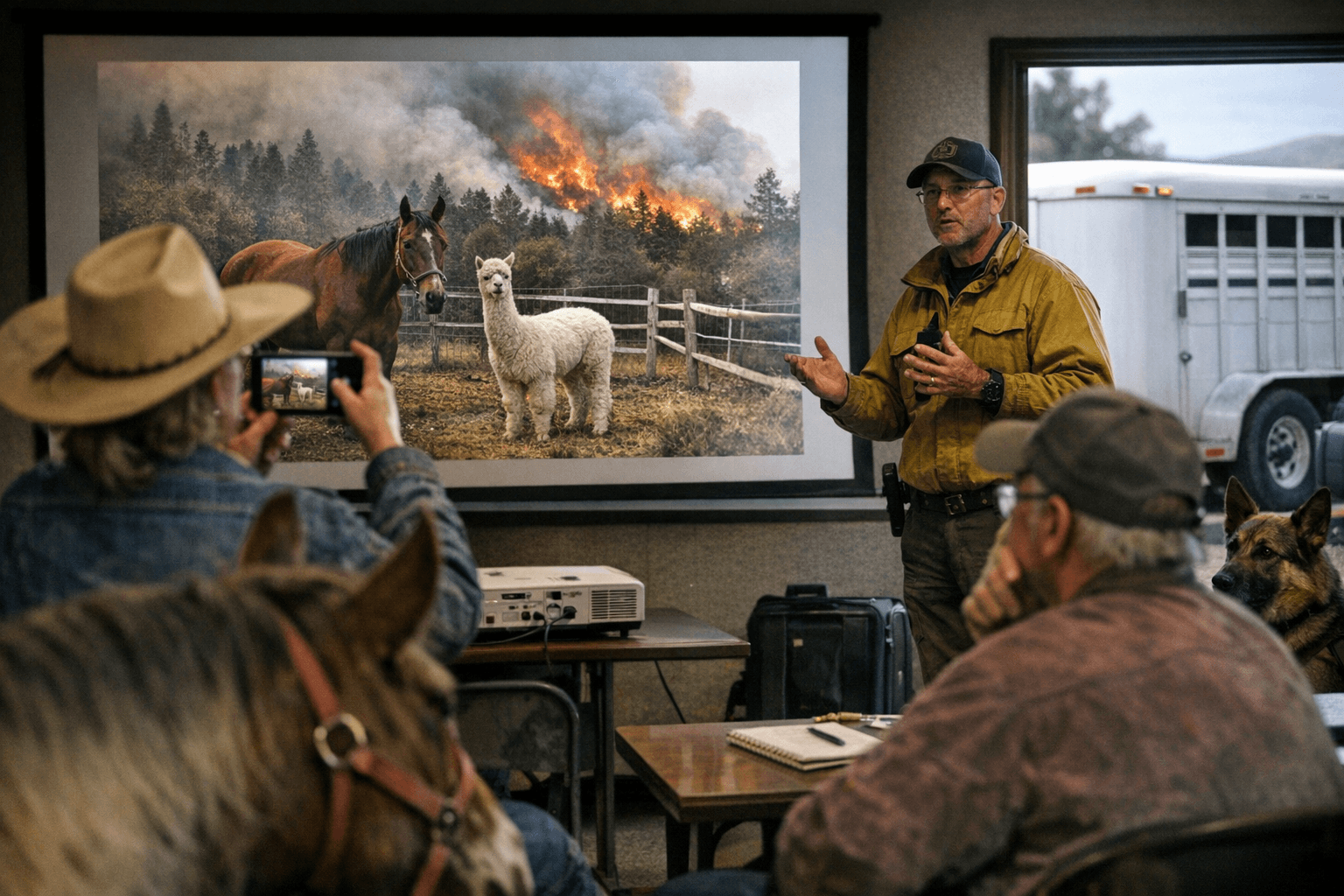
County notification systems and recommended veterinary and feed-supply contacts were also reviewed, giving owners a clearer picture of what support is available during a prolonged displacement. County-level programs that can assist with extended staging were outlined, pointing attendees toward official channels before an incident rather than after.
The Sheriff's Posse Lodge, situated near the riding and stable areas where most attendees keep their animals, gave the meeting a practical geography: the venue itself sits within the evacuation corridor that many owners would use. The Stable Owners Association's effort to bring county emergency management, Cooperative Extension, and volunteer responders into the same room reflects a broader recognition that livestock preparedness in wildfire-prone terrain requires coordination across agencies, not just individual readiness.
This article was produced by Prism’s automated news system from verified source data, official records, and press releases, then run through automated quality and moderation checks before publishing. The system is built and supervised by the people who set the standards it runs under. Read our full AI policy.
Did this article answer your question?