Proposed Border Law School Could Bring Legal Services to Rural New Mexico
Four of New Mexico's 33 counties have no practicing attorney; a proposed border law school is being debated as a fix for a legal desert that spans entire rural counties.
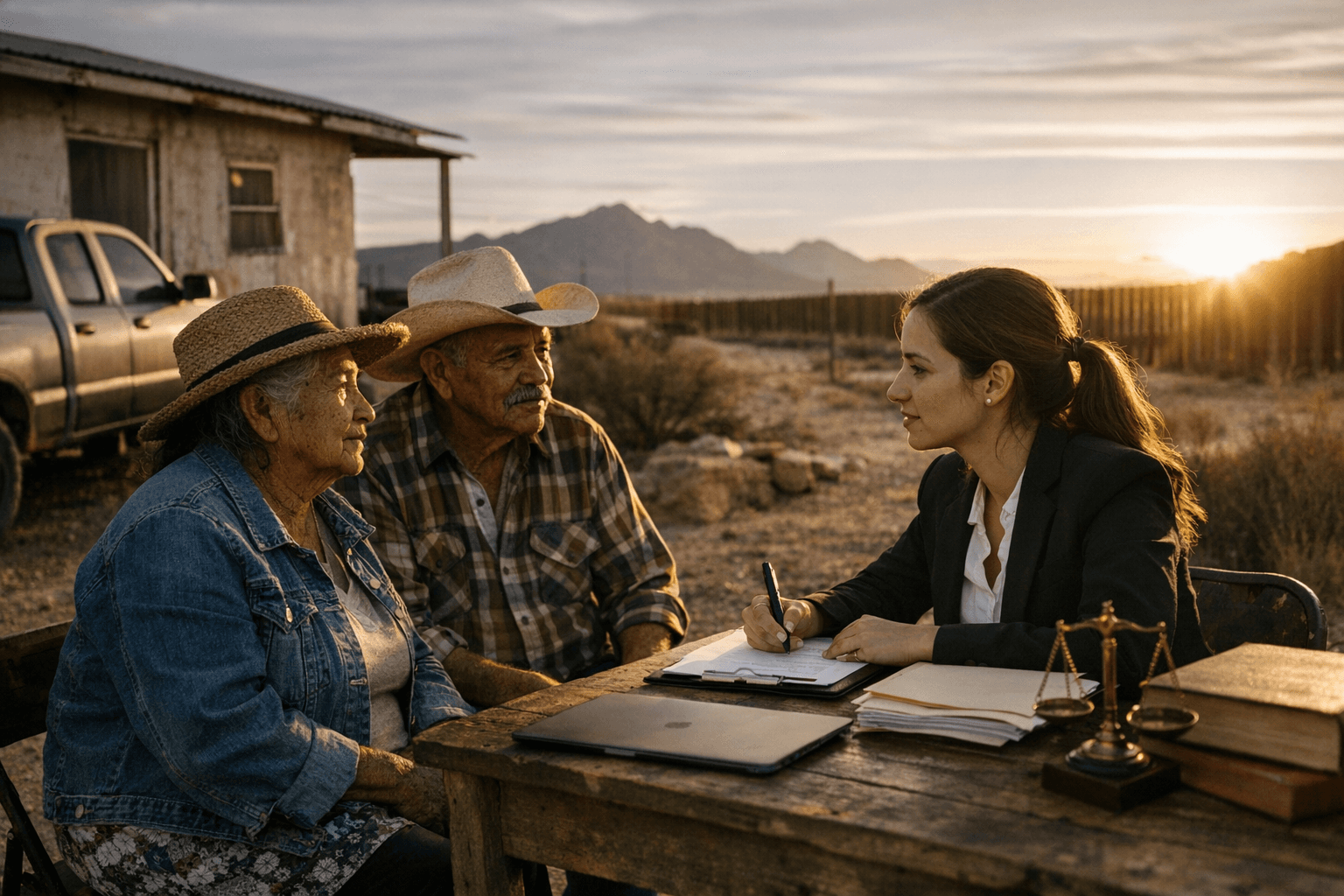
New Mexico's attorney shortage ranks among the most severe in the nation, and a proposal to establish a law school near the state's southern border has emerged as one potential answer to a crisis that leaves entire counties without a single practicing lawyer.
The numbers are stark. Of New Mexico's 33 counties, four have no practicing attorney, and more than one-third have 11 or fewer. The state is the fifth-largest in the nation geographically but ranks 46th in population density, with just over 2.1 million residents and approximately 5,000 attorneys. Roughly 80% of those attorneys are concentrated in Albuquerque, leaving the vast rural stretches of the state to navigate legal disputes, criminal charges, and civil matters largely on their own.
New Mexico needs an estimated 67% more attorneys simply to provide effective counsel in criminal cases, a gap that has already produced tangible consequences. More than 50 New Mexico lawyers who handle court-appointed cases for indigent defendants announced they would no longer accept new assignments, citing a severe and ongoing funding shortage in the federal defense system.
The case for a border-area law school rests on a theory well-supported by research on rural legal markets: attorneys trained in or near underserved regions are more likely to remain there after graduating. The University of New Mexico School of Law, the state's only existing ABA-accredited institution, already operates a Border Justice Initiative focused on immigration representation, positioning itself as the closest law school to the immigration court in El Paso, Texas. A second institution would represent a structural shift in how New Mexico approaches its legal education pipeline.
The New Mexico Rural Justice Initiative, created in 2019 and operating under the New Mexico Supreme Court, has attempted to address the shortage through a two-year clerkship program placing law graduates in communities including Farmington, Gallup, Clovis, and Portales. That program moves individual graduates into legal deserts; a border law school, proponents argue, would generate a larger and more sustained supply.
For Los Alamos County residents, the debate carries geographic weight. The county sits within reach of Albuquerque's legal market, but neighbors in Rio Arriba and Mora counties face a different reality entirely. Whether graduates of a potential southern border institution would migrate north or cluster near the border would depend heavily on loan-forgiveness structures and rural placement incentives built into any such program.
The proposal remains without a named institutional sponsor or accreditation pathway. What it does have is a growing body of evidence that the status quo, accepted for decades across rural New Mexico, is no longer tenable.
This article was produced by Prism’s automated news system from verified source data, official records, and press releases, then run through automated quality and moderation checks before publishing. The system is built and supervised by the people who set the standards it runs under. Read our full AI policy.
Did this article answer your question?