Experts Warn McDowell County Flooding Will Worsen Due to Climate, Land Use
Experts say climate-driven moisture and mountain land use are concentrating heavier storms into hollows like Welch, raising flood risk for McDowell County residents.
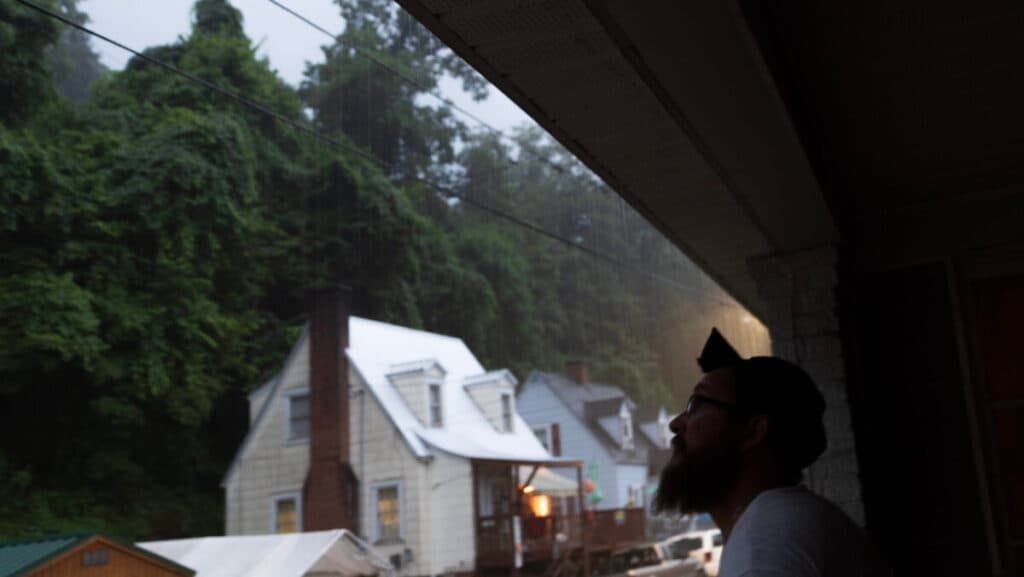
Flooding in McDowell County is set to become more frequent and more dangerous as warming oceans and the mountains’ steep terrain funnel greater volumes of moisture into valley communities such as Welch. Local geography, shifting weather patterns, and aging infrastructure combine to turn heavy rain into sudden, destructive flash floods that communities here are not well prepared to handle.
“Appalachia is more vulnerable for any number of reasons,” said Dennis, the lead author of a recent investigation. “One we talked about is the landscape. Obviously, it stands to reason that large amounts of rain and water falling on steep slopes are going to put places at risk of flash flooding. We definitely see that throughout Appalachia. ... The reason in part that much of Appalachia lies in this stretch that’s really vulnerable to that is that there’s this, for lack of a better term, conveyor belt of this moisture coming up, often from the Gulf of Mexico to the mountains of Appalachia, intersecting with the mountains there and causing these huge storms. Part of it is the climate that’s changing. The atmosphere is warmer. ... the rains of the past are not necessarily what the rains of the future look like, or even really rainstorms of the present.”
Climate physics helps explain why. “With every 1 degree Fahrenheit increase in temperature, the atmosphere holds between 4 and 7 percent more water,” a climate summary notes, and currents of moist air known as atmospheric rivers can carry that added moisture long distances. When those currents are forced upslope over mountains, the vapors are “wrung out” into intense downpours. Technical assessments show seasonal patterns: “River or long-term flooding occurred across the southern Appalachian Mountains mainly during the late winter and early spring months. This is likely due to widespread rainfall, sometimes in combination with snow melt,” and a secondary peak occurs between August and October “likely the result of tropical systems which occasionally affect the southern Appalachian Mountains during this time of year.” Heavy rain events are defined as “3 inches or more in a 6-hour or less time period and/or 4 inches or more in a 12-hour or less time period.”
The region’s flood history is stark: November 5–6, 1977 affected 16 counties; May 6–8, 1984 affected 10 counties; September 22, 1989 affected 13 counties during Hurricane Hugo; August 16–17, 1994 affected 14 counties during Tropical Storm Beryl; and January 7–8, 1998 affected 17 counties. Recent reporting also indicates floods have increased dramatically during the past decade, a trend partially attributed to greater emphasis on volunteer spotter networks and warning verification.
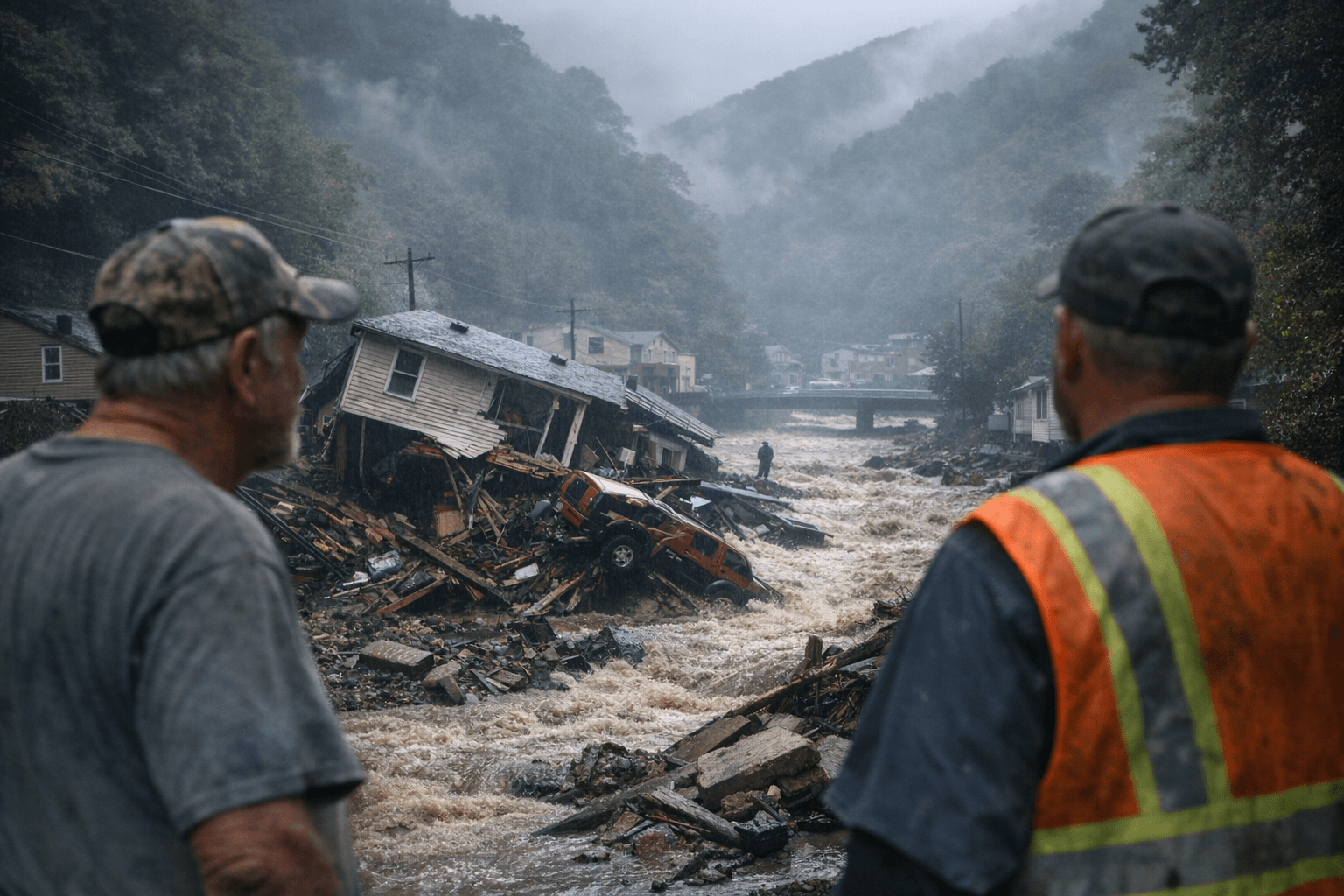
Poor, rural communities face the worst consequences. “The most devastated areas are also predominantly rural and lower-income,” Camp said. “These are not areas that get a lot of attention and investment for resilience and planning and improved infrastructure.” Camp added that “It’s likely that some local infrastructure wasn’t designed to be resilient even under once-in-100-year or once-in-500-year circumstances... ‘those design guidelines and standards kind of got thrown out the window; they wouldn’t have really helped.’” Mountains compound rescue and evacuation challenges: “Then there’s the terrain. In terms of response, mountains mean there are fewer roads to any given town, hampering both evacuation and response efforts, Camp says.” Experts note that tropical systems can prove especially destructive in inland mountains. Smith summarized that “This is a common way of producing catastrophic flooding.”
For McDowell County residents, the implications are practical and immediate. Narrow hollows and single access roads leave people and emergency crews vulnerable when waterways rise quickly. Community leaders and residents are calling for deeper investment in flood protection, responsive disaster management, and stronger building standards to reflect the new reality of larger, faster storms. As the climate supplies more moisture and storms deliver it faster, local planning and funding decisions will determine whether places like Welch can stay safe or find themselves repeatedly repairing the same damage.
Know something we missed? Have a correction or additional information?
Submit a Tip