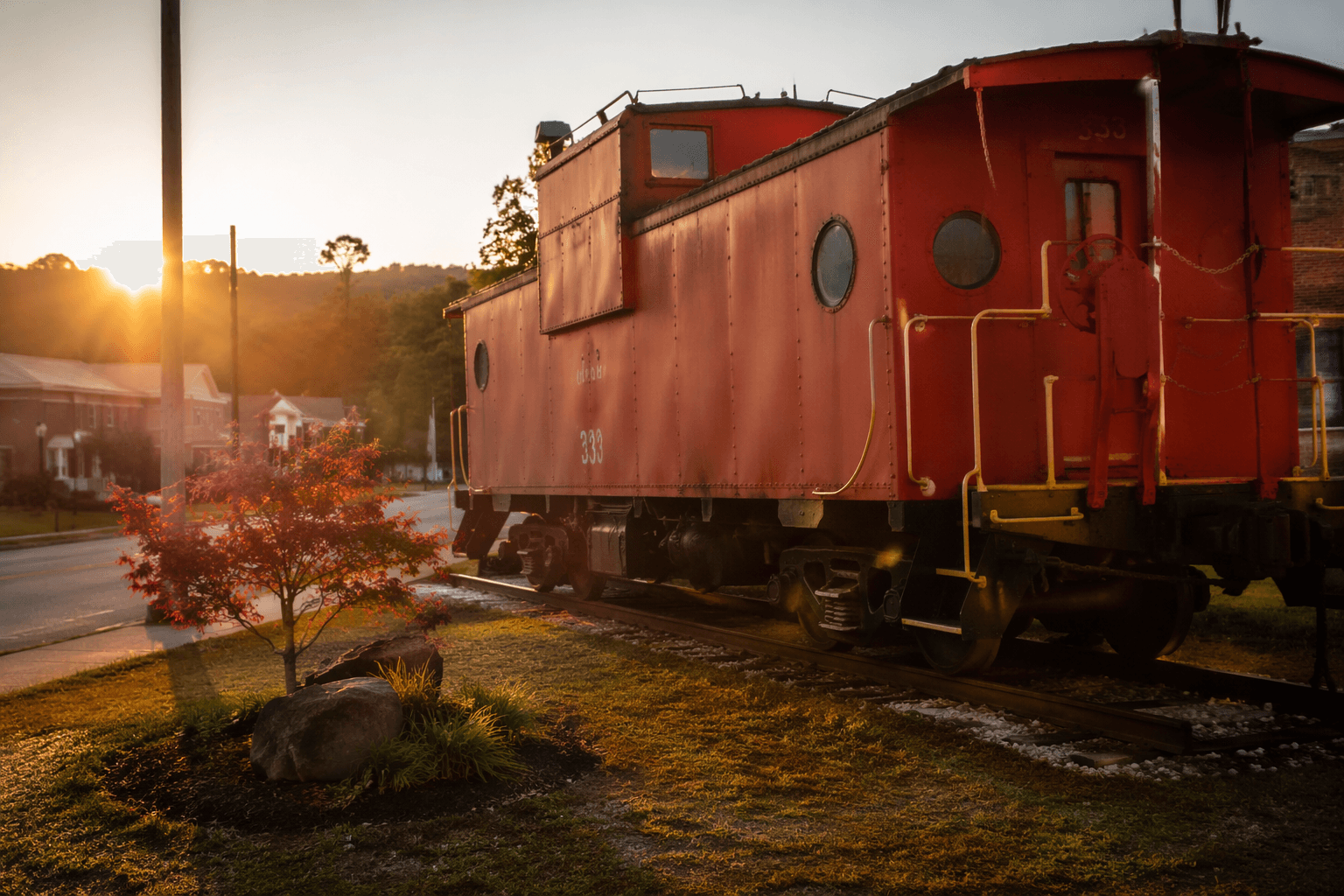
McDowell County Offers Five Historic Sites and Attractions Worth Exploring
Welch holds America's first WWI memorial building; five McDowell County towns carry histories most visitors never hear about.
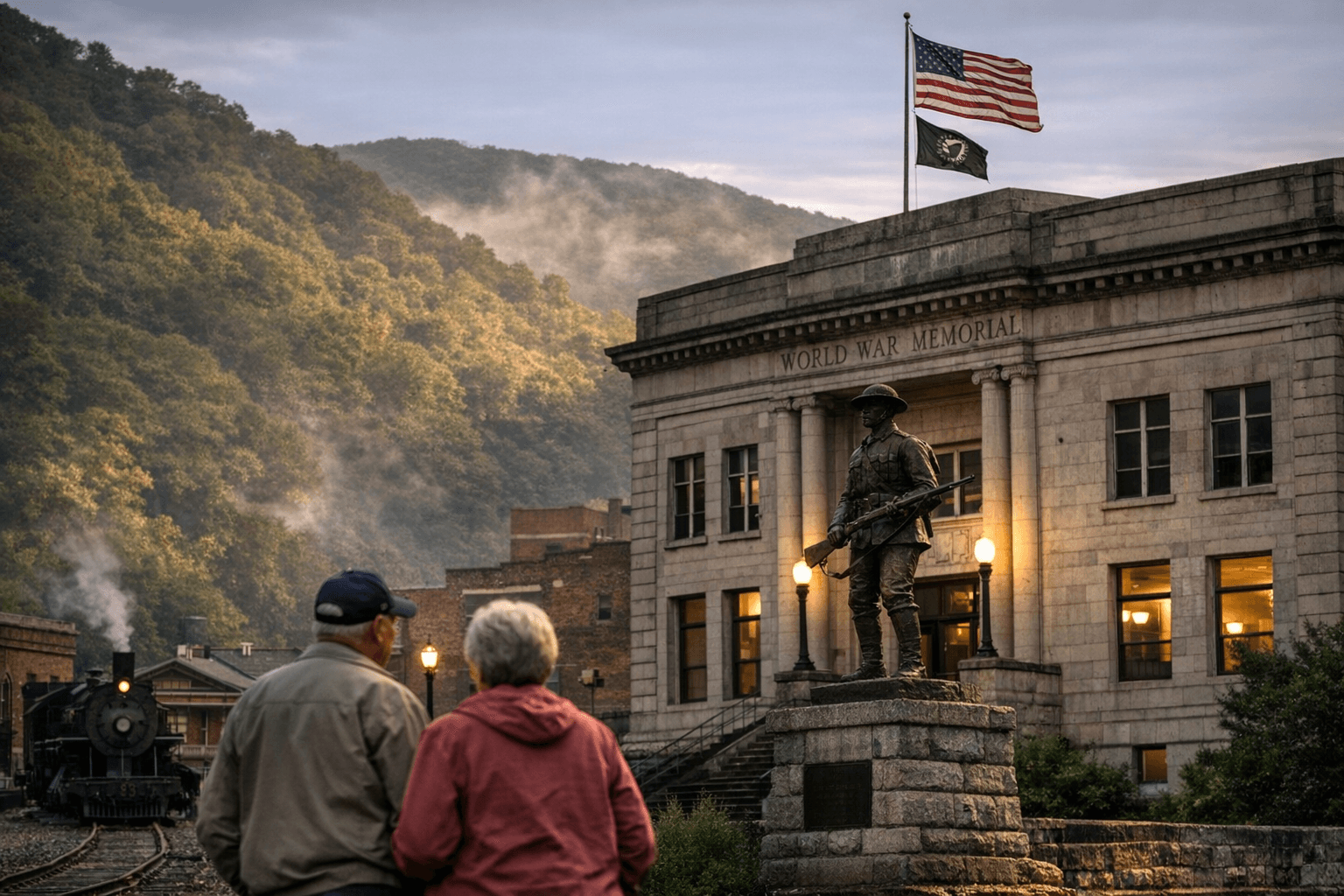
Welch: The County Seat That Built the Nation's First WWI Memorial
Before there were bridges or wagons in this corner of southern West Virginia, the principal exports out of the Tug Fork valley were furs and ginseng. That changed in 1891, when the Norfolk and Western Railway punched through the mountains and reached Welch the same year the county seat was moved here from Perryville. What followed was one of the most compressed industrial transformations in American history: within a generation, a settlement named for an early landowner, I.A. Welch, had become the administrative and commercial hub of a region producing millions of tons of coal annually.
Welch carries that history in its civic architecture. The town holds two national distinctions that almost no one outside McDowell County can name: it was home to the country's first World War I Memorial Building, and it constructed the first municipally owned and operated parking building in the United States. Those details sit alongside a more familiar role — the county's court records, circuit clerk filings, and historical archives are all centered here, making Welch the irreplaceable first stop for anyone researching family roots in the region. Walking the narrow valley floor, where the town is squeezed between steep ridges and never much wider than 1,000 feet, the landscape itself explains something essential about why McDowell County developed the way it did: there simply was no room to spread out, so communities concentrated, competed, and collaborated in ways that left unusually rich documentary records.
The McDowell County Historical Society and local museum exhibits connect those records to photographs, maps, and archived newspapers from the boom decades. Volunteer schedules vary seasonally, so calling ahead is worth the effort before making the drive.
Keystone: Incorporated in 1909, and Still One of West Virginia's Most Distinctive Towns
Keystone was incorporated in 1909 and named not for any ridge or creek but for Pennsylvania's Keystone Coal and Coke Company, which operated in the Elkhorn Creek valley below. The naming detail captures something true about McDowell County's early economic geography: the money and the corporate identities often came from somewhere else, while the labor, the community life, and the culture were built here. By the 2020 census, Keystone's population had fallen to 176, but the town retains a distinction that separates it from almost every other municipality in West Virginia: it is one of the few with an African American majority, a demographic reality rooted in the coal industry's recruitment of Black workers from the South during the early twentieth century.
That history gives Keystone a particular place in McDowell County's cultural landscape. The town and the communities around it developed their own churches, civic organizations, and social institutions during decades when segregation shaped daily life throughout the coalfields. The community fields and parks that now host youth sports and seasonal events are built on that layered ground. Visitors hoping to catch a game or a local gathering should check school and community calendars, as events often move on short notice. For hikers, the Elkhorn Creek valley and the ridgelines above Keystone provide access to Appalachian terrain that sees relatively little foot traffic, which is precisely its appeal.
Gary: A Town Drinking Water From Abandoned Coal Mines
Gary sits in the southernmost corner of McDowell County, and its water supply tells you nearly everything you need to know about the long aftermath of the coal era. The city draws its public water from a 130-foot well drilled into the tunnels of abandoned Pocahontas No. 3 coal seam mines, a system the coal companies originally built to house and supply the miners who worked those same seams. When the companies left, the infrastructure stayed, aged, and became a chronic problem. In 2024, community volunteers and regional organizations supplied more than 82,400 bottles of water to more than 280 homes in McDowell County as orange-to-black discoloration made tap water unusable for stretches of months.
The infrastructure challenge is the defining story of Gary right now, and it is part of a broader pattern: when coal companies built these towns, they also built and maintained the utilities. Their departure left municipalities with systems designed for private industrial management, not long-term public operation. A visit to Gary offers something no tourism brochure can fully replicate: a conversation with long-term residents about what it takes to keep a community functioning when the original economic rationale has disappeared. Travelers should consult local public notices before visiting, as some utilities and road conditions remain actively under repair.
War and Rocket Boys Drive: Where a Memoir Became a Road Sign
Homer Hickam was born on February 19, 1943, in Coalwood, a coal camp near the town of War that was founded in the early twentieth century by mine operator George L. Carter. In 1998, Hickam, by then a retired NASA engineer, published his boyhood memoir "Rocket Boys," recalling the waning days of coal mining in Coalwood and the story of a group of teenagers who built their own rockets inspired by Sputnik. The 1999 film adaptation, "October Sky," brought national attention to the area. Locally, the legacy took a more concrete form: Rocket Boys Drive, a road near Caretta, now carries Hickam's title as a permanent fixture on county maps.
That road sign is an entry point into a richer conversation about what this corner of McDowell County says about Appalachian aspiration. The towns around War and Caretta, their community centers, churches, and seasonal festivals, represent the texture of coalfield life that Hickam spent 23 pages documenting in a manuscript history of Caretta and Coalwood now held at West Virginia University. Mobile food distributions, annual events, and church-organized gatherings continue to function as the primary community infrastructure in this part of the county, as they have for decades. Checking bulletin boards at local churches and civic centers remains the most reliable way to find out what is actually happening on any given weekend.
Northfork: Ridgeline Roads and the Records That Stay
Northfork's position in the county puts it at the junction of two things that define McDowell County's landscape: the practical difficulty of getting anywhere and the reward waiting once you do. The roads climbing toward the ridgelines above Northfork are narrow and steep, and the county's sparse traffic infrastructure means distances that look manageable on a map can take significantly longer than expected. State DOT advisories and local weather forecasts are not optional reading before heading into the more remote sections; seasonal conditions can close or damage roads that are already marginal.
What draws photographers and landscape travelers to Northfork and its surrounding terrain is exactly what makes it logistically demanding: old mining sites folded into mountain scenery, ridge-top views with almost no development in the sightlines, and the particular quiet of a county where population has declined sharply over the past half-century. For genealogical researchers, Northfork and similar communities hold another kind of resource. Small-town churches throughout this part of McDowell County maintain cemetery records and burial registers that capture family histories not found in any digital database, the kind of documentation that rewards a patient visit and a conversation with whoever holds the keys to the records room.
One practical note worth repeating across all five of these communities: fuel and grocery options are limited throughout much of McDowell County. Carrying water and supplies for a full day of travel, and confirming museum and archive hours before leaving Welch, is not overcaution. It is how you actually see the county rather than spending the afternoon searching for an open gas station.
This article was produced by Prism’s automated news system from verified source data, official records, and press releases, then run through automated quality and moderation checks before publishing. The system is built and supervised by the people who set the standards it runs under. Read our full AI policy.
Did this article answer your question?