McDowell County Showcases Coal Heritage Through Museums, Memorials, Historical Sites
McDowell County preserves its coalfield past through museums, memorials, and surveyed company towns, drawing on heritage assets that could support tourism and local recovery.
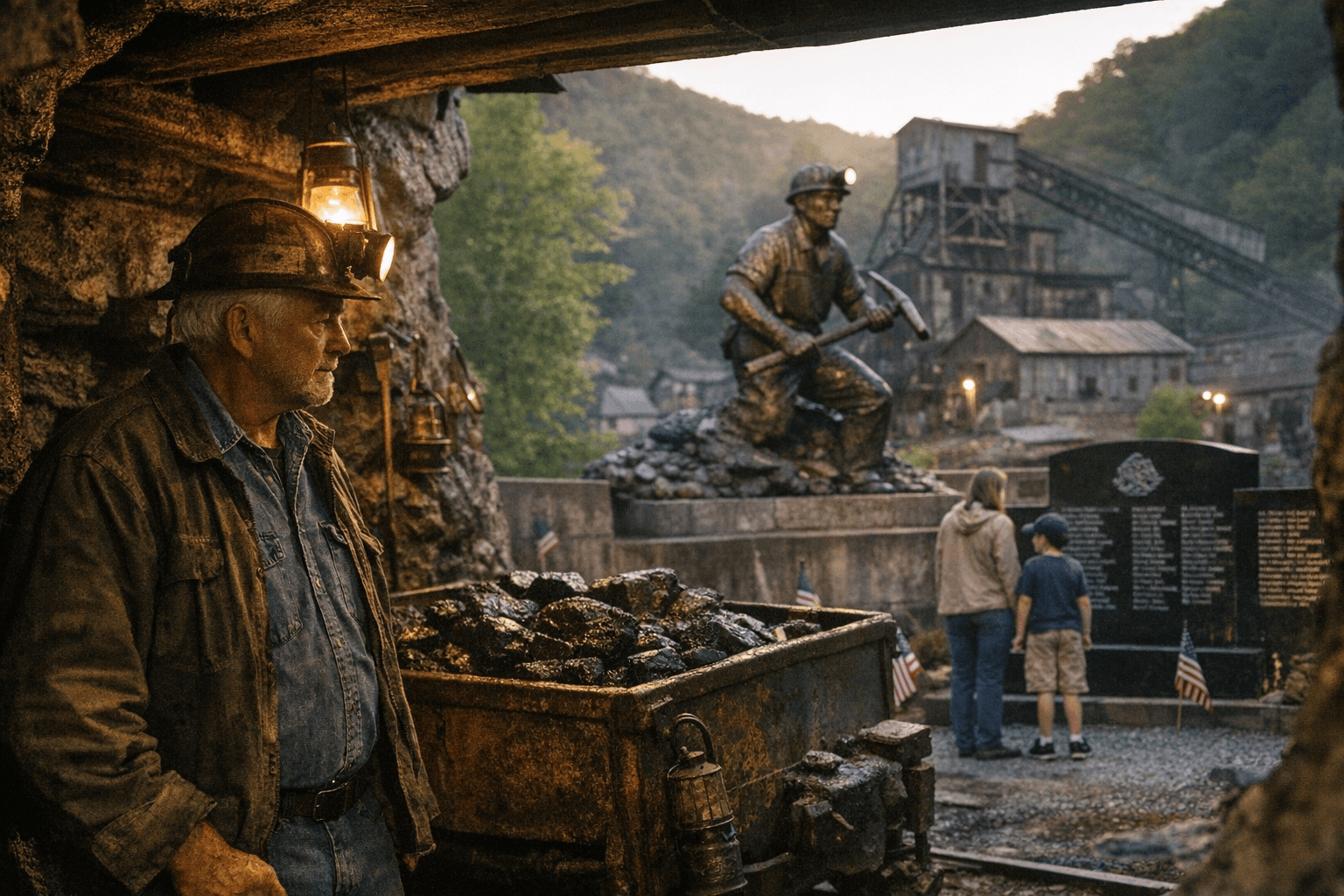
“McDowell County’s history is deeply shaped by the coal industry, and the county preserves that heritage through museum exhibits, memorials, and community historical collections.” That continuity of memory shows up across museums, monuments, and state survey work that together document the region’s industry, its tragedies, and its built environment.
At the center of the public-facing effort are museums that collect tools, photographs, company records, and reconstructed spaces. The Bituminous Coal Heritage Foundation Museum, also known as The Coal Heritage Museum, is located at 347 Main Street, Madison, Boone County, WV 25130. It lists hours Monday, Thursday, Friday and Saturday from 12:00 to 5:00 PM and provides two phone contacts: 304-369-5180 and 304-836-5446. The Coal Heritage Museum & Arts Center offers a simulated coal mine, a company store and a miners’ home, and is available for special tours Monday through Friday from 12:00 noon until 4:00 p.m. These institutions aim to educate schoolchildren, former miners and out-of-area visitors while preserving artifacts tied to the Southern West Virginia coal fields.
Monuments and memorials record both civic pride and contested history. The monumental World War Memorial at the eastern end of Kimball was designed in 1927 and completed and dedicated in 1928 by architect Hassell T. Hicks (spelled Hassel T. Hicks in some survey documents). “The memorial stood as a monument to black veterans who served in World War I, but it was also an important cultural and social center for blacks and whites in the isolated coalfields.” The stone‑founded, classically porticoed building deteriorated over time and suffered a 1991 fire that left a roofless shell. Local marker texts also assert an early memorial claim for Welch and note a 1920s county appropriation of $25,000 toward a veterans’ memorial; those texts are preserved in archival marker records and warrant further verification.
Survey work by the Coal Heritage Survey Update reinforces how the built landscape remains an historical asset. The report notes that “Coal company towns are defined as communities built and owned entirely by a specific coal company or companies,” and identifies Berwind, Coalwood, Elbert, Elkhorn, Filbert, Pageton, Thorpe and Venus as significant towns that retain integrity. Individual survey entries include MD-4663 at 5529 Coal Heritage Road, Iaeger (ca. 1935) associated with architect Hassel(l) T. Hicks; MD-4080, the N&W Huger Tunnel at Superior (1915); and MD-4900, the Sterling Drive-In in Welch (1945). The update also records the human cost of extraction: near a Standard Pocahontas Coal Company operation, an explosion in 1911 killed six miners and a roof fall in 1948 killed six workers; that mine was known as the Shannon Branch prior to its mid-1980s closure.
Economic and policy context is stark. The survey explicitly lists community challenges as “abject poverty, lack of transportation, inadequate food accessibility and the opioid epidemic,” while identifying ATV tourism as an area for optimism and the National Coal Heritage Area/Coal Heritage Highway Authority as an active promoter of preservation and education. The report points to Cass in Pocahontas County as a rehabilitation model for repurposing former company towns into tourist rentals managed by a state park system.
For McDowell County residents, the combined inventory of museums, memorials and survey‑listed sites is both a record of social history and a lever for economic strategy. Strengthening visitor access, pursuing National Register nominations, and coordinating with regional heritage authorities could convert preserved buildings and interpretive programs into measurable visitor spending and jobs. At the same time, preserving memorials like Kimball’s World War Memorial keeps alive the human stories behind the region’s coal economy. What comes next is whether local leaders and regional partners move from documentation to investment so these places support both remembrance and recovery.
This article was produced by Prism’s automated news system from verified source data, official records, and press releases, then run through automated quality and moderation checks before publishing. The system is built and supervised by the people who set the standards it runs under. Read our full AI policy.
Did this article answer your question?