Moore, Green discuss clean water fixes for McDowell County
Southern McDowell County still runs on fragile water systems, with 3,500 customers spread across 16 lines and recurring boil advisories hitting multiple communities.
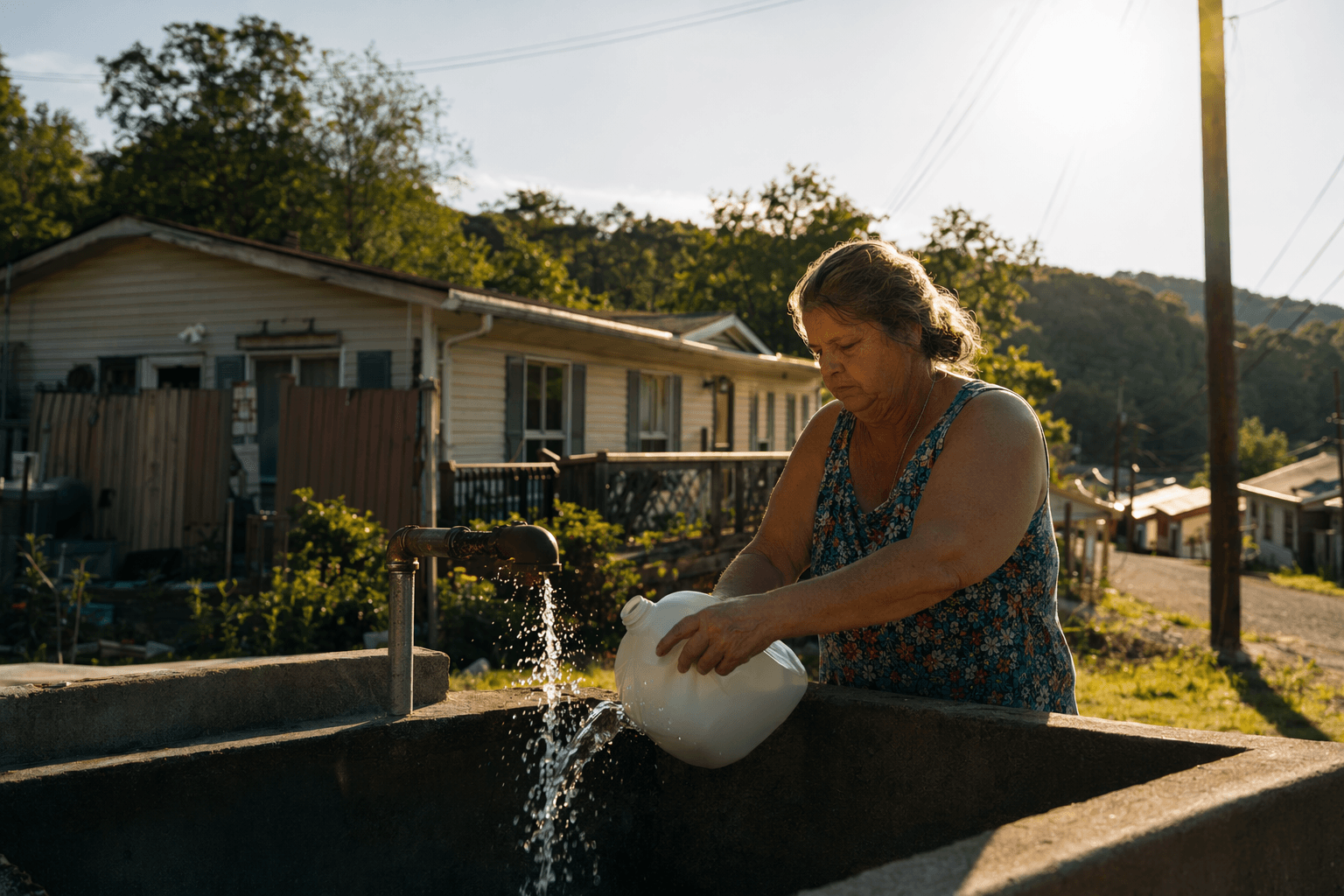
Southern McDowell County residents are still waiting for dependable drinking water, even as Riley Moore and Delegate David Green talk through fixes for a system that serves about 3,500 customers across 16 separate water systems with only 17 employees to keep it running.
The scale of the problem has been clear for years in places like Highway 52, Kimball and Welch, where residents have lived through outages and boil-water advisories that keep coming back. Notices posted by the McDowell County Public Service District in 2025 and 2026 show the crisis is still active, not a distant memory. In some coalfield communities, families still lean on bottled water, roadside springs or other stopgap sources when taps fail.
That fragility traces back to the collapse of coal-company-run town systems decades ago. Appalachian Voices reported in April 2024 that when coal companies stepped away from maintaining water lines and treatment plants, local governments and private operators were left with systems they could not afford to keep in shape. The McDowell County Public Service Department was formed in 1990, but by 2024 it was still stretching limited staff across a sprawling network of aging infrastructure.
The county has shown it can finish projects when money is assembled. The Highway 52 water project, completed in December 2021, cost $6.3 million and drew on local contributions along with money from the USDA Rural Utilities Service, the Appalachian Regional Commission, the U.S. Department of Housing and Urban Development’s Small Cities Block Grant program and the U.S. Economic Development Administration. The question now is whether southern McDowell can get that kind of sustained investment again, and on what timeline.
Moore has already pressed the issue in Washington. On July 22, 2025, his office said a House Appropriations Committee amendment passed directing the Environmental Protection Agency to brief Congress on federal resources available to communities with high rates of drinking-water violations, including McDowell County. Green, who represents most of McDowell County in District 36 and serves on the Energy and Public Works Committee, has also been involved in the state debate. A March 2026 report said he had reduced a southern coalfields water proposal from $250 million to $10 million because he could not win enough support from Republican colleagues.
The pressure has only increased this year. In February 2026, Rev. Brad Davis and other advocates pushed lawmakers in Charleston for emergency water-infrastructure funding, arguing the need was immediate. Around the same time, House bills HB 5525 and HB 5585 were stalled in the Energy and Public Works Committee, and Senate Concurrent Resolution 7 asked lawmakers to study the crisis in southern West Virginia, with special attention to McDowell and Wyoming counties. McDowell County’s appearance on CBS News’ 60 Minutes in February only sharpened the spotlight on what residents already know: clean water is still not guaranteed, and the next round of funding will need clear sources, clear deadlines and clear responsibility if the fixes stall again.
Know something we missed? Have a correction or additional information?
Submit a Tip