Welch Courthouse Remains Landmark of Coalfield History and Memory
The McDowell County Courthouse in Welch is a preserved Romanesque Revival landmark that anchors the town visually and historically, and it stands as the site of the August 1, 1921 killings that intensified regional labor unrest. For residents the building links civic institutions, architectural heritage, and the complex legacy of the coal fields, shaping preservation and public memory in McDowell County.
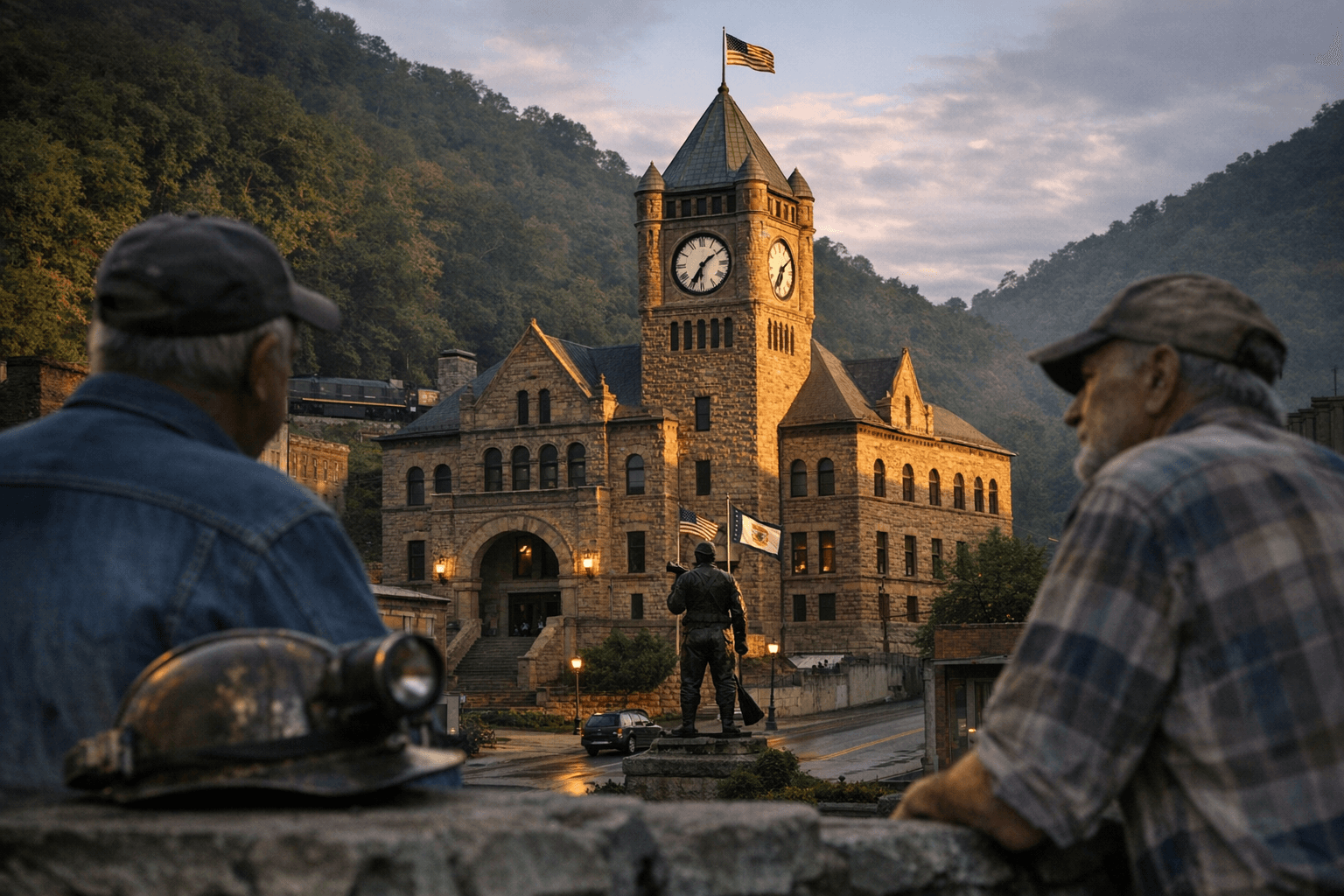
The McDowell County Courthouse sits on Wyoming Street above downtown Welch, a heavy masonry structure with round arched windows and richly detailed cornices that mark it as a late nineteenth century public building. Designed by regional architect Frank P. Milburn, the courthouse was constructed from 1893 to 1894 with a 1909 addition. It is listed on the National Register of Historic Places and remains the most prominent historic landmark in the county.
The courthouse is widely known beyond county lines because of a violent episode on its front steps on August 1, 1921. Police Chief Smilin' Sid Hatfield and his deputy Edward Chambers were shot there by detectives from the Baldwin Felts agency following a protracted and contentious legal conflict linked to labor tensions in the coal fields. The killings reverberated across southern West Virginia and helped intensify labor unrest across the region. The steps and the building itself have become a focal point for remembrance of the miners struggles during that era.
Architecturally the building is an example of the Romanesque Revival courthouse type that Milburn and his contemporaries produced across the Mountain State, and its hillside position gives it a commanding view over Welch. That visibility has reinforced the courthouse as a civic symbol, used in local histories, guided tours, and interpretive materials that examine the county's economic and social past. For researchers and visitors the site offers both material evidence of local government and a tangible connection to the contested labor history of the early twentieth century.
For residents the courthouse is important for more than nostalgia. It anchors the historic district, influences tourism, and factors into efforts to preserve the county's coal field heritage. The building's dual role as functioning civic space and memorial landscape raises policy questions about preservation funding, interpretation of contested histories, and how public institutions steward sites that embody both local governance and painful episodes from the past.
As McDowell County considers preservation priorities and civic education programs, the courthouse will remain central to debates about resources and public memory. Its physical presence keeps the county's architectural legacy visible, while its history demands continued attention to how communities reckon with labor conflicts, law enforcement actions, and the long term social and economic impacts those events left on southern West Virginia.
Know something we missed? Have a correction or additional information?
Submit a Tip