Welch Restaurant Shifts To Donation Meals, Rebrands As Fellowship Table
A downtown Welch restaurant changed from a conventional business model to a donation based community meal operation on December 24, converting Latin Appalachian into The Fellowship Table as part of the Nehemiah Project. The move responds to flood recovery work and aims to expand volunteer driven food access, a development that could reshape local support networks and public policy priorities.
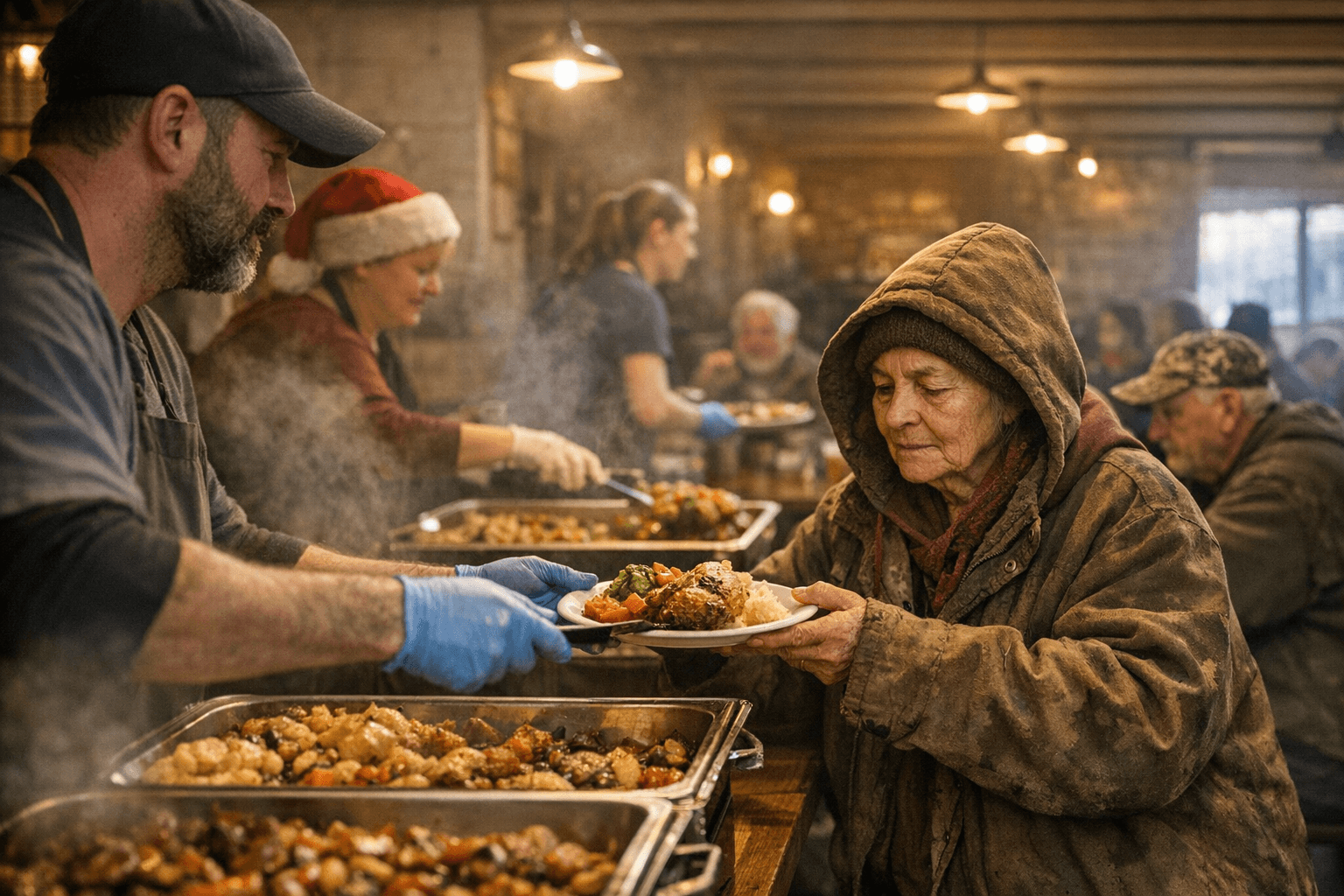
Roberto Diaz, owner of the Latin Appalachian in downtown Welch, announced that his restaurant would operate on a donation basis and become known as The Fellowship Table, joining the Nehemiah Project. The restaurant hosted a community meal from 5 p.m. to 7 p.m. on December 24 at 30 McDowell Street in Welch, and Diaz said the Latin Appalachian will continue as a catering business while the new operation focuses on serving the public.
Diaz said he made the decision after serving 50,000 meals to the community after the February floods. "It’s a way to give back to our community and a way to get volunteers to come in here. People who are struggling, maybe have a past, whether you’re rich or poor. We just get it. Life happens," Diaz said. The remark underscores the initiative's dual purpose of delivering meals and creating volunteer opportunities for residents across circumstances.
For local residents the change is significant. McDowell County faces longstanding challenges with food insecurity and limited access to services, particularly in the wake of extreme weather events. A donation based meal site anchored in a downtown location can provide immediate relief for vulnerable households, reduce pressure on emergency providers, and serve as a focal point for volunteers and civic organizations seeking to coordinate assistance.
The shift also raises operational questions for county officials and regulators. Sustaining a donation based feeding program requires reliable volunteer engagement, safe food handling practices, and coordination with social service agencies. Local government may need to clarify licensing, health inspection, and liability frameworks so that community run operations can scale without compromising public safety. Funding pathways such as grants, municipal support, or partnerships with regional nonprofits could determine whether the model endures beyond the current recovery phase.
By converting a business to a community table, Diaz and the Nehemiah Project have created both a practical resource and a potential model for civic engagement. Residents seeking more information were directed to the Nehemiah Project’s Facebook page, and local officials and community groups will likely watch closely to assess how this effort affects broader service delivery and public policy priorities in McDowell County.
This article was produced by Prism’s automated news system from verified source data, official records, and press releases, then run through automated quality and moderation checks before publishing. The system is built and supervised by the people who set the standards it runs under. Read our full AI policy.
Did this article answer your question?