Welch Restaurant Shifts to Donation Model, Expands Community Meals
Roberto Diaz announced that Latin Appalachian in downtown Welch will operate on a donation basis and be rebranded as The Fellowship Table under the Nehemiah Project, a move aimed at sustaining relief for residents still recovering from February flood losses. The change, which keeps Latin Appalachian as a catering business while focusing daily community meals and volunteer engagement at The Fellowship Table, matters because it addresses ongoing food needs and supports local nonprofit recovery efforts.
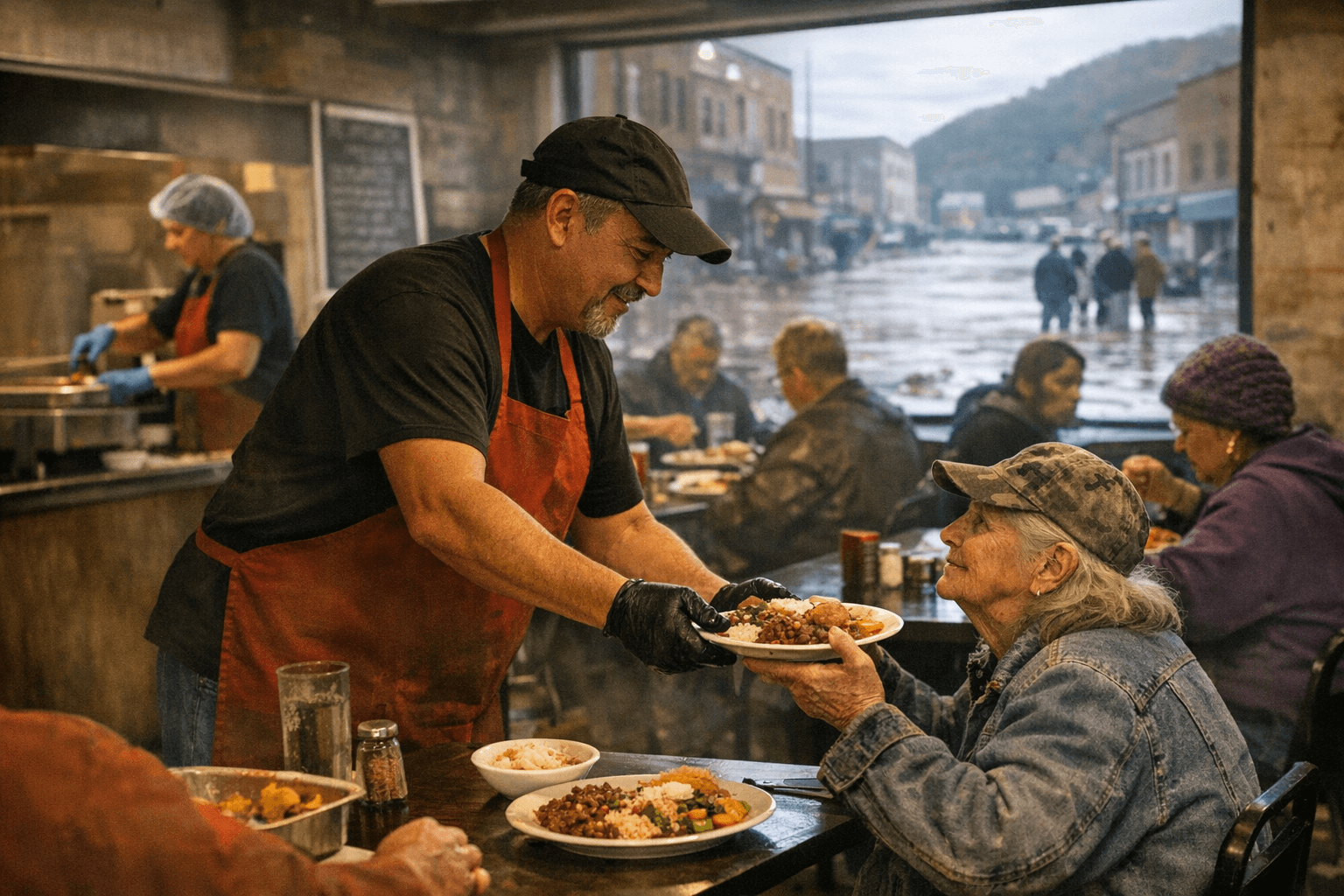
Roberto Diaz, owner of Latin Appalachian in downtown Welch, announced on December 24 that the restaurant will transition to a donation based operation and be rebranded as The Fellowship Table as part of the Nehemiah Project. Diaz said the shift grew out of the restaurant's role in flood relief after the February floods, noting that the business served roughly 50,000 meals during relief efforts. Latin Appalachian will continue as a catering business while The Fellowship Table will host community meals and recruit volunteers.
The first community meal under the new model was scheduled for December 24 from 5 to 7 p.m. at 30 McDowell Street in Welch. Organizers describe the model as a community centered response to continuing needs after the floods, and as part of broader local nonprofit relief activity. For many residents who lost income, housing, or access to transportation earlier this year, regular donation based meals can reduce immediate food insecurity and provide a place for connection and information about other recovery resources.
Public health officials and local leaders will watch the transition closely because long term disaster recovery is as much about access to nutritious food as it is about shelter and infrastructure. Community feeding efforts can improve food access in the short term, and they can also surface unmet needs such as chronic disease management, medication access, and transportation barriers to health care. Ensuring proper food safety protocols, coordination with the county health department, and sustainable volunteer support will be important to maintain both the health of meal recipients and the operational longevity of the effort.
The Fellowship Table model highlights how small businesses can become central hubs for recovery and mutual aid in rural communities. As McDowell County moves forward, the partnership between restaurants, nonprofit volunteers, and public agencies will be critical to converting emergency responses into lasting programs that address food insecurity and build community resilience.
This article was produced by Prism’s automated news system from verified source data, official records, and press releases, then run through automated quality and moderation checks before publishing. The system is built and supervised by the people who set the standards it runs under. Read our full AI policy.
Did this article answer your question?