11 Bodaway-Gap Families Receive ARPA-Funded Modular Homes After Decades
Eleven Bodaway-Gap families received keys to new modular homes funded by the Navajo Nation Fiscal Recovery Fund, easing decades-long housing shortages in the Former Bennett Freeze Area.
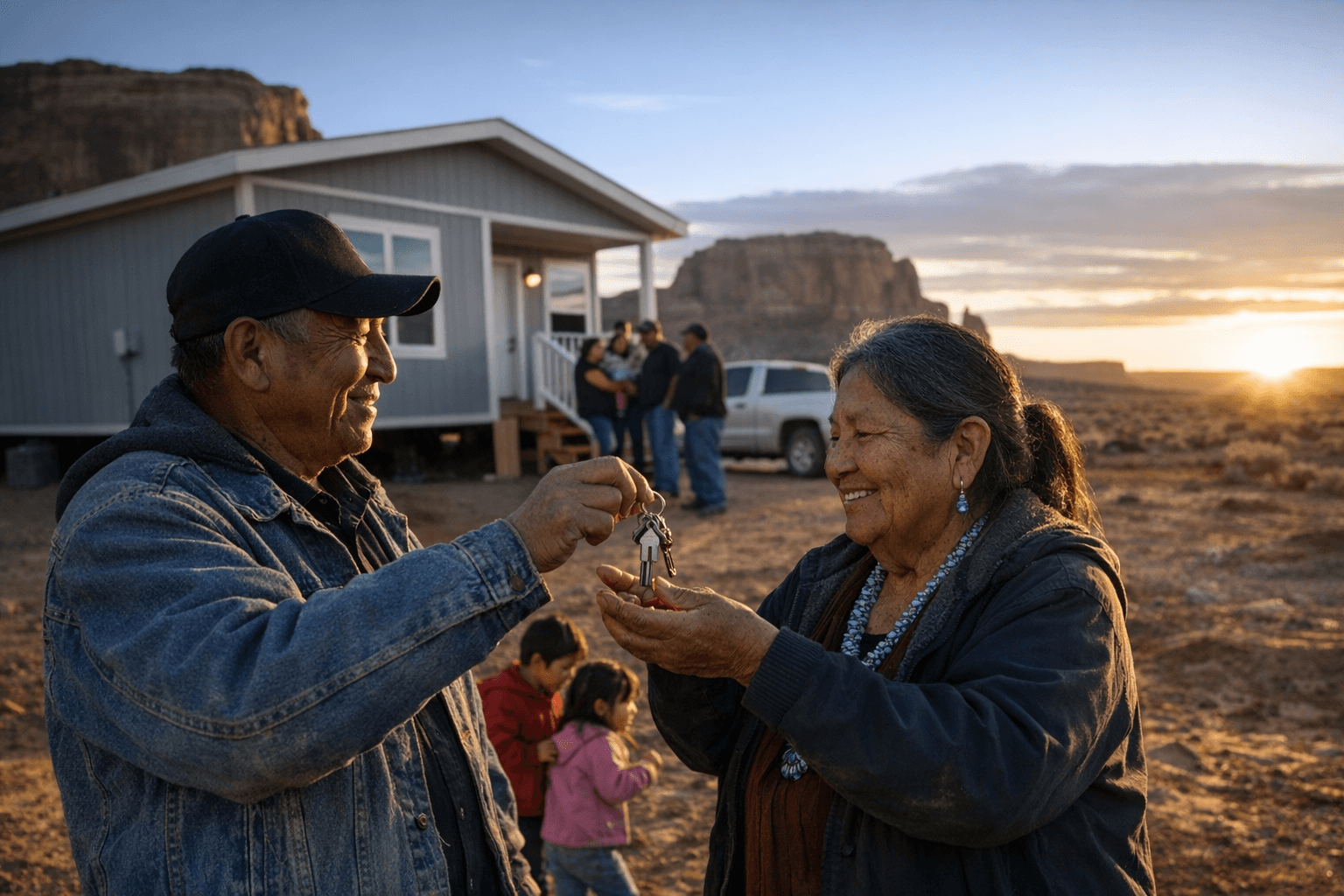
Eleven families in the Bodaway-Gap community took possession of new modular homes at a key-turnover event held at the Bodaway-Gap Chapter House on Jan 22, 2026. The homes were funded through the Navajo Nation Fiscal Recovery Fund Housing Assistance Project, part of ARPA housing efforts aimed at addressing long-standing shortages caused by historical development restrictions in the Former Bennett Freeze Area.
The deliveries mark a visible milestone in local housing recovery. Residents who have waited decades for clear title, building approvals, and basic services now have permanent structures that replace overcrowded units and unstable housing arrangements. The modular homes were placed using project funds, including site preparation and installation, enabling faster occupancy than traditional stick-built construction.
This small but concentrated investment has several immediate economic effects for McKinley County. Eleven households gaining legal, utility-ready homes improves housing stability and can reduce costs associated with emergency repairs and health impacts tied to inadequate shelter. For homeowners, newly titled dwellings create household assets that improve access to credit and financial resilience over time. On the supply side, modular construction delivered under the Navajo Nation Fiscal Recovery Fund demonstrates a cost- and time-efficient model for remote communities where transportation and labor constraints inflate traditional building costs.
Policy context matters for understanding why this mattered to residents. The Former Bennett Freeze Area experienced development halts and bureaucratic barriers that suppressed housing supply for years. Using federal ARPA-derived funds for housing assistance shifts pandemic relief dollars toward durable infrastructure investments. That choice aligns immediate relief with long-term community development, but it also raises questions about sustainment. Modular units still require ongoing investment in roads, utilities, and maintenance budgets; without recurrent funding streams, gains in housing stock risk being undermined by service shortfalls.
The Bodaway-Gap project is part of broader efforts across Former Bennett Freeze Area communities to expand housing capacity. Scaling such projects could yield modest local economic multipliers through construction jobs, supplier activity, and increased consumer spending as families stabilize. However, leaders will need to reconcile one-time federal infusions with recurring needs for operations, utilities, and community services if the benefits are to persist.
For readers in McKinley County, the arrival of these 11 homes is a concrete improvement in neighborhood living conditions and a test case for replicating modular deliveries elsewhere on the Navajo Nation. The next steps for policymakers and community leaders include securing funds for infrastructure connections, planning for maintenance, and integrating new homeowners into local services. If managed well, the project points to a pathway from pandemic-era relief to durable, asset-building housing for communities long held back by historical restrictions.
This article was produced by Prism’s automated news system from verified source data, official records, and press releases, then run through automated quality and moderation checks before publishing. The system is built and supervised by the people who set the standards it runs under. Read our full AI policy.
Did this article answer your question?


