Federal Court Rules EPA Ignored Cadmium Threat to San Juan River Fish
A federal court found the EPA never checked whether its cadmium water rules would harm endangered fish in the San Juan River, forcing a review with consequences for McKinley County farms and families.
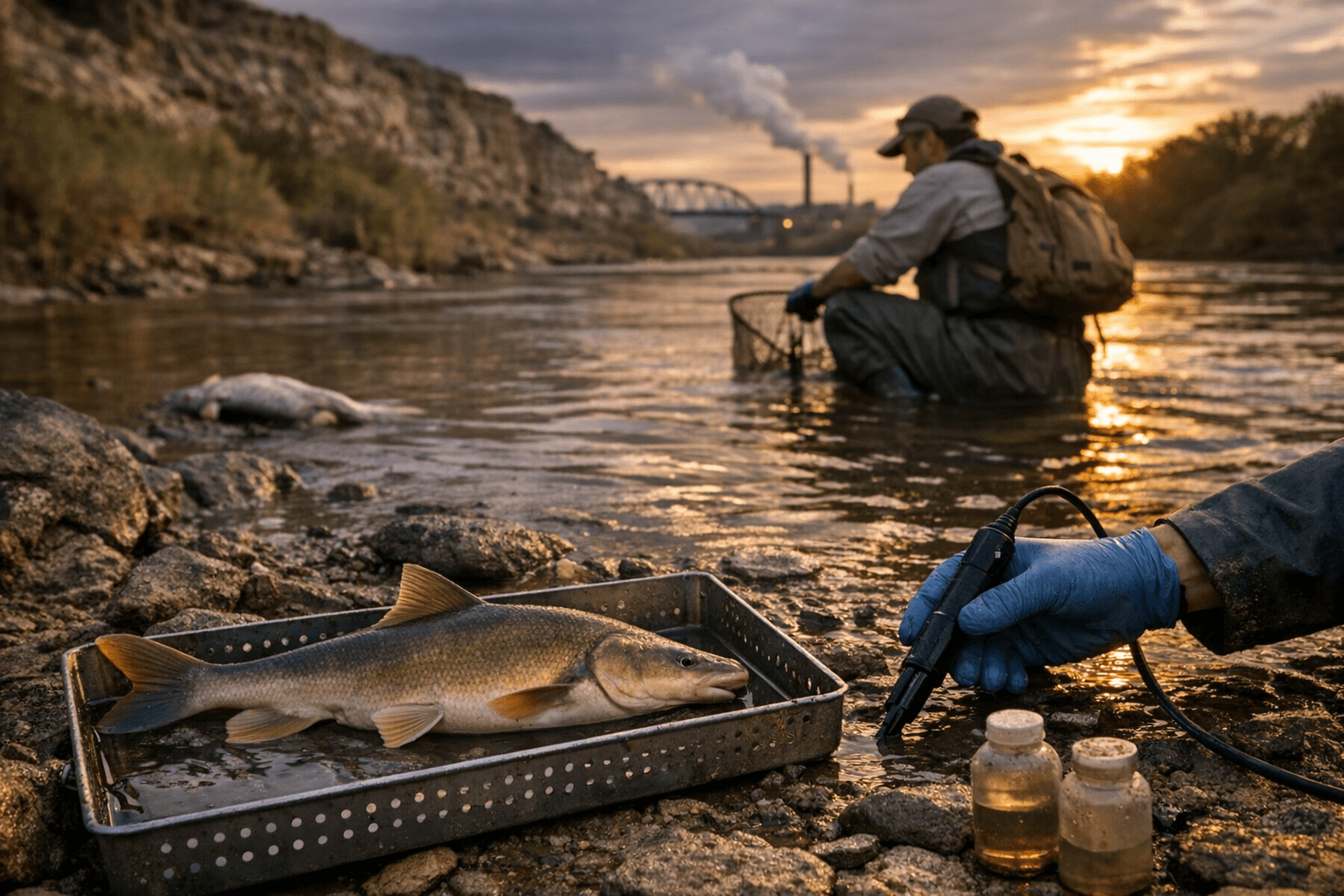
Every discharge permit tied to the Four Corners Power Plant, every irrigation draw that keeps Navajo Agricultural Products Industry fields green, and every family that fishes below Shiprock now has a stake in what the 9th U.S. Circuit Court of Appeals decided March 3: the EPA set cadmium water quality standards in 2016 without ever checking whether they would harm endangered fish.
The court ruled that the EPA's cadmium guidance, though the agency called it nonbinding, carries practical legal force because states and tribal governments treat it as the baseline when drafting their own water quality limits. That reliance triggered mandatory consultation with federal wildlife agencies under the Endangered Species Act, a step the EPA never took.
At the center of the ruling are two federally endangered species native to the San Juan River system: the Colorado pikeminnow and the razorback sucker, both the focus of long-running recovery efforts in a basin that winds through McKinley County and surrounding Navajo land.
What changes now: The EPA must consult with the U.S. Fish and Wildlife Service before any revised cadmium guidance takes effect. No fixed deadline governs that process, but stricter benchmarks would filter into discharge permit limits for facilities operating near the San Juan. Four Corners Power Plant, whose permitted wastewater streams include metal-cleaning waste and ash pond flows on Navajo land, is among the industrial operations subject to that review. Residents along the river corridor should watch for updates to fish-consumption advisories, irrigation water testing requirements, and permit renewals tied to the San Juan system.
For NAPI, which runs one of the largest irrigated farming operations in the Southwest using San Juan River water, tighter discharge thresholds could require more rigorous monitoring of irrigation return flows. The Navajo Nation separately holds authority to enforce tribal water quality standards on permitted projects, a layer of oversight that stronger federal cadmium guidance would reinforce rather than replace.
The ruling does not immediately alter any current permit or advisory. But it makes it legally untenable for the EPA to issue future water quality guidance for the San Juan basin without first accounting for the endangered fish the region has spent decades trying to save.
This article was produced by Prism’s automated news system from verified source data, official records, and press releases, then run through automated quality and moderation checks before publishing. The system is built and supervised by the people who set the standards it runs under. Read our full AI policy.
Did this article answer your question?