Vasquez Hosts To'hajiilee Safety Forum, Pledges Tribal Law Enforcement Funding
Vasquez ended a three-day tribal tour at To'hajiilee, where officers cited staffing shortages and long response times after recent violence in the community.

The public safety roundtable Rep. Gabe Vasquez convened at To'hajiilee Chapter last week put two specific failures on record: not enough officers, and response times that leave residents dangerously exposed.
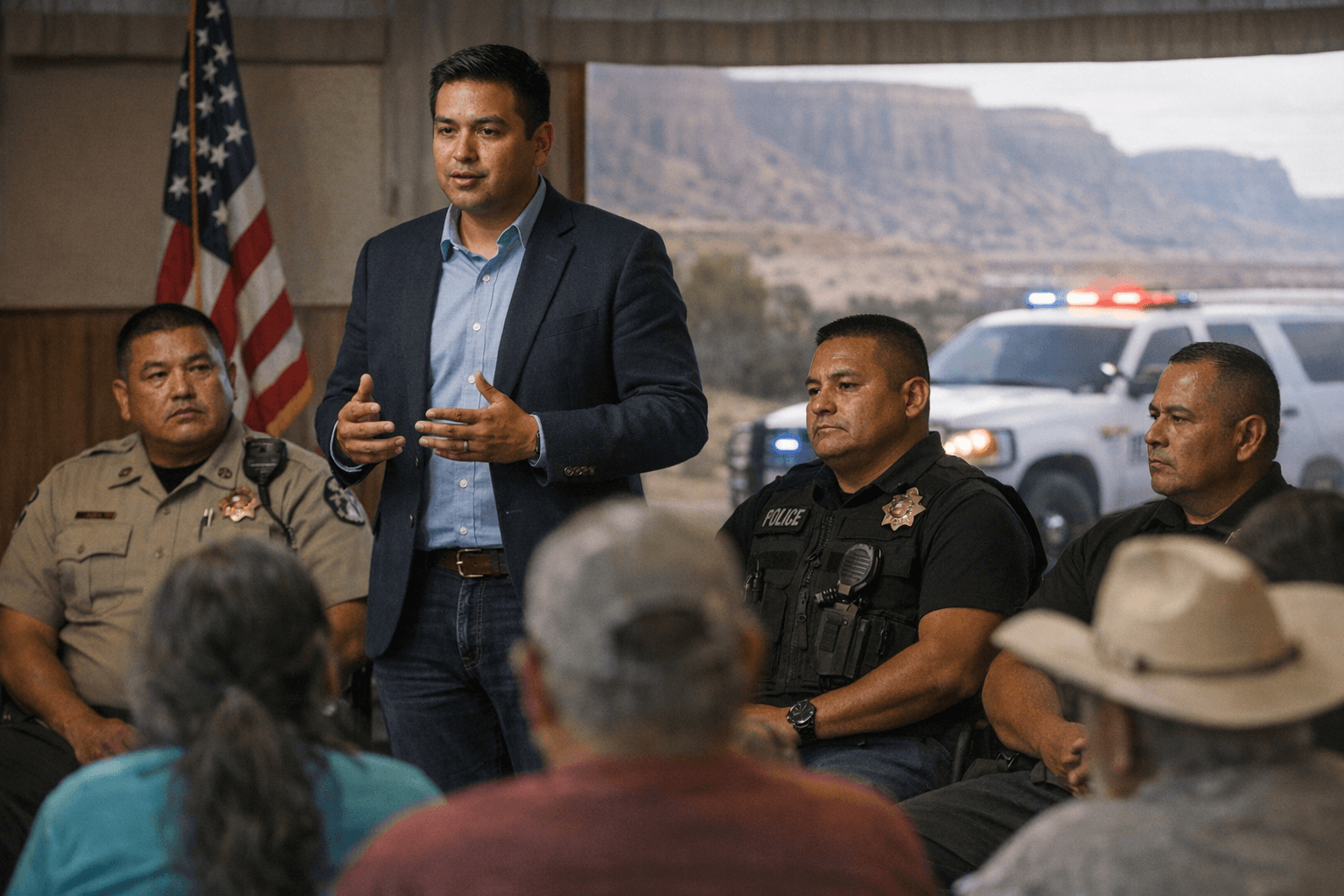
Vasquez held the forum as the closing stop of an April 1–3 swing through six tribal communities in New Mexico's 2nd Congressional District: Isleta Pueblo, Alamo Navajo, Acoma Pueblo, Zuni Pueblo, Ramah Navajo, and To'hajiilee. The To'hajiilee session was called in direct response to recent violence in the community, bringing together law enforcement officers, local officials, and community members to press the congressman on what federal action looks like in practice.
The conversation at To'hajiilee Chapter zeroed in on staffing shortages and long emergency response times as the community's sharpest public safety pain points, alongside the broader question of how Congress can better fund tribal law enforcement infrastructure. Vasquez identified two legislative priorities as his answers: the Parity for Tribal Law Enforcement Act and the Indian Programs Advance Appropriations Act.
The Parity for Tribal Law Enforcement Act targets the compensation gap that pushes officers away from tribal postings toward better-paying jurisdictions, leaving communities like To'hajiilee with open positions that directly extend the response times raised in the forum. The Indian Programs Advance Appropriations Act would provide tribes with greater funding predictability by removing annual budget uncertainty from program operations.
On funding already secured, the current fiscal year's appropriations bill directed $570 million nationally to Tribal Public Safety and Justice programs, a $14.5 million increase over the prior fiscal year. Whether that increase translates to filled positions and shorter response times in To'hajiilee depends on what the pending legislation unlocks.
"Since being elected to office, I have maintained my steadfast commitment to Indian Country in our district and across the state," Vasquez said. "Over the last week, I heard directly from Tribal leaders, educators, students, seniors, parents, and public safety officials about their concerns and opportunities. Those conversations will continue to guide my work in Congress."
The To'hajiilee forum was part of a broader three-day conversation that also addressed education, housing, health care, and water rights across the district's tribal communities. Public safety, Vasquez acknowledged, remained the sharpest thread running through all six stops.
This article was produced by Prism’s automated news system from verified source data, official records, and press releases, then run through automated quality and moderation checks before publishing. The system is built and supervised by the people who set the standards it runs under. Read our full AI policy.
Did this article answer your question?