Gallup Approves Automated Speed Cameras, City Prepares Enforcement
The Gallup City Council approved a contract with NovoaGlobal to install automated speed cameras, advancing a program aimed at reducing dangerous speeding on local roads. The decision affects school zones and busy corridors, and residents should expect mailed notices, fines or community service options, and a new municipal workload for processing violations.

On Dec. 16 the Gallup City Council approved a contract with safety equipment supplier NovoaGlobal, Inc., moving the city closer to using automated speed cameras to address a documented speeding problem. NovoaGlobal has been developing the agreement for more than a year, and company representative Heidi Traveso worked with city staff and the Gallup Police Department to collect speed data throughout 2024. The study identified frequent speeding of 10, 15, or even 20 miles per hour over limits on roads including Mentmore and Coal avenues, and Traveso said Gallup was on par with much larger Albuquerque when population was factored in.
The initial rollout will include five fixed cameras, though the contract allows up to 18 installations. The first fixed locations identified were the 500 block of East Aztec and Park avenues, Mendoza Road, Churchrock Street between the Red Rock 10 theater and Rehoboth Christian High School, and the 700 block of East Montoya Boulevard. Officials also said mobile units will be used in school zones and could be deployed to frequently complained about locations such as Ford Canyon Drive.
Traveso described the technology as a tool to free officers for other duties, stating, "They allow locations around the city to be monitored for speeding and it allows the officers to be involved in the community, or to be following up on their cases or to be handling 911 calls; all those things that require human contact and interaction. That’s where you want your officers spending their time." She added that video reviews by a law enforcement officer typically take about 20 seconds and that the system saves significant staff time, calling it, "[It’s] more of a net than a fishing pole."
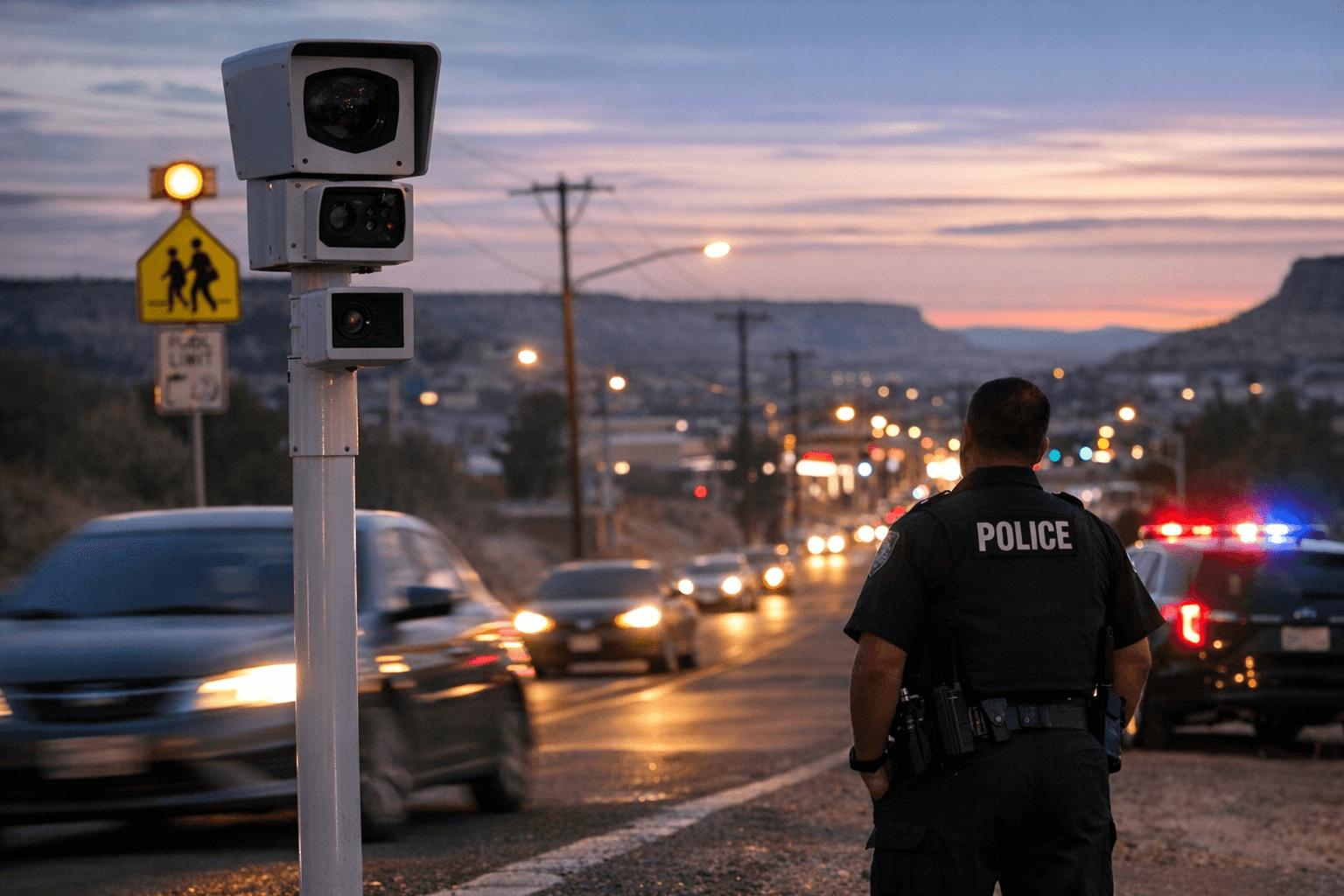
Under the contract NovoaGlobal will provide installation, calibration, operation, training, citation processing assistance, maintenance, public education, reporting, and expert witness support if needed. There is no upfront payment from the city. NovoaGlobal will receive $27 for each speeding violation processed, and the city will pay $3,500 per month for each fixed installation and $4,500 per month for each portable installation ordered. Violations will trigger a mailed notice offering a fine of up to $100 or the option to complete four hours of community service, with Gallup Municipal Court handling cases and appeals available to district court.
The city expects to hire a full time clerk to manage the caseload, and the police department will use existing staff and overtime for processing. NovoaGlobal typically takes about 90 days to set up cameras after contract signing, and the city plans an extensive public notice campaign and a 30 day warning period with no penalties when cameras first go live. Traveso said the warning period often produces rapid change, noting, "After we implement the first 30 days with the warnings and the signs go up, there’s a huge drop, like 70 percent." The new program is intended to reduce speed related risks near schools and busy corridors, while shifting officer time back to community policing and emergency response.
This article was produced by Prism’s automated news system from verified source data, official records, and press releases, then run through automated quality and moderation checks before publishing. The system is built and supervised by the people who set the standards it runs under. Read our full AI policy.
Did this article answer your question?