Gallup Council to Consider $800K Engine Purchase, $3M Wastewater Grant
Gallup council met to weigh an $800,000 emergency fire engine purchase after Engine 4 failed and to accept a $3 million state grant for wastewater plant upgrades, affecting public safety and infrastructure.
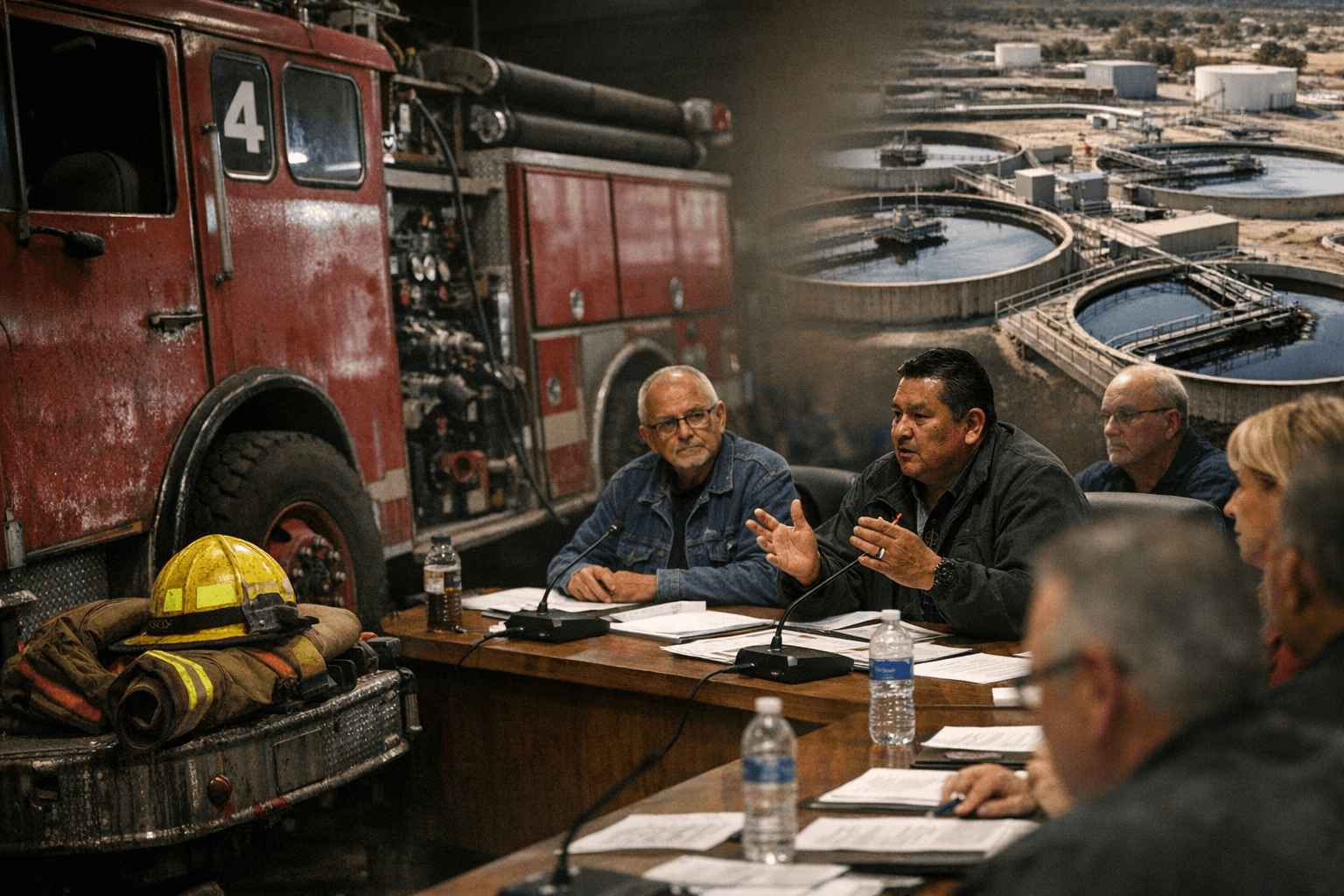
The Gallup City Council convened a special meeting to consider two high-cost, high-priority items that could reshape the city’s public safety capacity and wastewater infrastructure. The agenda posted January 16 listed a proposal to transfer and use $800,000 to buy a stock fire engine after Engine 4 suffered a total failure, and Resolution R2026-6 to accept a New Mexico Special Appropriation Grant Agreement No. 25-ZJ5039 awarding $3,000,000 for planning, design, construction and equipment improvements to Gallup’s wastewater treatment plant.
The engine purchase request proposed splitting funding between Fire Fund 209, which would provide $200,000, and the Vehicle Replacement Fund, which would contribute $600,000. City leaders framed the move as an urgent response to a frontline apparatus loss. For residents, the immediate concern is continuity of fire protection and emergency response. Replacing a failed engine with a stock unit could shorten lead times compared with custom orders, but pulling significant dollars from the Vehicle Replacement Fund has implications for the fleet lifecycle and future capital availability.
The $3 million special appropriation targets multiple phases of wastewater work, including planning and design through construction and equipment. State grant dollars aimed at the treatment plant reduce the need for the city to identify equivalent local funding for those components, though the resolution and grant agreement will require council acceptance and customary administrative oversight. Upgrades to the plant affect regulatory compliance, long-term operating costs, environmental protections for local waterways, and potential capacity to support growth or economic development in McKinley County.
Council business also included a closed-session agenda item invoking attorney-client privilege and potential real property acquisition under the New Mexico Open Meetings Act. The use of a closed session for legal and real estate matters is a standard municipal practice, but it narrows the public window into negotiation details and timing. Transparency advocates will likely focus on how the council documents decisions taken in closed session and how any property transactions relate to infrastructure projects such as the wastewater improvements.
The decisions before the council illustrate the trade-offs municipal officials face between urgent repairs and long-term capital planning. Funding an emergency apparatus purchase can preserve response capability but may accelerate the need to replenish replacement reserves. Accepting a state grant for the wastewater plant can advance needed upgrades while concentrating oversight responsibilities on project management and adherence to grant conditions.
For Gallup residents, the immediate effects to watch are fire department readiness and any follow-up budget adjustments that alter service levels or capital planning. Over the longer term, wastewater plant improvements could affect permit compliance, environmental health, and capacity for local development. The council’s next steps will include final votes, budget amendments if approved, and public reporting on procurement timelines and project milestones. Monitor city council minutes and subsequent agenda postings for official outcomes and implementation details.
This article was produced by Prism’s automated news system from verified source data, official records, and press releases, then run through automated quality and moderation checks before publishing. The system is built and supervised by the people who set the standards it runs under. Read our full AI policy.
Did this article answer your question?