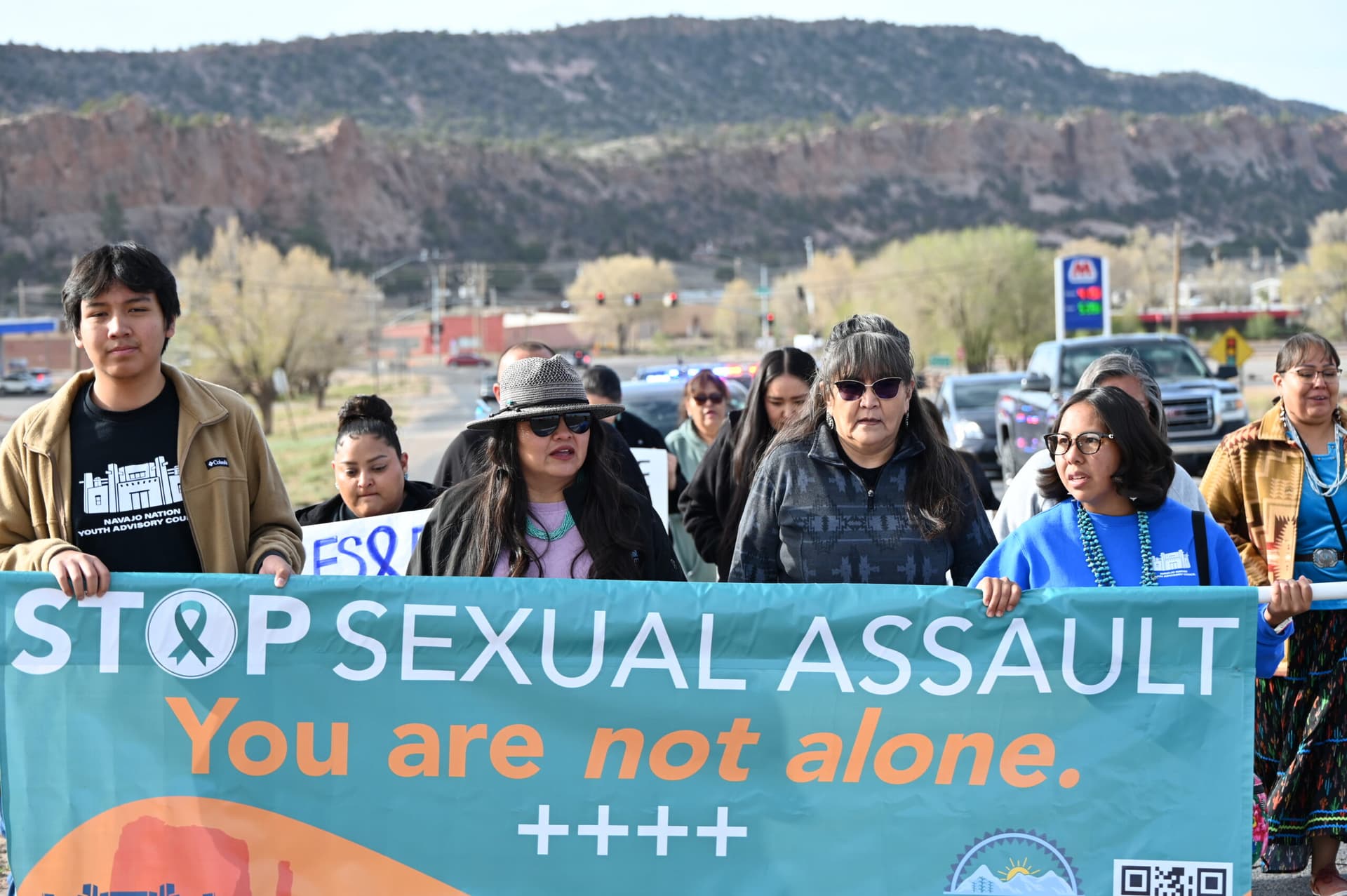
Gallup Event Combines MMIP Documentary, Talking Circles, and Community Resources
Christine Means lost her sister to a 2015 Gallup murder; the March 29 El Morro event gave families like hers direct access to MMIP investigators, DNA registration, and alert-system guidance.
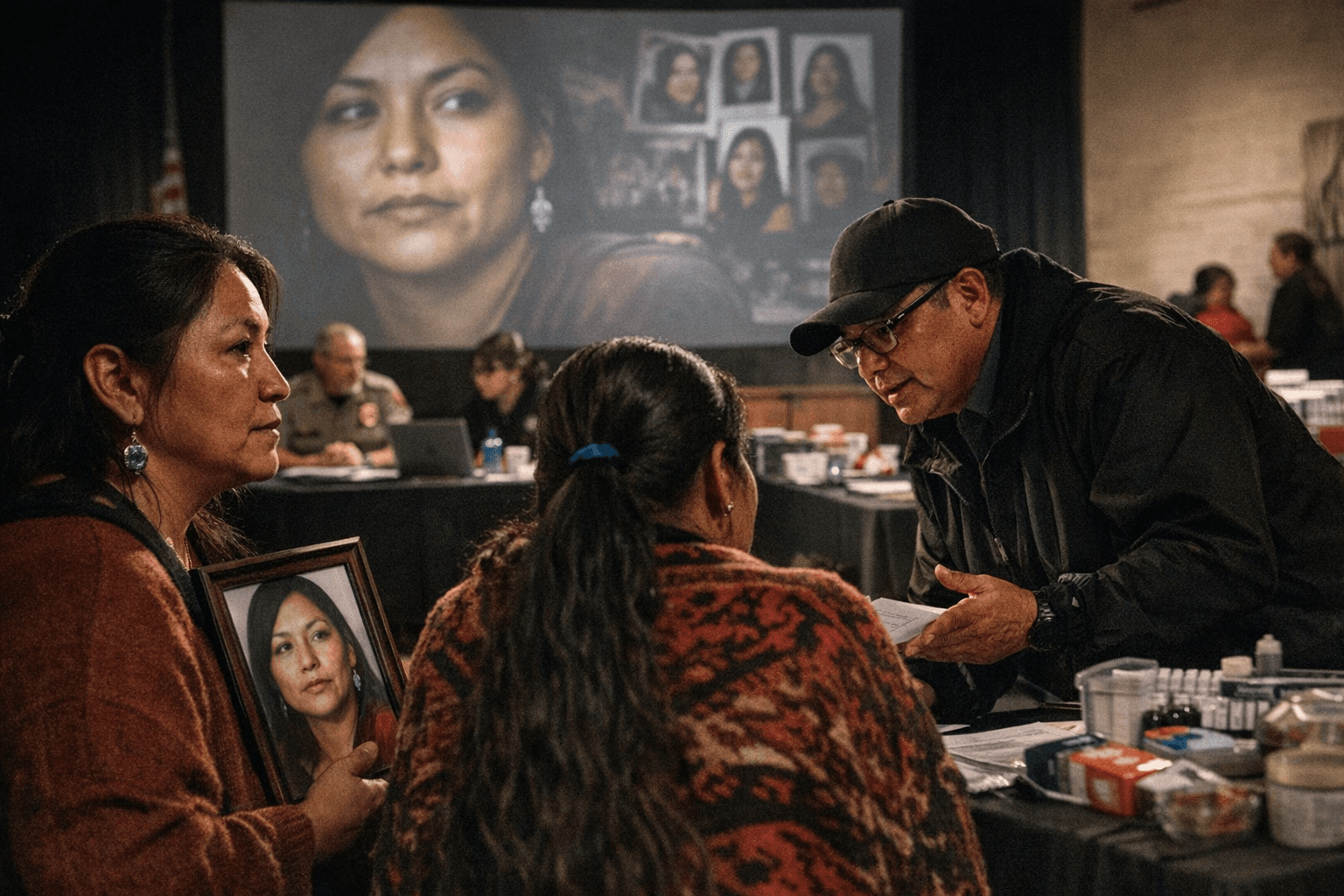
For Christine Means, the March 29 stop at El Morro Theatre was not an abstract public-health forum. Means, whose heritage spans Arikara, Dakota, and Navajo nations, lost her sister Dione Thomas to a fatal domestic violence incident in Gallup in 2015. Thomas's case became the center of "She Cried That Day," the Indigenous-led documentary that anchored the Good Heart Medicine Tour when it arrived in Gallup that Sunday morning.
The free daylong event, organized by the Fund for Nonviolence together with the film's production team, opened its doors at 10:30 a.m. and ran through the afternoon. Beyond the screening, attendees joined facilitated talking circles, received on-site emotional support services, and shared a free community lunch while local and state agencies staffed resource tables focused specifically on MMIP cases.
The law-enforcement component of the day was substantive. Leadership from the McKinley County Sheriff's Office, representatives from the New Mexico State Police, and personnel from the New Mexico Department of Justice took part in public panels and Q&A sessions. Officials walked families through the mechanics of open missing persons cases: how to submit tips to investigators, how to request formal case updates, and how to register DNA samples with state authorities. They also clarified how New Mexico's public-alert tiers work in practice, including the distinctions among the Amber, Silver, Turquoise, and Brittany alert systems and how tribal, county, and state mechanisms are supposed to coordinate.
That transparency carries real stakes in McKinley County. Data compiled by the New Mexico Missing and Murdered Indigenous Women and Relatives Task Force found that between 2014 and 2019, Indigenous people accounted for 52 percent of all missing persons cases in McKinley and San Juan counties combined. Nationally, documented rates of violent crime against Native American women remain sharply elevated. Families in rural counties have routinely faced long delays receiving DNA results or formal case updates, leaving them without information for months or years at a stretch.
The Fund for Nonviolence and the filmmakers built the tour's format to address those specific gaps: a documentary that provides a shared emotional and factual foundation, followed by panels that translate that foundation into actionable guidance. Organizers described the event as trauma-informed and culturally appropriate, designed to reduce the institutional distance that often keeps affected families from engaging directly with investigators.
McKinley County families navigating an active missing persons case or seeking to engage law enforcement on MMIP concerns have several concrete steps available now. The New Mexico Department of Justice operates an online MMIP portal, launched in March 2024, where families can submit tips, file new reports, and inquire about the status of existing cases. DNA samples can be registered through the New Mexico Department of Public Safety's Missing Persons Information Clearinghouse. Families can contact the McKinley County Sheriff's Office directly to request case-specific updates or ask for referrals to investigators. Knowing which alert tier applies to a given situation, whether Amber for a child, Silver for a senior, Turquoise for a tribal member, or Brittany for an at-risk adult, can help families press for faster public notifications from the moment someone goes missing.
The Gallup stop was one leg of a broader tour, but the documentary's roots in Dione Thomas's story, and in the city where she died, gave the day a specificity that outside-in forums rarely carry.
This article was produced by Prism’s automated news system from verified source data, official records, and press releases, then run through automated quality and moderation checks before publishing. The system is built and supervised by the people who set the standards it runs under. Read our full AI policy.
Did this article answer your question?