Gallup Sees 51-Degree Swing Before Noon, NWS Warns of Extreme Variability
Gallup hit 21°F at dawn and 72°F before noon on March 19, a 51-degree swing NWS Albuquerque says reflects dangerous diurnal extremes driven by dry conditions.
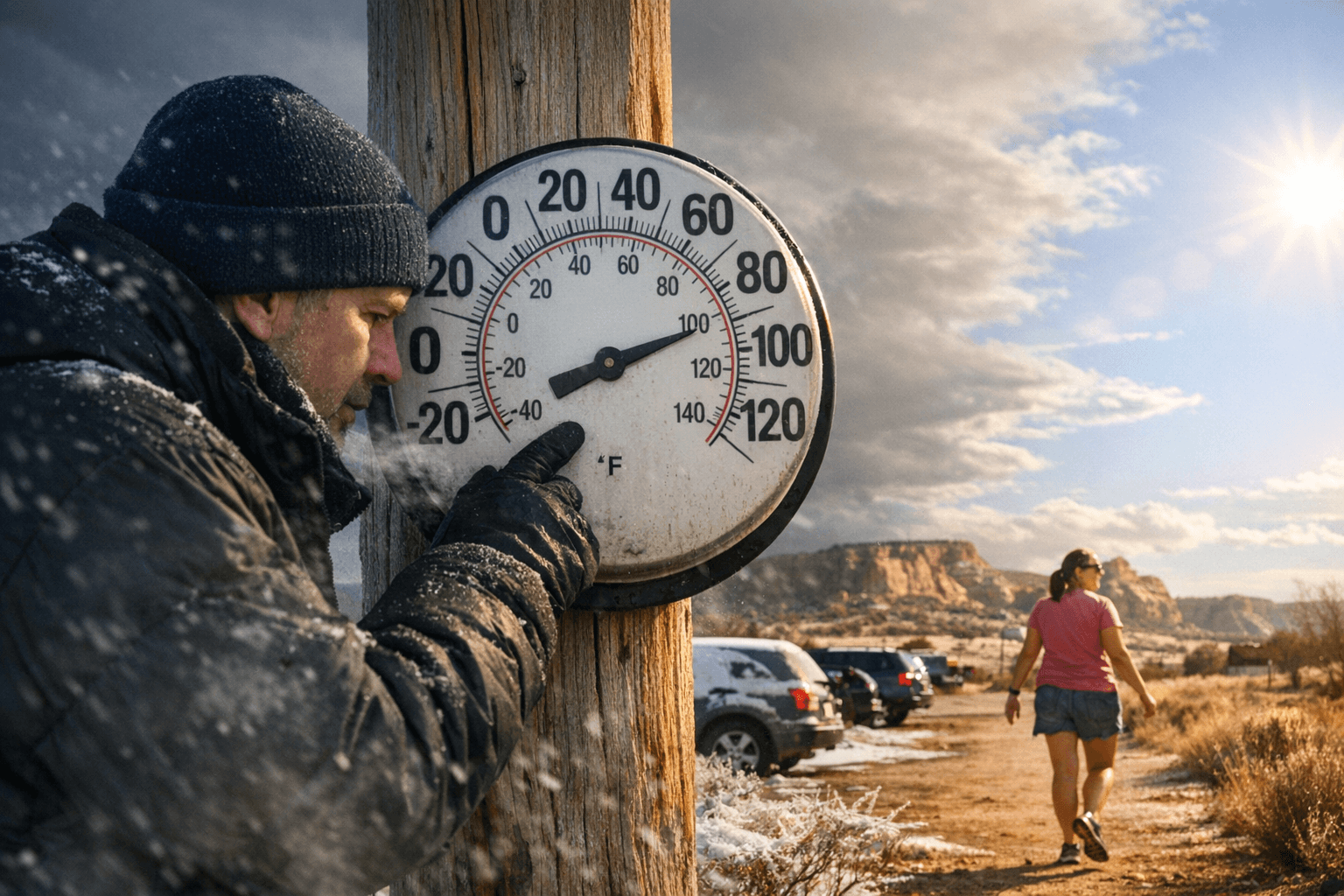
Gallup recorded a 51-degree temperature swing in a single morning, climbing from 21°F to 72°F before noon on March 19 in what the National Weather Service in Albuquerque is flagging as a sign of extreme and potentially hazardous weather variability across McKinley County.
The jump, which compressed a range typically spread across seasons into a matter of hours, occurred during a dry stretch that NWS Albuquerque says is enabling diurnal swings exceeding 60°F. Without sufficient moisture in the soil or atmosphere to moderate heat absorption and nighttime radiative cooling, temperatures in high-desert terrain like the Gallup area can behave more like a cast-iron skillet than a climate, heating and shedding warmth at rates that strain both infrastructure and the human body.
A 51-degree swing before midday is not a curiosity. It means anyone who left home in a heavy coat at sunrise was overdressed by mid-morning, and that conditions suitable for a hard freeze just hours earlier had given way to temperatures more typical of a warm spring afternoon. For McKinley County residents managing livestock, working outdoor jobs, or dealing with older housing stock prone to pipe stress, that kind of oscillation carries real consequences.
NWS Albuquerque's warning focuses on the structural driver: dryness. When precipitation is scarce and humidity stays low, there is little thermal buffering. Nights drop sharply and days overshoot. The agency's alert about swings exceeding 60°F suggests March 19 was not an isolated outlier but a pattern the region should expect to continue under current atmospheric conditions.
Gallup sits at roughly 6,500 feet in elevation, and its high-desert position already predisposes it to wide daily temperature ranges. But the scale recorded Thursday morning, more than half the span between water's freezing and boiling points compressed before the clock hit twelve, represents the kind of meteorological whiplash that NWS watches carefully for its downstream effects on fire weather, road conditions, and public health.
This article was produced by Prism’s automated news system from verified source data, official records, and press releases, then run through automated quality and moderation checks before publishing. The system is built and supervised by the people who set the standards it runs under. Read our full AI policy.
Did this article answer your question?


