Gallup’s Inter-Tribal Indian Ceremonial marks century of Native arts and tradition
Gallup’s biggest Native cultural gathering returns to Red Rock Park with a marketplace, parades, rodeo, and century-old traditions that still shape the city.
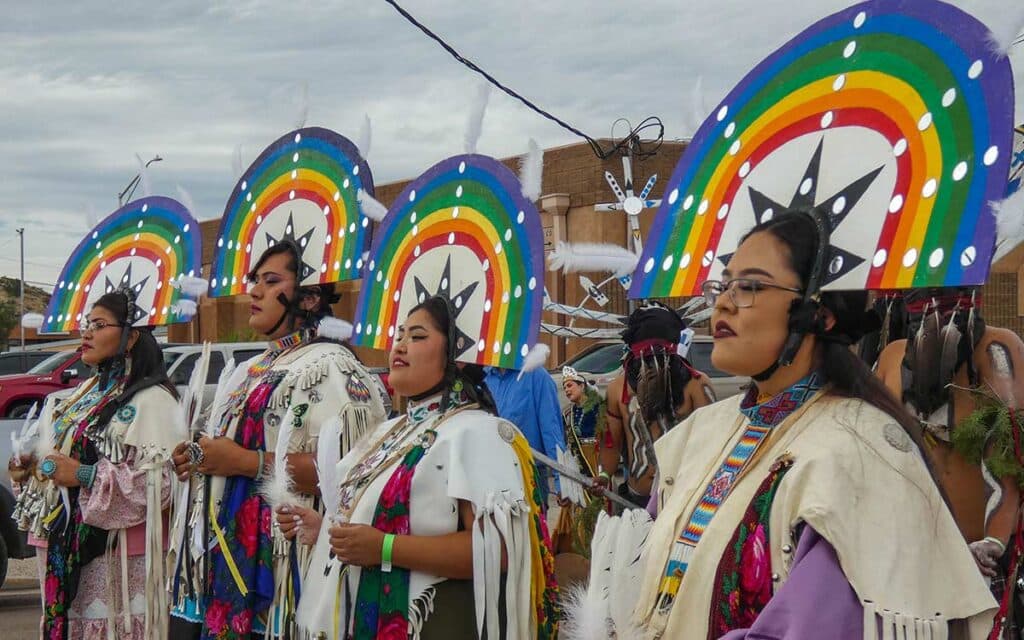
The 104th Gallup Inter-Tribal Indian Ceremonial is set for July 31 through August 9, 2026, at Red Rock Park, with the parade tradition reaching into downtown Gallup and admission listed at $15 per person.
What visitors will find this year
The Ceremonial is not a single performance or a one-day fair. It centers on an Indoor/Outdoor Marketplace and a Ceremonial Showroom, where visitors can expect genuine Indian fine arts that include Navajo rugs, katsinas, jewelry, pottery, and basketry. That core market is paired with a full schedule that also includes socials, rodeos, parades, a Ceremonial Queen Pageant, junior and ladies competitions, a film festival, and a 5K walk/run.
Exhibit Hall Opening Night is $27.85 per person. The larger run of events is built around Red Rock Park, but the city itself becomes part of the venue when the parade moves through downtown Gallup.
A practical way to think about the week is this:
- Red Rock Park is the main hub for the marketplace, showcase events, and most of the programmed activity.
- Downtown Gallup carries the parade tradition into the business district.
- The Marketplace and Showroom are the best places to look for Native fine arts and crafts made for both local buyers and visiting collectors.
- Rodeo, dance, and pageant events give the Ceremonial a wider audience beyond the arts market.
Why the event still matters to Gallup
It is a century-old tradition shaped by many caretakers, with support from the City of Gallup, the Gallup Inter-Tribal Indian Association, Inc., McKinley County, the State of New Mexico Tourism Department, the Intertribal Ceremonial Office, and generations of volunteers.
For artists, the Ceremonial is a direct marketplace where Native work is seen, sold, and judged in a setting that has long been tied to Gallup’s identity. For families, it is a place to see dances, rodeo traditions, and community competitions in one stretch of days rather than as isolated events. For businesses, the influx of visitors helps sustain the hotels, restaurants, shops, and trading-post economy that has long defined the city’s role in western New Mexico.
A century of documented roots
Official histories date the first Gallup Inter-Tribal Indian Ceremonial to September 28, 1922, and New Mexico Tourism describes it as one of the state’s oldest events and one of the oldest continuous recognitions of Native American culture and art. A University of New Mexico thesis traces that founding to citizens of Gallup, then an isolated frontier coal-mining city, who created the Inter-Tribal Indian Ceremonial Association in 1922 to stage an annual demonstration of Indian ceremonialism and a display of Indian arts and crafts, twelve years before a paved highway connected the city to the outside world.
There is some variation in the earliest record. A historical marker places the first Ceremonial on September 22, 1922 and says traders and the Chamber of Commerce helped initiate it. On the marker, early Native participants came in wagons and camped in the surrounding hills while tourists arrived in automobiles on dirt roads.
What the early history reveals about the event now
Gallup did not build this tradition after the city became easy to reach or after Native arts were already mainstream in tourism. It was created in an isolated mining town, in a period when the city’s connection to the rest of the region was still limited.
Traditional dance and parade culture remain central, but the schedule also makes room for newer crowd draws like the film festival and the 5K walk/run.
Why people still show up
Navajo Nation President Buu Nygren attended the 103rd Ceremonial in 2025, and the Navajo Nation Office of the President and Vice President emphasized the song, dance, rodeo traditions, and community connection that continue to draw Native leaders and local audiences.
For McKinley County, the Ceremonial remains one of the few events that can draw artists, traders, families, tourists, and local institutions into the same civic space for more than a week.
This article was produced by Prism’s automated news system from verified source data, official records, and press releases, then run through automated quality and moderation checks before publishing. The system is built and supervised by the people who set the standards it runs under. Read our full AI policy.
Did this article answer your question?


