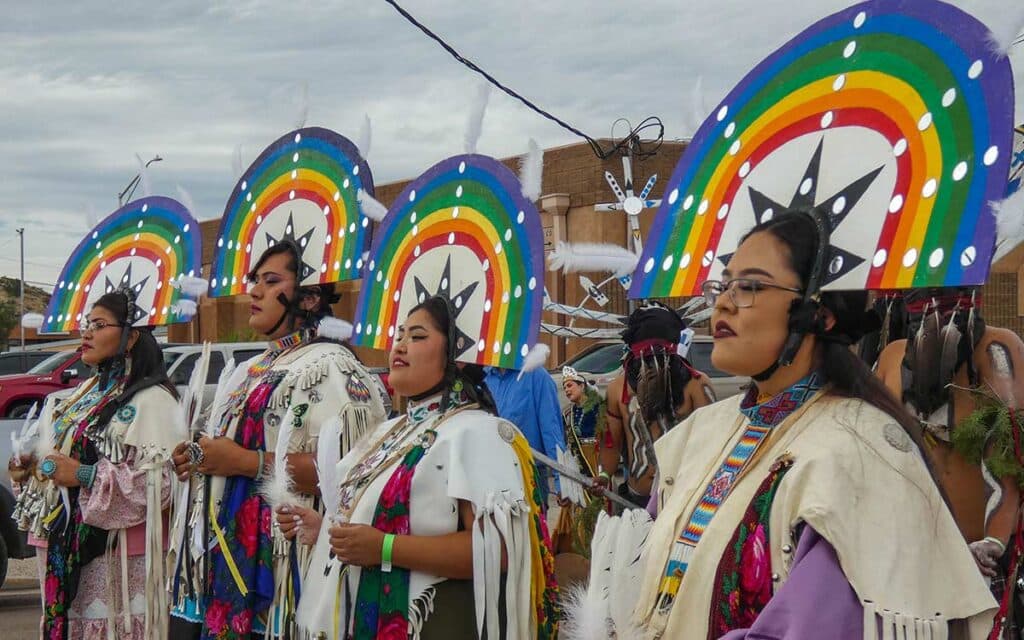
Hawikuh’s legacy ties Zuni Pueblo to McKinley County history
Hawikuh is not just an archaeological site. It is part of Zuni Pueblo’s living homeland, where centuries of history still shape cultural authority, education, and stewardship.

Hawikuh sits at the center of a much larger story than a set of ruins near Zuni. In McKinley County, it connects the Zuni Pueblo community to ancestral settlement, Spanish colonization, Pueblo resistance, and the modern fight to have Zuni history represented on Zuni terms.
A place that still belongs to a living community
The geography alone shows why Hawikuh matters beyond a textbook history lesson. The Census Bureau identifies Zuni CCD as a county subdivision in McKinley County with 504.2 square miles of land area, while the Zuni Pueblo census-designated place covers just 8.9 square miles. That contrast captures the difference between a small townsite and the much broader tribal homeland that surrounds it.
Hawikuh lies about 12 miles southwest of the city of Zuni, New Mexico, on the Zuni Indian Reservation, off NM Route 53. The site is not a remote relic separated from present-day life. It sits inside a landscape that the Pueblo of Zuni describes as home to people who have lived in the American Southwest for thousands of years, with cultural and religious ties rooted in mountains, waterways, forests, and deserts across the ancient homeland.
That living connection matters because outsiders often flatten places like Hawikuh into a single archaeological storyline. For Zuni people, it is part of a continuing cultural geography where identity, memory, and stewardship remain active concerns, not museum labels.
From ridge-top village to Spanish contact
The original pueblo of Hawikuh stood atop a long, narrow ridge on the eastern side of the Zuni River Valley. Archaeological evidence places inhabitants there as early as the A.D. 1200s, and the site was once the largest Zuni pueblo. Long before it became a landmark, it was a major Indigenous community with its own history of settlement, architecture, and survival.
Hawikuh also entered European records early. The National Park Service identifies it as the first pueblo visited by the Spanish, after Fray Marcos de Niza and Hernando de Alvarado opened the way for Francisco Vázquez de Coronado’s expedition north. That encounter turned Hawikuh into one of the legendary Seven Cities of Gold in Spanish imagination, a label that says more about colonial greed than about Zuni life.
Mission La Purísima Concepción began at Hawikuh in 1629, adding another layer to the site’s history. The mission period did not erase the earlier pueblo history. Instead, it shows how Spanish religious and political ambitions were imposed on an Indigenous community that had already been established for centuries.
Why the site was abandoned, and why it still matters
Hawikuh was abandoned after the Pueblo Revolt of 1680, when the Zuni fortified themselves on Black Mesa. That detail matters because it places Zuni survival at the center of the story, not just Spanish arrival. The abandonment of Hawikuh marks a moment when Zuni people made a strategic decision to protect themselves in the face of colonial pressure.
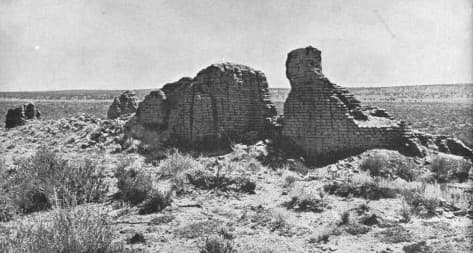
Today, the site’s significance reaches well beyond its abandonment. The National Park Service says the Zuni-Cibola Complex National Historic Landmark district is made up of Hawikuh, the Yellow House ruins, Kechipbowa, and the Village of the Great Kivas. Taken together, those sites embody hundreds of years of American Indian precontact history in the Zuni area, early Spanish contact, and the evolution of cultural practices that shaped today’s Zuni tribe.
Hawikuh was designated a National Historic Landmark in 1960 and later included in the Zuni-Cibola Complex National Historic Landmark in 1974. That places it within a rare national category, one that the National Park Service says includes more than 2,600 National Historic Landmarks in the United States. The designation recognizes the site’s importance, but the deeper authority still belongs to the community whose history it carries.
What McKinley County gains by seeing Hawikuh clearly
McKinley County’s cultural map is often reduced to highways, towns, and commercial centers. Hawikuh pushes that view wider. It shows that the county includes one of the Southwest’s most important Indigenous historical landscapes, one that cannot be understood apart from Zuni Pueblo and the Zuni Indian Reservation.
That broader view also changes how history is taught. Hawikuh links precontact settlement, Spanish expedition history, missionization, resistance, and present-day tribal identity in a single place. For students, residents, and visitors, it offers a more complete understanding of how McKinley County’s past has been shaped by Indigenous endurance rather than by colonial arrival alone.
It also challenges the habit of treating heritage sites as static. The Pueblo of Zuni makes clear that Zuni people remain tied to the ancient homeland through cultural and religious traditions. That means Hawikuh is not simply a place to look back at the past. It is part of an ongoing responsibility to preserve memory, maintain cultural authority, and resist having the story told only from the outside.
How to approach Hawikuh with respect
Anyone approaching Hawikuh should begin with the recognition that this is Zuni land and Zuni history. The site’s value is not just in its age or its ruins, but in the fact that it remains tied to a living Pueblo community that continues to define its own identity and traditions.
- Treat Hawikuh as part of the Zuni homeland, not a detached tourist stop.
- Center Zuni interpretation of the site rather than colonial myths about the “Seven Cities of Gold.”
- Understand that the landscape is tied to cultural and religious traditions, not only archaeology.
- Recognize that preservation is also about who has authority to speak for the place.
Respectful engagement starts with a different mindset:
That approach matters in McKinley County because Hawikuh is not an isolated chapter in a history book. It is a place where ancestral settlement, colonial intrusion, Pueblo resistance, and present-day Zuni stewardship still overlap. In that overlap is the real story: a community that continues to define its history, protect its homeland, and insist that its past be understood as part of its present.
This article was produced by Prism’s automated news system from verified source data, official records, and press releases, then run through automated quality and moderation checks before publishing. The system is built and supervised by the people who set the standards it runs under. Read our full AI policy.
Did this article answer your question?