GMCS Outlines Path for Students to Earn State Bilingual Seal
GMCS outlines how students can earn NM's bilingual seal — a diploma credential that can open doors to healthcare, court, and tribal government jobs in McKinley County.

A bilingual high school diploma carries weight at the Gallup Indian Medical Center's interpretation desk, at McKinley County District Court, and at Navajo Nation chapter houses across the region — institutions that need workers who can move fluently between English and another language. The Gallup-McKinley County Schools Cultural Education Department laid out exactly how students can earn that credential during a presentation to district stakeholders April 3.
New Mexico's State Seal of Bilingualism-Biliteracy, adopted by the state Board of Education in 2015, recognizes graduating seniors who demonstrate proficiency in English and at least one other language. The distinction appears on diplomas and official transcripts, giving students a verifiable credential for college admissions, job applications, and tribal government hiring. Department staff framed the program as both academic recognition and a community-cultural priority, noting it "recognizes students who master two languages."
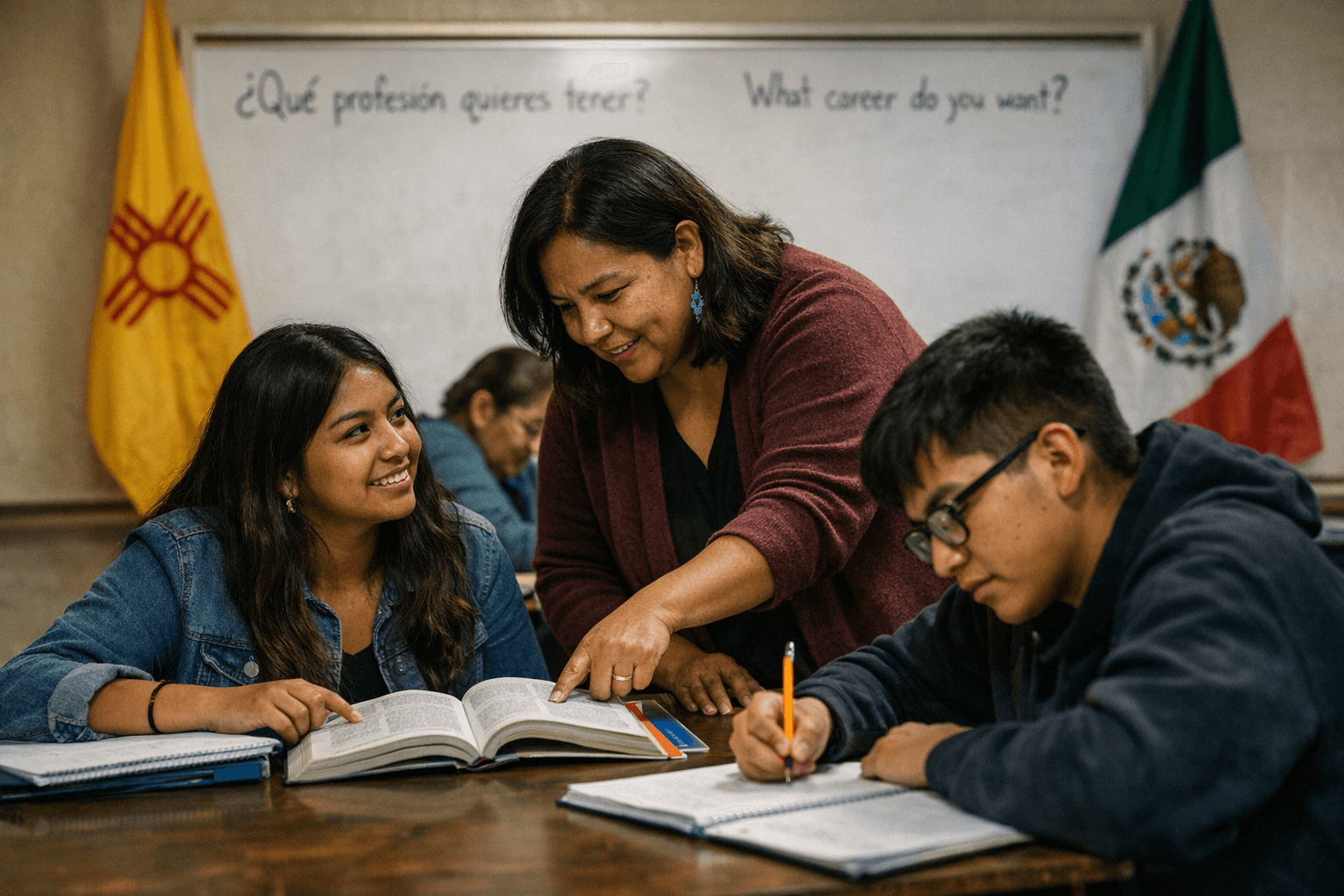
GMCS supports qualifying paths through Navajo, Zuni, Spanish, and other heritage languages. Students can earn the seal through four state-approved options. The standard route requires four units of credit in the target language at a grade of C or higher, paired with a qualifying exam score: a 3 or higher on an Advanced Placement language exam, a 4 or higher on an International Baccalaureate higher-level exam, or passing a nationally recognized language proficiency assessment. For Navajo and Zuni speakers, the state allows a tribal nation to certify proficiency directly, bypassing the standardized testing requirement entirely.
The biggest local bottleneck sits between fluency and paperwork. Many GMCS students who speak Navajo or Zuni daily at home have the language ability the seal is designed to recognize but never completed formal coursework that generates transcript credits. For those students, a portfolio pathway exists: a formal presentation, an interview before a panel of at least three district staff and community members who are proficient in the target language, and a student-produced work sample. The state requires the portfolio to address both receptive and expressive language skills.
Here is where the gap stands locally: a January 2025 regional education laboratory study examining the seal statewide found 28 districts had formally adopted it. McKinley County's own Zuni Public School District, a small tribally controlled district serving the Zuni Pueblo, was among the 12 districts selected for the program's evaluative focus groups. GMCS, the county's dominant district and the largest by geography in New Mexico, was not.
For students looking to qualify before this spring's graduation window, the first step is a conversation with a school counselor to verify language credit eligibility and identify the correct assessment track. AP exam registration windows are time-sensitive and close well before test dates, making spring 2026 effectively closed for new registrants. Students who speak Navajo or Zuni as a home language should ask specifically about the tribal certification and portfolio options. Families can contact the GMCS Cultural Education Department through the district's central office to ask about assessment scheduling, counselor referrals, and heritage language portfolio guidance for the 2026-2027 school year.
This article was produced by Prism’s automated news system from verified source data, official records, and press releases, then run through automated quality and moderation checks before publishing. The system is built and supervised by the people who set the standards it runs under. Read our full AI policy.
Did this article answer your question?