Governor signs medical compacts, Immigrant Safety Act and $1.5B road bonds
Governor signs four bills easing out-of-state licensure, banning local ICE detention contracts and authorizing $1.5B in road bonds, affecting health access and local infrastructure.
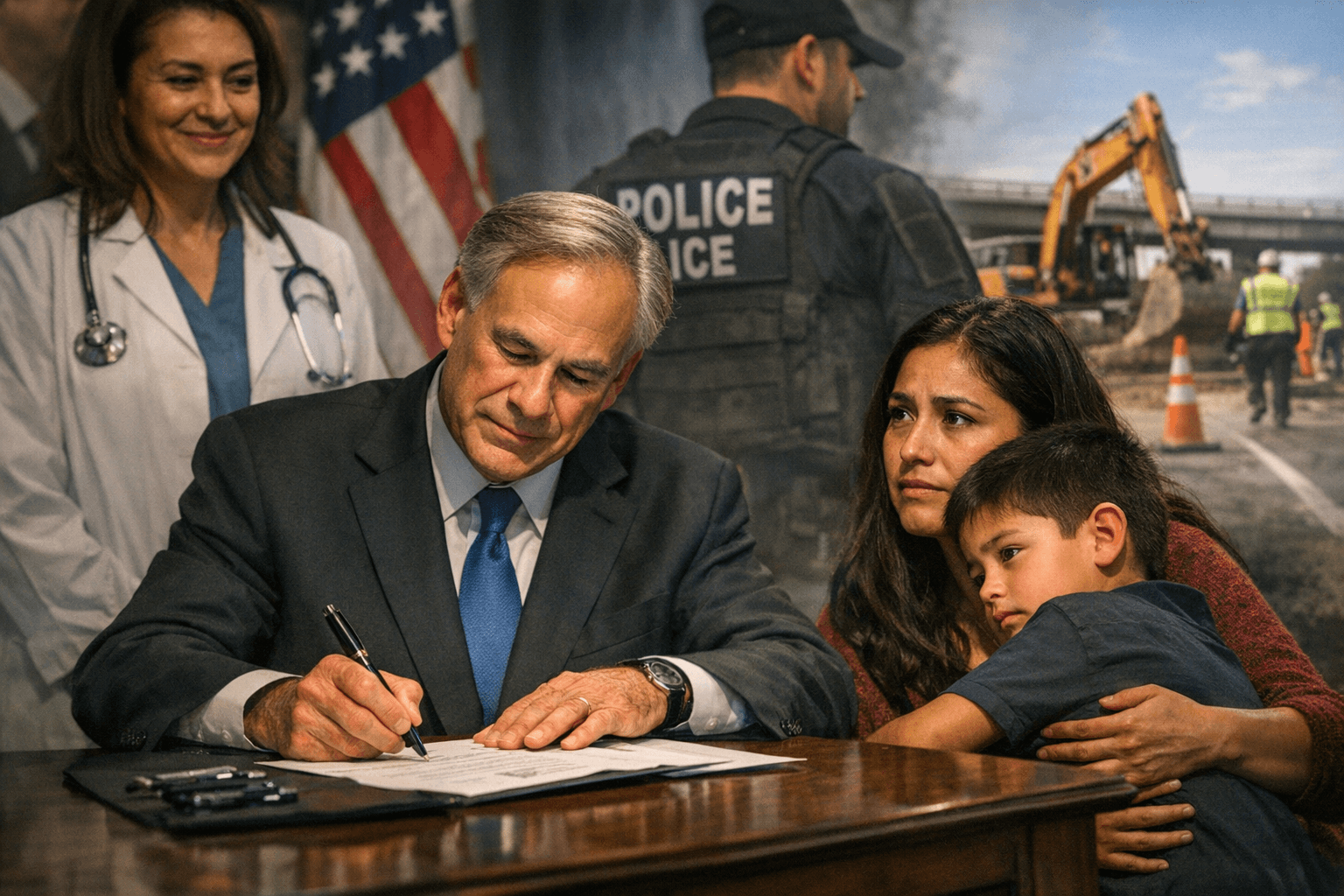
The governor signed four bills Feb. 5 that state leaders say will expand the health workforce, restrict local immigration detention agreements and inject $1.5 billion into road projects statewide. The measures include an interstate medical licensure compact, a social work licensure compact, the Immigrant Safety Act and a transportation bond package that officials portray as mid-session progress on urgent community needs.
The signing took place Thursday morning with lawmakers from both parties in attendance, including House Speaker Javier Martinez, Senate Majority Leader Peter Wirth and Sen. Mimi Stewart of Albuquerque. State materials describe the medical licensure measure, Senate Bill 1, as allowing physicians licensed in other compact states "to practice in New Mexico more easily." Local reporting noted House approval of SB1 was unanimous and that the governor had a three-day window to sign or let it become law without a signature.
Coverage of SB1 varies on how the compact will operate. KOAT described the measure as potentially "automatically licensing out-of-state doctors when they come to New Mexico" and added that out-of-state doctors cannot provide advice over the phone without a New Mexico license. Sen. Mimi Stewart said, "[i]t’s really that bipartisan work that has got us here, and I want to thank the party across the aisle for that help."
House Bill 50 creates a parallel interstate compact for social workers to ease mobility for licensed social workers seeking to practice in New Mexico. The governor's office framed both compacts as ways to expand the pool of doctors and social workers serving rural and underserved communities.
House Bill 9, the Immigrant Safety Act, "Prohibits state and local governments from entering into or renewing agreements to detain individuals for federal civil immigration violations and requires termination of any existing such agreements. The bill also prevents public entities from using public property to facilitate immigration detention while preserving law enforcement’s ability to conduct lawful investigative stops and detentions under state law." Sponsors listed in reporting include Reps. Eleanor Chávez, Andrea Romero, Marianna Anaya, Angelica Rubio and Sen. Joseph Cervantes. Advocacy groups hailed the law; Jared Berenice of The Semilla Project said, "Governor Lujan Grisham’s signature on HB 9 Plus, the Immigrant Safety Act, is a historic and deeply meaningful victory for New Mexico… For immigrant and mixed-status families, this law represents relief, dignity, and the simple freedom to live without fear. It means parents can take their children to a park, families can gather on public lands, and young people can enjoy the outdoors without worrying about surveillance, detention, or being torn apart. By signing HB 9 into law, New Mexico is choosing care over cruelty and community over fear, and affirming that true public safety is rooted in trust, belonging, and respect for both our people and the land we share. This victory honors the courage of our communities and makes [...]" Arturo Castillo of Conservation Voters New Mexico added, "Today marks an important moment in our history… Detention centers have long been a source of human rights and environmental harms on our people and land. By signing HB 9, the Immigrant Safety Act, into law, New Mexico says loud and clear that enough is enough."
Senate Bill 2 authorizes $1.5 billion in bonds for road construction projects across the state. State materials presented the figure as an authorization; KOAT noted the funding is structured "over 20 years" and cited Consumer Affairs research that poor road conditions cost New Mexico drivers more than $1,000 in vehicle repairs. Officials framed the package as addressing safety and infrastructure needs.
Governor Michelle Lujan Grisham called the bills "major progress on issues that matter to working families" and said, "Halfway through the session, we’re showing what’s possible when we focus on getting things done for New Mexicans. These bills represent major progress on issues that matter to working families, including safer roads, and more doctors and social workers to serve our communities. I look forward to getting even more done with lawmakers during the second half of the session." She also said, "I’m feeling good, I don’t want to jinx it, about fully funding universal child care."
For McKinley County residents the measures promise potential gains and open questions. Expanded licensure pathways could help recruit doctors and social workers into Gallup and surrounding rural communities, while the road bonds may free state match money for highway and local road repairs. The Immigrant Safety Act removes a tool local governments have used to contract for federal detention, but local officials must still navigate contracts signed or renewed before the law took effect; reporting showed Torrance County renewed an ICE detention contract after passage and before the governor signed the bill.
Implementation details, funding allocations and effective dates will determine how quickly McKinley County households see changes to health care access, policing practice and pavement conditions. Lawmakers and state agencies now face the work of turning the signed bills into rules, budgets and projects that deliver for local communities.
This article was produced by Prism’s automated news system from verified source data, official records, and press releases, then run through automated quality and moderation checks before publishing. The system is built and supervised by the people who set the standards it runs under. Read our full AI policy.
Did this article answer your question?