McKinley County leads New Mexico in disconnected young people
McKinley County's youth are being left behind by a system built too far from their homes and too thin on support, in a state with 32,000 disconnected young people.
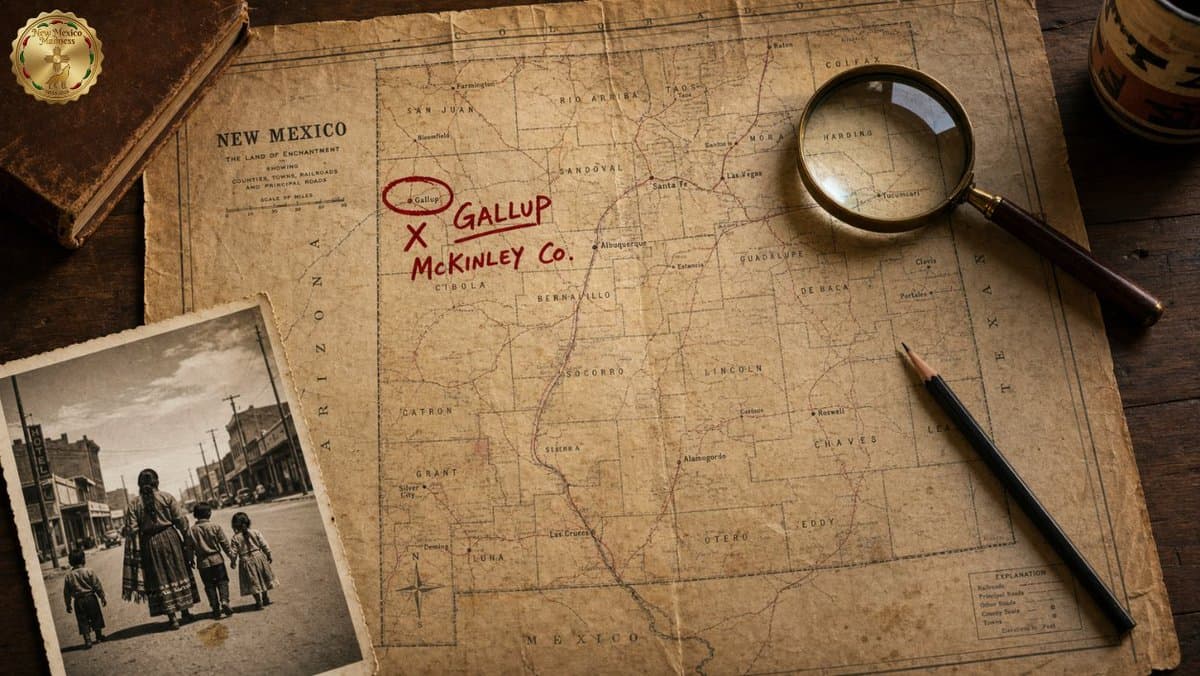
McKinley County has New Mexico’s highest rate of young people who are neither working nor in school, and the numbers point to a broader systems failure that reaches from Gallup to the county’s most remote roads. About 30% of local teens and young adults are disconnected, a rate that sits well above the state average and reflects how distance, poverty, housing instability and weak pathways from school to work combine to push young people out.
Statewide, the Legislative Finance Committee estimated in May that about 32,000 New Mexicans ages 16 to 24 are disconnected, costing the state $623 million a year in lost tax revenue. The state’s rate stands at 13%, about 2 percentage points above the national average. The report says disconnected youth are more likely to face drug use and mental health problems, lower educational attainment and criminal justice involvement, and that by their 30s they can earn $38,400 less, are 45% less likely to own a home and 42% less likely to be employed.
More than half of New Mexico’s disconnected youth live in Bernalillo, Doña Ana, San Juan and McKinley counties, a concentration that underscores how the burden is clustered in a few places rather than spread evenly across the state. McKinley County’s scale helps explain why that burden is so hard to unwind: the county covers 5,451.1 square miles, making it the state’s seventh-largest by area, and its 2024 population was estimated at 68,945. The county is 80.6% American Indian and Alaska Native alone, with a median household income of $24,950 and a poverty rate of 35.7%.
Young people surveyed for the state report pointed to housing instability, lack of skills or training, health conditions and disabilities, low wages and family care obligations as the main reasons they were not looking for work. Yet 82% said they would work or go to school if they had adequate support, a figure that puts the focus on access, not motivation. In McKinley County, where New Mexico Voices for Children says child food insecurity is 27% and only 55% of families with children have all parents employed, those barriers often arrive at once.
Local leaders are trying to respond. The 100% McKinley County Initiative at NMSU’s Anna, Age Eight Institute is building one-stop family service hubs and community-school models that connect residents to medical care, behavioral health, food, housing, transportation, parenting help, early childhood services, youth mentoring and job training. Gallup-McKinley County Schools has scheduled community listening tours in June, created an Equity Council to advance student success and named Jvanna Hanks interim superintendent effective March 2. The district’s renewed focus on attendance shows how urgently local institutions are trying to rebuild engagement, but the size of the problem makes clear that reconnecting young people will require schools, county offices, tribal partners and employers to move in the same direction, with transportation, paid training and coordinated referrals at the center of the work.
This article was produced by Prism’s automated news system from verified source data, official records, and press releases, then run through automated quality and moderation checks before publishing. The system is built and supervised by the people who set the standards it runs under. Read our full AI policy.
Did this article answer your question?


