Navajo Council Ousts Acting Attorney General, Raising Local Legal Uncertainty
The 25th Navajo Nation Council voted 19–2 on Oct. 22 to reject President Buu Nygren’s appointment of Acting Attorney General Colin Bradley, citing statutory authority and concerns over transparency and conflicts of interest. The decision leaves the attorney general’s post without a named successor, creating potential short-term impacts on legal oversight and services that affect McKinley County residents.
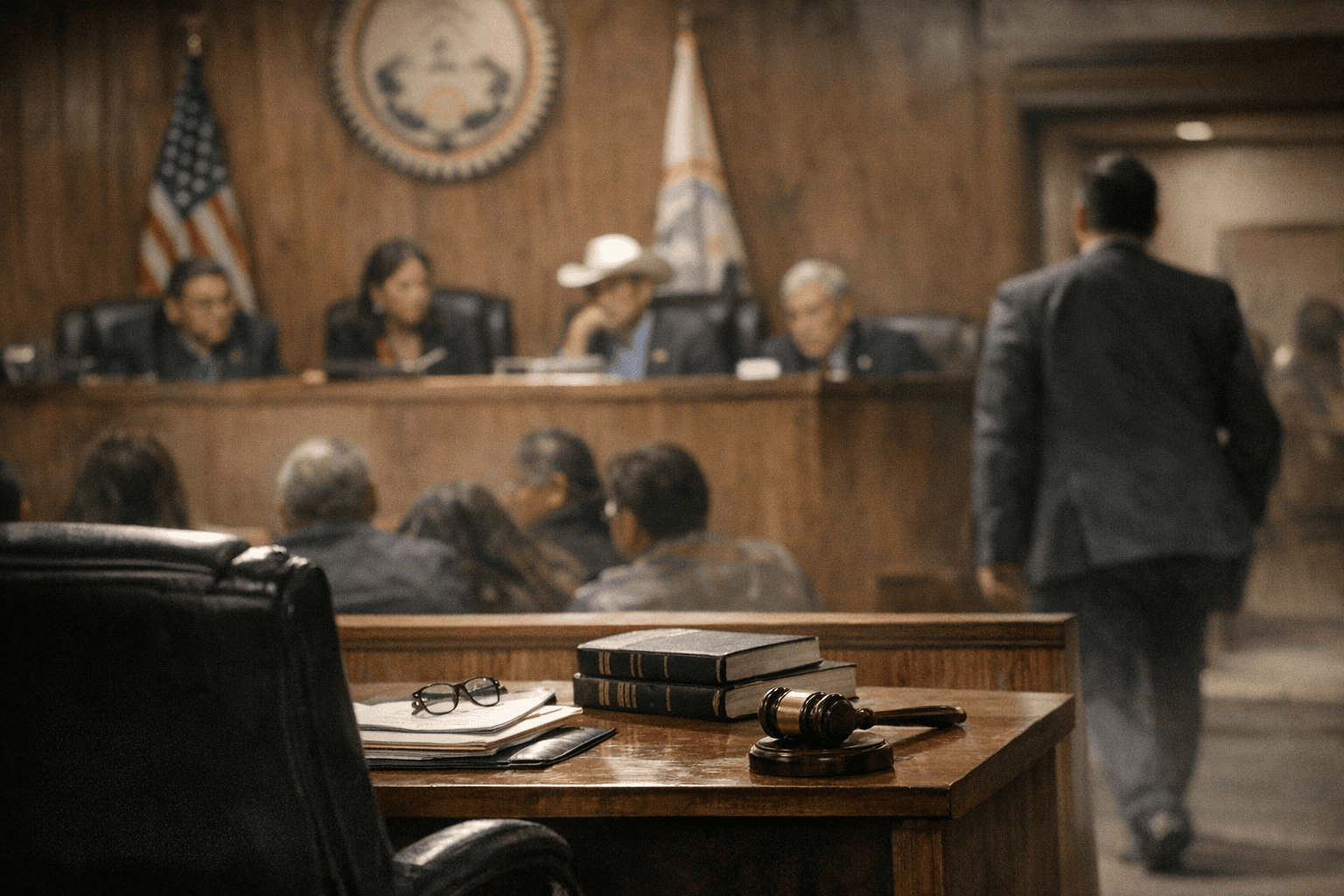
The Navajo Nation’s legislative branch exercised its removal powers Oct. 22, rejecting President Buu Nygren’s choice for acting attorney general after a 19–2 vote by the 25th Navajo Nation Council. Council leaders pointed to 2 N.N.C. § 1962(B), which they cited as authority to remove the attorney general with or without cause once the Speaker certifies the action.
Delegates who opposed Bradley’s appointment raised concerns about his refusal to answer key legal questions in public sessions and about a potential conflict of interest linked to his former law firm’s involvement in the ZenniHome investigation. Those concerns framed the council’s argument that Bradley’s continued service could undermine public trust in the Nation’s legal apparatus.
President Nygren criticized the council’s decision as discouraging to young Navajo professionals. No successor had been named as of press time, leaving an interim gap in leadership at an office responsible for representing the Nation in court, advising elected officials, and coordinating with tribal and local law enforcement.
For residents of McKinley County, where many communities fall within the Navajo Nation’s jurisdiction, the move has immediate administrative and legal implications. The Office of the Navajo Nation Attorney General handles a broad portfolio that touches land and resources, child welfare, public safety coordination, and enforcement of tribal laws. An abrupt change in leadership can slow decisions on ongoing cases, delay legal advice sought by elected bodies and departments, and complicate relationships with county and state partners who rely on stable legal representation in cross-jurisdictional matters.
The council’s action highlights a broader governance tension between the executive and legislative branches of the Navajo Nation. By invoking 2 N.N.C. § 1962(B), council leaders asserted legislative oversight authority, signaling an insistence on public accountability and transparency in legal stewardship. At the same time, the president’s administration faces the challenge of filling the vacancy in a way that restores confidence and reassures young professionals and community stakeholders.
The reference to the ZenniHome investigation underscores the sensitive nature of high-profile inquiries within the Nation. While details of the investigation and the former law firm’s role were referenced by council members as a basis for concern, the outcome of this dispute will depend on how the Nation’s institutions proceed in appointing and vetting a replacement and whether any further review or inquiry into the Attorney General’s Office’s past conduct is pursued.
Local leaders and residents now await further announcements from the president’s office and the council’s Speaker on next steps. The episode serves as a reminder of the interdependence between tribal governance and daily life in McKinley County, where legal stability and transparent processes are key to maintaining public trust and effective government services.
This article was produced by Prism’s automated news system from verified source data, official records, and press releases, then run through automated quality and moderation checks before publishing. The system is built and supervised by the people who set the standards it runs under. Read our full AI policy.
Did this article answer your question?