NMDOT Proposes Two Alternatives for Interstate 40 Miyamura Interchange
The New Mexico Department of Transportation presented an update to the Gallup City Council on a long running study of the Interstate 40 Miyamura Drive interchange, a principal gateway to downtown Gallup. The report narrowed six design concepts to two contenders, and the chosen option will shape traffic flow, safety, and downtown access while carrying potential costs for right of way and construction.

The New Mexico Department of Transportation and Horrocks Engineers informed the Gallup City Council on December 16 about progress in a study examining improvements to the Interstate 40 Miyamura Drive interchange. The presentation outlined the study scope, which evaluated traffic volumes, geometric conditions, safety concerns, and infrastructure health while incorporating input from local residents. The interchange serves as a key entry point into downtown Gallup, making both travel reliability and pedestrian connectivity central considerations for city planners and residents.
Early in 2025 the project team created six potential interchange configurations and screened them for operational feasibility and community impact. Two designs advanced to detailed analysis. The first is an improved diamond interchange that would add turn lanes, lengthen ramps, address outdated geometry, replace decaying bridges, and introduce a multi use trail to connect Joseph M. Montoya Boulevard to the downtown core. The second is a single point urban interchange that also would replace bridges, improve ramp operations, and add a separated multi use trail.
Project staff are now analyzing costs, right of way needs, traffic impacts, and constructability for both alternatives. The preferred alternative is expected to be identified by spring 2026, with a final study report to follow. Presentation materials and technical summaries are available on the NMDOT website for residents and stakeholders seeking detailed schematics and data tables.
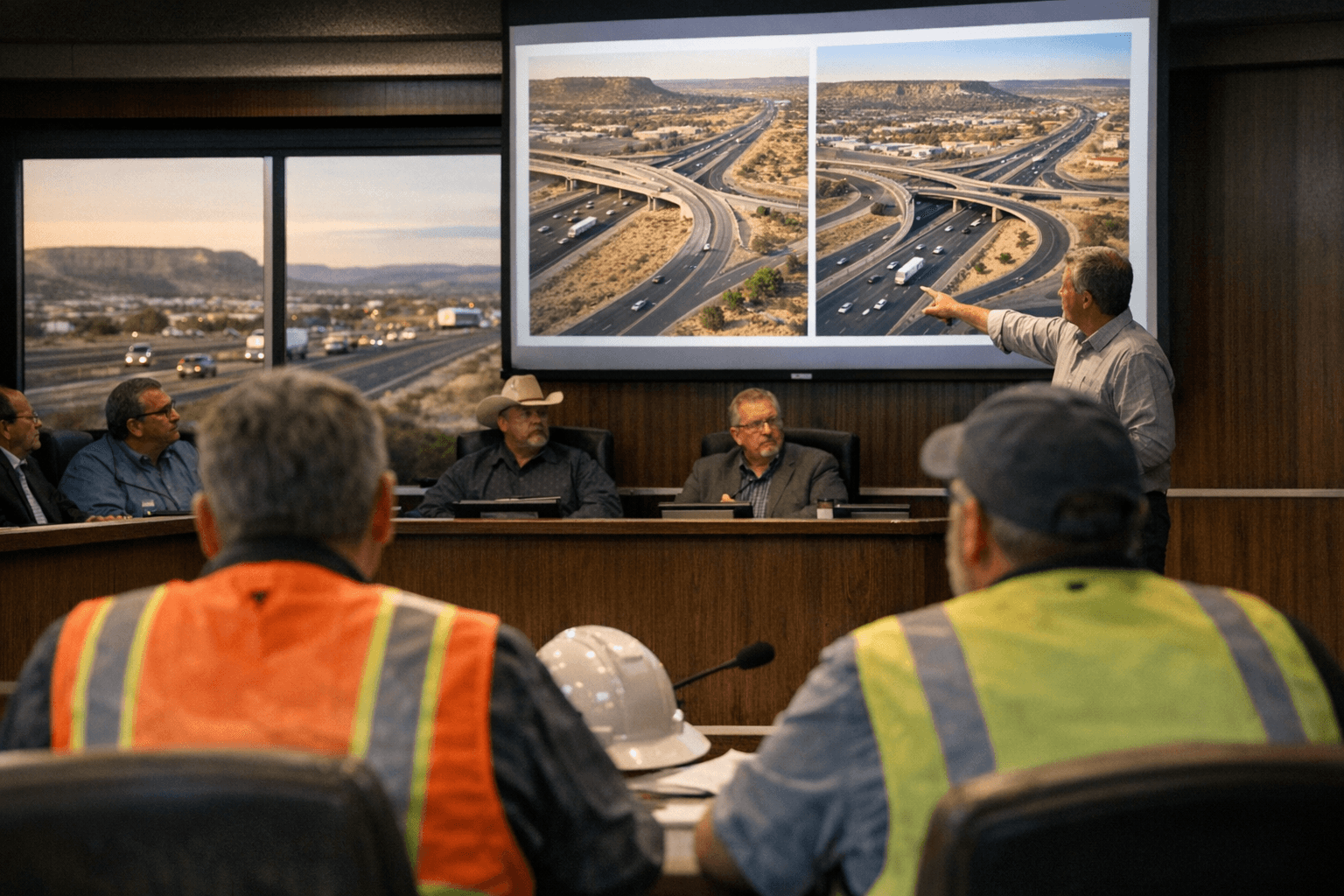
The decision will affect daily commuters, freight traffic, and nonmotorized users. Improved ramp geometry and added turn capacity could reduce congestion and crash risks at the gateway into downtown, while the inclusion of multi use trails aims to expand safe walking and bicycling routes. Conversely, larger interchange footprints could require additional right of way acquisitions, raising questions about property impacts and local fiscal commitments. Construction phases will also produce short term disruptions to traffic and access for nearby businesses.
Local officials and residents will want to track cost estimates and right of way plans as the study advances, and to participate in forthcoming public engagement opportunities tied to the preferred alternative. The choice made by spring 2026 will guide design and funding decisions that will shape downtown Gallup mobility and economic access for years to come.
This article was produced by Prism’s automated news system from verified source data, official records, and press releases, then run through automated quality and moderation checks before publishing. The system is built and supervised by the people who set the standards it runs under. Read our full AI policy.
Did this article answer your question?