Nygren honors Gallup health worker retiring after 41 years
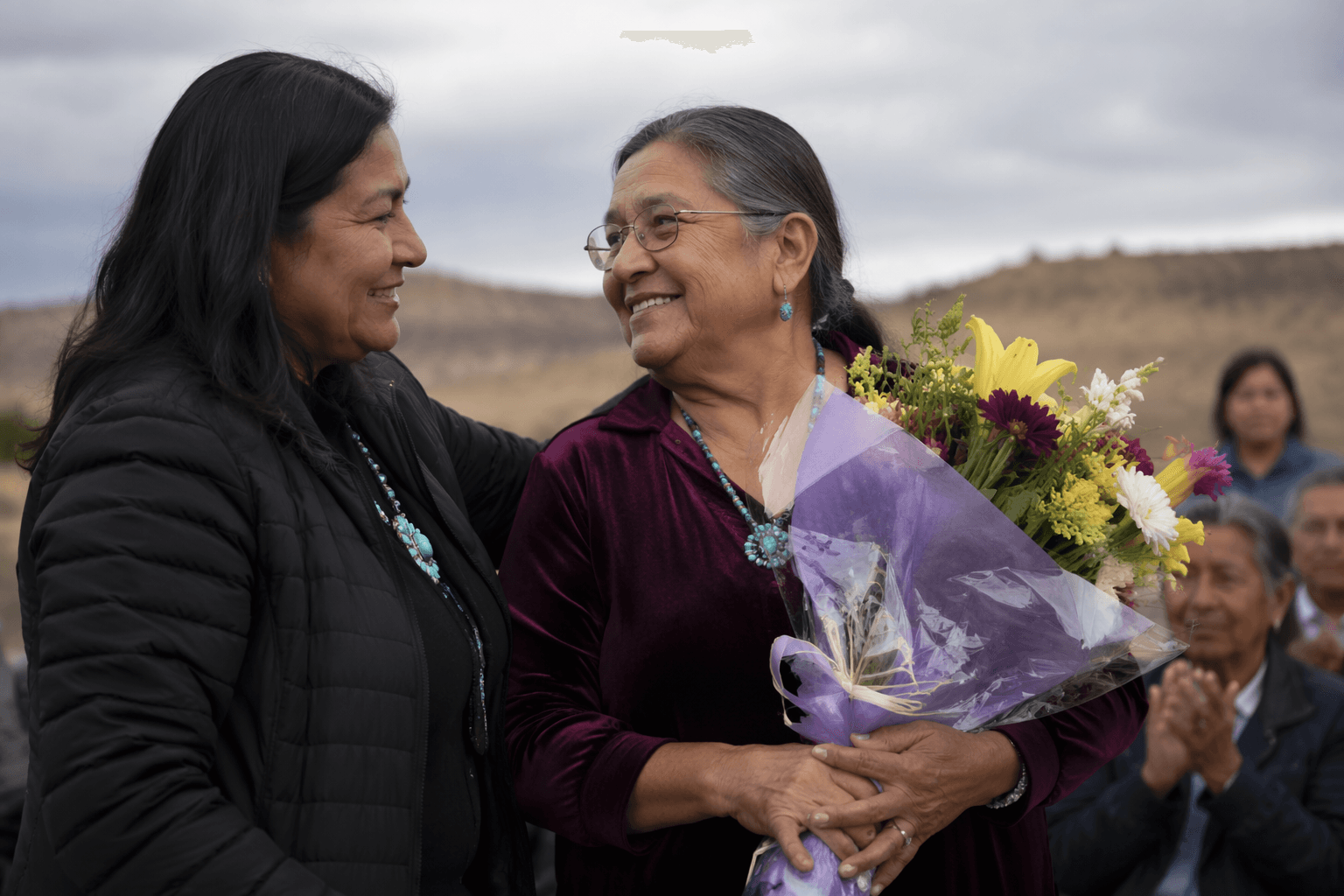
Buu Nygren honored Martha Williams in Gallup as she retired after 41 years serving Navajo communities as an Indian Community Health Representative.

President Buu Nygren joined a Gallup celebration for Martha Williams, who retired after 41 years as an Indian Community Health Representative. Her career stretched across the Navajo Nation, including the hardest months of the COVID-19 pandemic, when community health workers were helping families get water, food and medication.
Williams’ retirement also put a spotlight on the Navajo Nation CHR and Outreach Program, which was established in 1968. The program serves about 210,000 Navajo people on and around the Navajo Nation, and the Indian Health Service describes CHRs as frontline public health workers who improve access to care and build community capacity. Published research has also described Navajo CHRs as part of the oldest and largest community health worker program in the United States.
That role became especially visible during COVID-19. Partners In Health said the Navajo Nation experienced the highest rate of infection in the early months of the pandemic, outpacing even New York City, and CHRs were part of the response that helped families reach clean drinking water, food, medication and quarantine support. In that period, workers such as Marlene Nez were among the CHR staff carrying that support into homes and remote communities across Arizona, New Mexico and Utah.
Williams’ retirement reaches beyond one career. The Navajo Times reported that tribal retirement planning was discussed in 1969, and later approved under Peter MacDonald, to provide retirement pay for long-serving tribal workers. That history makes Williams’ 41 years part of a longer shift toward recognizing the people who kept Navajo community health running long before many formal systems existed.
As Gallup marked her retirement, the question left behind is who fills that daily gap now, in a program that has depended for generations on workers who know the roads, the families and the distance between a clinic and a kitchen table. For McKinley County communities, the answer still depends on CHRs who can reach people the system often misses.
This article was produced by Prism’s automated news system from verified source data, official records, and press releases, then run through automated quality and moderation checks before publishing. The system is built and supervised by the people who set the standards it runs under. Read our full AI policy.
Did this article answer your question?