RDC presses Congress to hold agencies accountable for uranium cleanup
RDC pressed Congress to hold EPA and DOJ accountable as cleanup moved at Section 32 and 33 Mines near Casamero Lake Chapter and a $63 million Church Rock deal.

RDC pressed Congress to hold federal agencies accountable for uranium mine cleanup as the U.S. Environmental Protection Agency continued work at the Section 32 and 33 Mines Site near Casamero Lake Chapter and other abandoned sites across McKinley County and the Navajo Nation. The push put new pressure on the agencies responsible for a problem that has stretched across generations of families living near old mine waste, drainage channels and contaminated ground.
The cleanup footprint is already broad. EPA’s Navajo Nation program tracks work at Old Church Rock, Northeast Church Rock, Haystack #1, Mariano Lake, Quivira Mines, the Lukachukai Mountains Mining District, Section 32 and 33 Mines and the Eastern Abandoned Uranium Mine Region. EPA also has a 2020-2029 Ten-Year Plan for federal actions to address uranium contamination on the Navajo Nation, a sign that the work is being managed as a long-running federal obligation rather than a short project with a quick finish.
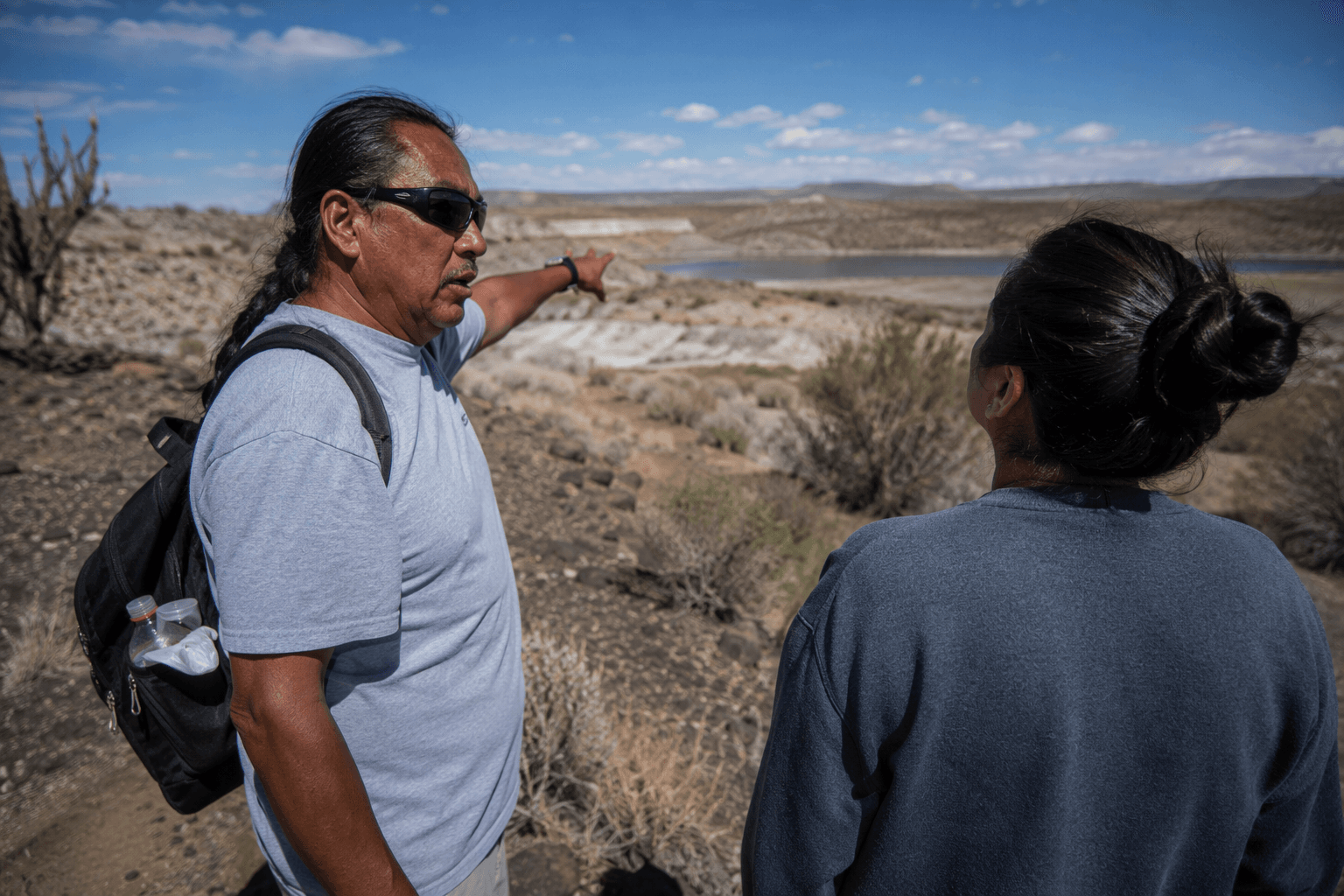
Recent federal actions show both movement and how much remains. The Justice Department and EPA announced a $63 million cleanup by United Nuclear Corporation and General Electric for uranium mine waste at the Northeast Church Rock Mine and UNC Mill Sites in New Mexico and the Navajo Nation. EPA also awarded Arrow Indian Contractors a $3.85 million contract to clean up portions of the Quivira Mines, with money also going toward bridge rebuilding and road construction. Those projects matter in McKinley County because cleanup is tied not just to mine waste removal, but to whether people can safely use nearby roads, land and travel routes.
EPA’s Sept. 30, 2025 memorandum approved and funded a non-time-critical removal action at the Section 32 and 33 Mines Site in McKinley County, on the Navajo Nation Indian Reservation and adjacent private land near Casamero Lake Chapter. The memo named Kenyon Larsen, Will Duncan, Jacob Phipps and Michael Montgomery. It is one of the clearest examples of how the federal response now reaches specific sites, specific people and specific deadlines, even as many communities are still waiting to see the results on the ground.
For families near these sites, the issue is not abstract. Uranium contamination can shape whether land is safe for grazing, whether dust or runoff raises water worries, and whether health fears stay tied to everyday life in and around Gallup, Church Rock and Casamero Lake. Congress can press EPA and the Justice Department for site-by-site progress reports, firmer cleanup deadlines and proof that the money already committed is reaching the places where McKinley County residents have waited the longest.
This article was produced by Prism’s automated news system from verified source data, official records, and press releases, then run through automated quality and moderation checks before publishing. The system is built and supervised by the people who set the standards it runs under. Read our full AI policy.
Did this article answer your question?


