Strong Winds, Unseasonable Warmth Rock McKinley County, Gallup
On December 17 a passing cold front produced strong winds and unusually warm daytime highs across McKinley County, with Gallup tying or breaking record high temperatures. The conditions prompted state National Weather Service advisories for high winds and raised concerns about blowing dust, hazardous travel, and possible power interruptions for local residents.

On December 17 a fast moving cold front produced a combination of strong gusty winds and record level daytime warmth across parts of New Mexico, affecting McKinley County and the city of Gallup in particular. Gallup tied or broke record high temperatures during the mid December stretch while local observations recorded gusts near 20 miles per hour. The state National Weather Service issued advisories for high winds as forecasters tracked the front and warned of continuing gusty conditions through the evening and into the following day.
The primary local impacts were reduced visibility from blowing dust, hazardous travel conditions on county roads and state highways, and the potential for brief power interruptions where lines or trees were stressed by gusts. County emergency managers and utility officials were placed on heightened alert as crews monitored conditions and staged resources to respond to power outages and debris removal. Live reports from Gallup indicated active wind gusts that contributed to these operational concerns.
For residents the event underscored routine winter vulnerabilities. Unseasonable warmth altered surface conditions, while strong winds increased the risk that unsecured outdoor items could become hazards. Motorists experienced reduced visibility in spots where dust was mobilized, and officials advised securing outdoor furniture and equipment and exercising caution while traveling until winds subsided.
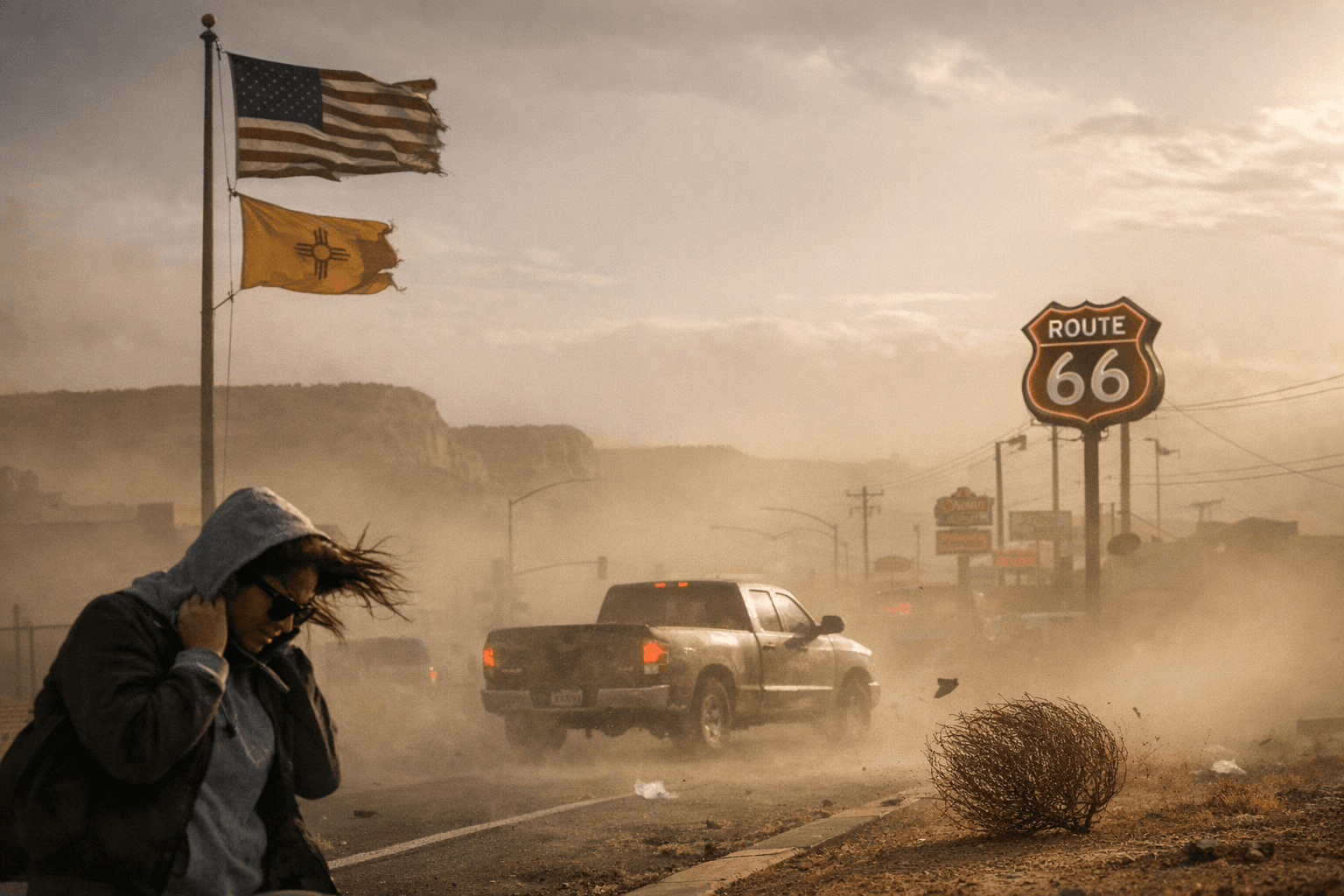
Beyond immediate safety actions, the episode highlights policy and institutional considerations for McKinley County. Repeated wind events expose weaknesses in aboveground power distribution and in road and dust mitigation strategies. The combination of weather extremes suggests a need for sustained planning on infrastructure resilience, clearer communication channels for weather alerts, and coordination between county, state and utility agencies to reduce outage durations and maintain safe travel routes.
While the most acute effects occurred on December 16 and 17, the situation serves as a reminder to verify local emergency alerts, review personal preparedness for winter wind events, and for community leaders to prioritize investments that reduce disruption from strong winds and episodic dust events.
This article was produced by Prism’s automated news system from verified source data, official records, and press releases, then run through automated quality and moderation checks before publishing. The system is built and supervised by the people who set the standards it runs under. Read our full AI policy.
Did this article answer your question?


