UniSource Energy Funds Navajo, Hopi Cosmos Mural at Lowell Observatory
UniSource Energy Services gave $5,000 to fund a Diné and Hopi cosmology mural at Flagstaff's Lowell Observatory, linking the Gallup region to the new public exhibit.
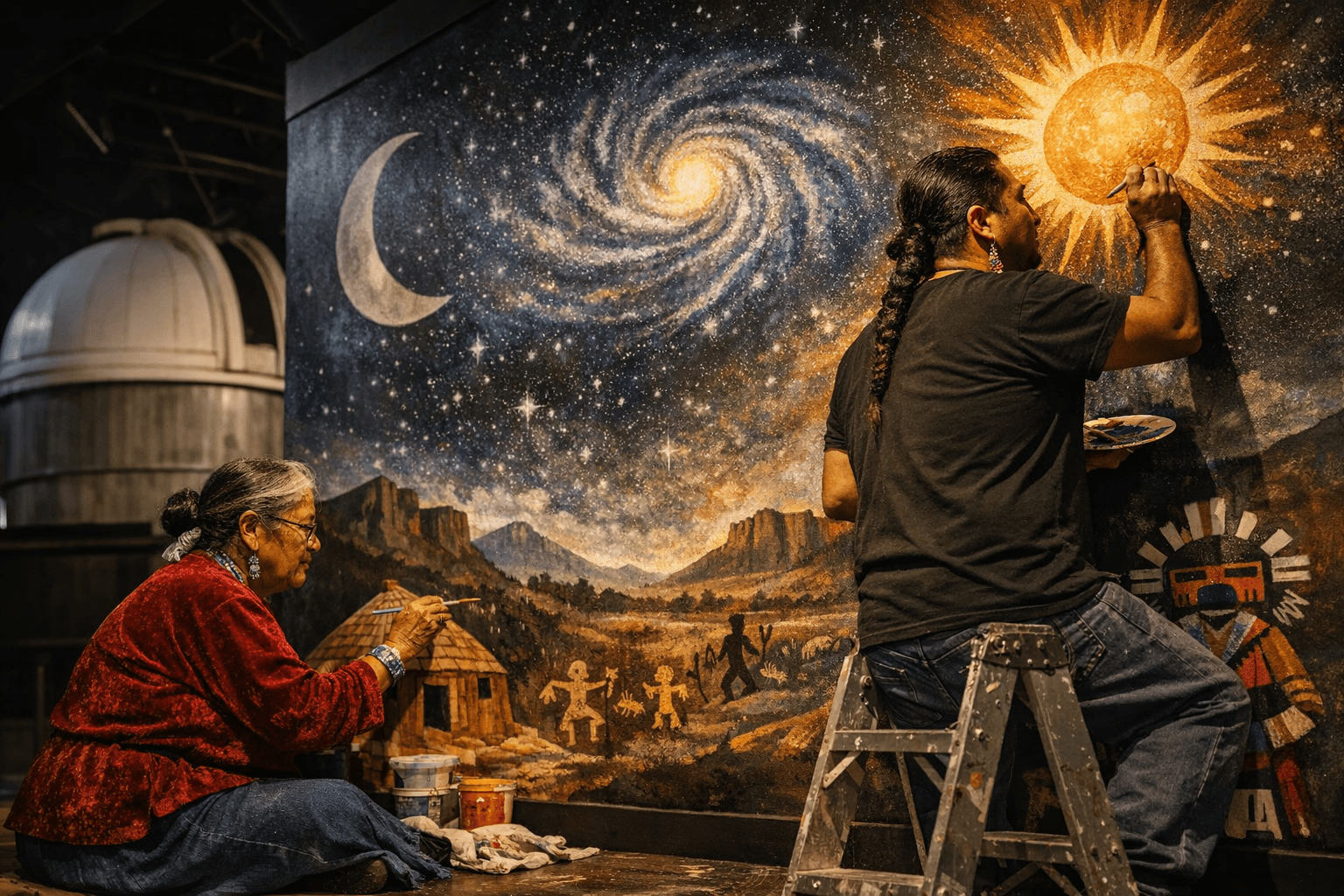
UniSource Energy Services put $5,000 behind a new public mural at Flagstaff's Lowell Observatory depicting Diné (Navajo) and Hopi cosmology, with the project drawing a cultural connection between the Gallup region and the northern Arizona institution.
The Navajo Times reported on the mural this week, noting that UniSource also helped host a September event tied to the project. No year for that event was specified in available reporting, and details about the mural's unveiling timeline remain incomplete.
The mural represents a collaboration between Lowell Observatory and Gallup-region communities, according to the story's framing, though the specific organizations and individuals involved from the Gallup side have not been publicly identified in reporting to date. Lowell Observatory, founded in 1894 and best known as the site where the expansion of the universe was first measured, has in recent years worked to broaden its public programming beyond Western astronomical traditions.
Key details about the mural itself, including the artist or artists responsible, the physical dimensions, exact campus location, and whether it is a permanent installation, were not available in reporting published through this week. The total project budget beyond UniSource's contribution has also not been disclosed.
For McKinley County residents with ties to Diné and Hopi communities, the mural represents a rare instance of Indigenous cosmological knowledge displayed at one of the country's most historically prominent observatories. Lowell Observatory draws roughly 100,000 visitors annually, giving the work significant public reach.
UniSource Energy Services, an Arizona utility provider, has a service territory that includes portions of the Four Corners region, giving the company both geographic and community ties to the populations whose traditions the mural represents.
Know something we missed? Have a correction or additional information?
Submit a Tip