Zuni archaeologist shares new findings from Middle Village excavation
Middle Village excavation is adding new detail to Halona Idiwan'a, while Zuni Pueblo works to protect the kiva and keep control of its own heritage.
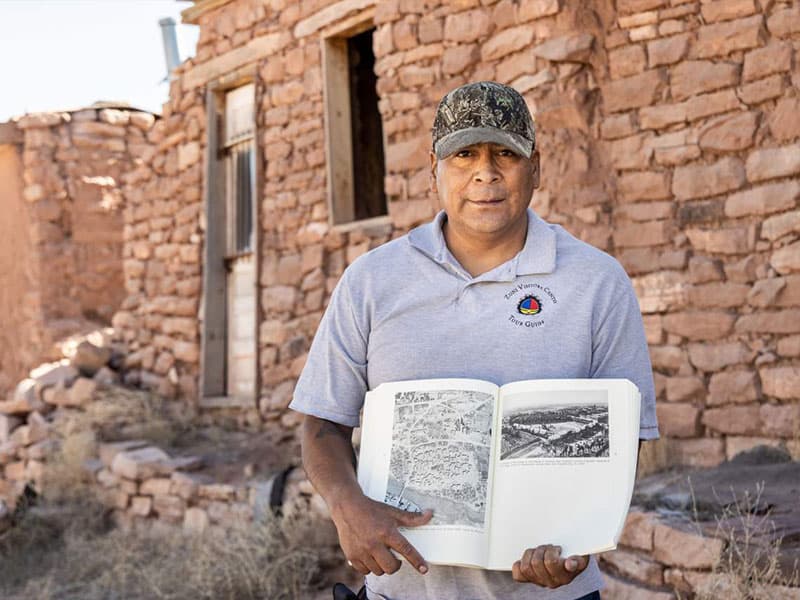
New excavation work at Middle Village is giving Zuni Pueblo a closer look at Halona Idiwan'a, the Middle Place, while also sharpening the case for preserving one of the community’s most important cultural sites. Kenny Bowekaty, a Zuni archaeologist and tour guide, shared results from the ongoing work as part of a broader effort to strengthen local understanding of Zuni history, religion and settlement patterns in McKinley County.
Halona Idiwan'a is not just an archaeological site. It is another name for Zuni Pueblo itself, a place the National Park Service identifies as one of the original six Zuni settlements at the time of Spanish contact in 1539. After the Pueblo Revolt of 1680, it became the central pueblo of the Zuni people. Zuni sources say the village has been occupied since at least 700 CE, a reminder that the community’s history reaches far deeper than the Spanish record.
That continuity matters to residents because the excavation is being tied directly to cultural stewardship, not detached study. Zuni Pueblo tourism materials say the Pueblo considers archaeological sites an important part of Zuni cultural heritage and has adopted a tribal antiquities ordinance to protect them. The tribe’s approach places community control at the center of preservation work, especially at Middle Village, where the kiva has been described in grant materials as a historical and religious property in dire need of preservation.

The preservation push has already included a Middle Village Kivas Restoration Preliminary Planning and Assessment project backed by a $30,187 grant for the period Sept. 1, 2022, through Sept. 30, 2024. That funding was meant to support a historical site assessment and mitigation plan for repair and preservation of the Middle Village Kiva, a sign that the excavation is tied to practical decisions about what can be stabilized, repaired and protected for future generations.
Bowekaty’s role gives the work a public face inside and outside the pueblo. Archaeology Southwest describes him as a member of the Zuni people, an archaeologist and a tour guide for Zuni Pueblo. New Mexico Magazine has called his one-hour interpretive walking tour of Halona Idiwan’a the bread and butter of Zuni tourism, reflecting how archaeological knowledge also supports the local economy and how visitors learn about the village through Zuni voices.

The broader Zuni-Cibola Complex National Historic Landmark reinforces that bigger picture. It includes Hawikuh, the Yellow House ruins, Kechipbowa and the Village of the Great Kivas, with the National Park Service estimating that Hawikuh held about 700 people in the early 16th century. For Zuni residents, the Middle Village excavation is deepening the story of a living homeland, not preserving a relic from the past.
This article was produced by Prism’s automated news system from verified source data, official records, and press releases, then run through automated quality and moderation checks before publishing. The system is built and supervised by the people who set the standards it runs under. Read our full AI policy.
Did this article answer your question?


