Zuni museum preserves culture, history and land in McKinley County
Zuni Pueblo’s community-run museum keeps land, language and history connected, from map art to Hawikku, and shows why local knowledge belongs in Zuni hands.
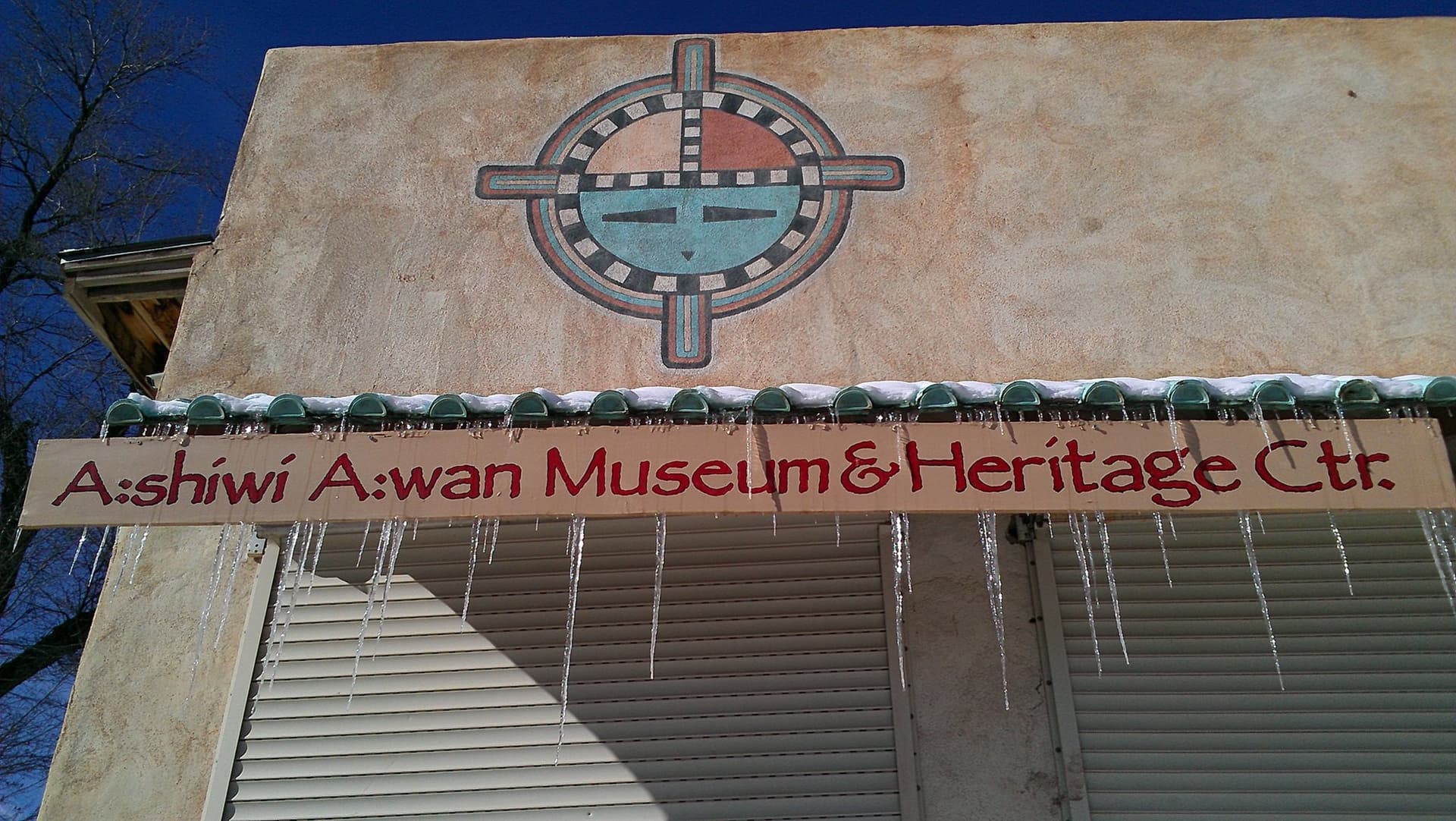
The A:shiwi A:wan Museum and Heritage Center is not a roadside stop that packages Zuni culture for outsiders. It is a Zuni-run institution in the center of a reservation that stretches across McKinley and Cibola counties, and it treats place, language and memory as inseparable parts of the same story.
That matters in western New Mexico because the Zuni Pueblo reservation covers about 450,000 acres, includes land in Apache County, Arizona, and is described by the tribe as the largest of New Mexico’s 19 pueblos. The museum’s work gives residents, students and visitors a way to see why control over history is also control over how land and identity are understood.
A museum built for the community
The museum was established in 1992 by a small group of Zuni tribal members and operates as a Pueblo of Zuni Tribal Program. Its mission is aimed at serving the Zuni community’s past, present and future, which makes it different from a generic cultural attraction or a shelf of archived objects.
That distinction is central to how the museum presents itself as an ecomuseum. In practice, that means cultural preservation is tied to environmental values, local knowledge and the Zuni way of understanding the world. The museum’s role is not only to display material culture, but to protect the authority of Zuni people over their own history, objects and teachings.
For McKinley County readers, that is more than an interpretive choice. It is a public-service function in a region where outside institutions have often collected, labeled and explained Indigenous histories without keeping the community at the center of the narrative.
The map art project turns landscape into memory
The strongest example of that approach is the A:shiwi Map Art project. The museum says 16 Zuni artists created 31 paintings that map landscapes, migration, cultural memory and place names. Another description of the project says 14 artists traveled to ancestral sites across the Colorado Plateau with Zuni cultural advisors, helping decide what was culturally appropriate to include.
The project ran between 2006 and 2013 and was designed to help reverse distortions of Zuni history. That makes the map art more than illustration. It functions as a living archive, showing how routes, sites and stories survive through image, oral knowledge and community memory even when outside records flatten them into a tourist version of “the Southwest.”
The lesson for students is immediate: history is not only in textbooks or museum labels. It is also in named places, migration routes and the relationships between families, artists and cultural advisors. The lesson for visitors is just as direct: to understand Zuni history, you have to understand how the land itself carries information.
What the museum teaches right now
The museum’s exhibitions are built to make that knowledge visible. One of the most important pieces is the five-panel Emergence and Migration mural, begun in 1998, which presents the A:shiwi story of origins and is used in school presentations in both Zuni and English. That bilingual use matters because language is part of the cultural record, not a side note.

Visitors can also learn how the museum handles outside misunderstandings of Zuni collections. Its exhibitions are intended to set the record straight and reclaim authority over objects and the knowledge attached to them. The result is a place where history is explained on Zuni terms, not merely curated for outside consumption.
- understanding how Zuni people connect origin stories to place
- seeing how place names, migration and memory are preserved in art
- learning how the museum frames colonial contact and later change
- recognizing why community control over interpretation matters for Indigenous history
A visit today can be especially useful for:
Hawikku brings colonial history into focus
The Hawikku exhibit, installed in 2002, deepens that story. It contains 221 representative Hawikku pieces selected by Zuni representatives from the Smithsonian National Museum of the American Indian collection. The exhibit places Hawikku in the context of the Spanish invasion, Spanish influence, the Pueblo Revolt, later changes in the 1700s and 1800s, and the arrival of anthropologists and ethnographers.
That framing matters because Hawikku is not presented as a frozen archaeological site. It is shown as a place shaped by conflict, adaptation and survival. The museum’s interpretation also centers the controversial Hendricks-Hodge Archaeological Expedition, which ran from 1917 to 1923 and was funded by the Museum of the American Indian, Heye Foundation. The expedition is described as one of the most extensive archaeological projects ever conducted in the Southwest.
For the community, the significance is clear. Objects from Hawikku are not separated from the history of who excavated them, who funded the work, and who gets to explain what they mean. By placing the pieces within that broader timeline, the museum insists that archaeology without sovereignty is incomplete.
Why this matters for McKinley County
In a county where Zuni Pueblo is one of the defining communities, the museum offers a grounded way to understand public health, education and social equity through the lens of cultural continuity. When a community retains authority over its language, stories and land-based knowledge, it strengthens the social fabric that children, elders and families rely on.
That is especially important in places where outside systems have often treated Indigenous people as subjects of study instead of partners in interpretation. The museum’s map art, its bilingual school presentations and its Hawikku exhibition all point in the same direction: Zuni history is not a relic to be displayed. It is a living record maintained by the people who belong to it.
For residents and visitors alike, the A:shiwi A:wan Museum and Heritage Center offers a clear answer to a larger question in western New Mexico: who gets to preserve the story of a place, and who gets to explain what that place means.
This article was produced by Prism’s automated news system from verified source data, official records, and press releases, then run through automated quality and moderation checks before publishing. The system is built and supervised by the people who set the standards it runs under. Read our full AI policy.
Did this article answer your question?


