College of Menominee Nation Leader Named Among Wisconsin's Most Influential Native Americans
CMN's Geraldine Sanapaw, who helped steer a landmark $10 million gift to Keshena's tribal college, is among Wisconsin's 28 most influential Native American leaders for 2026.
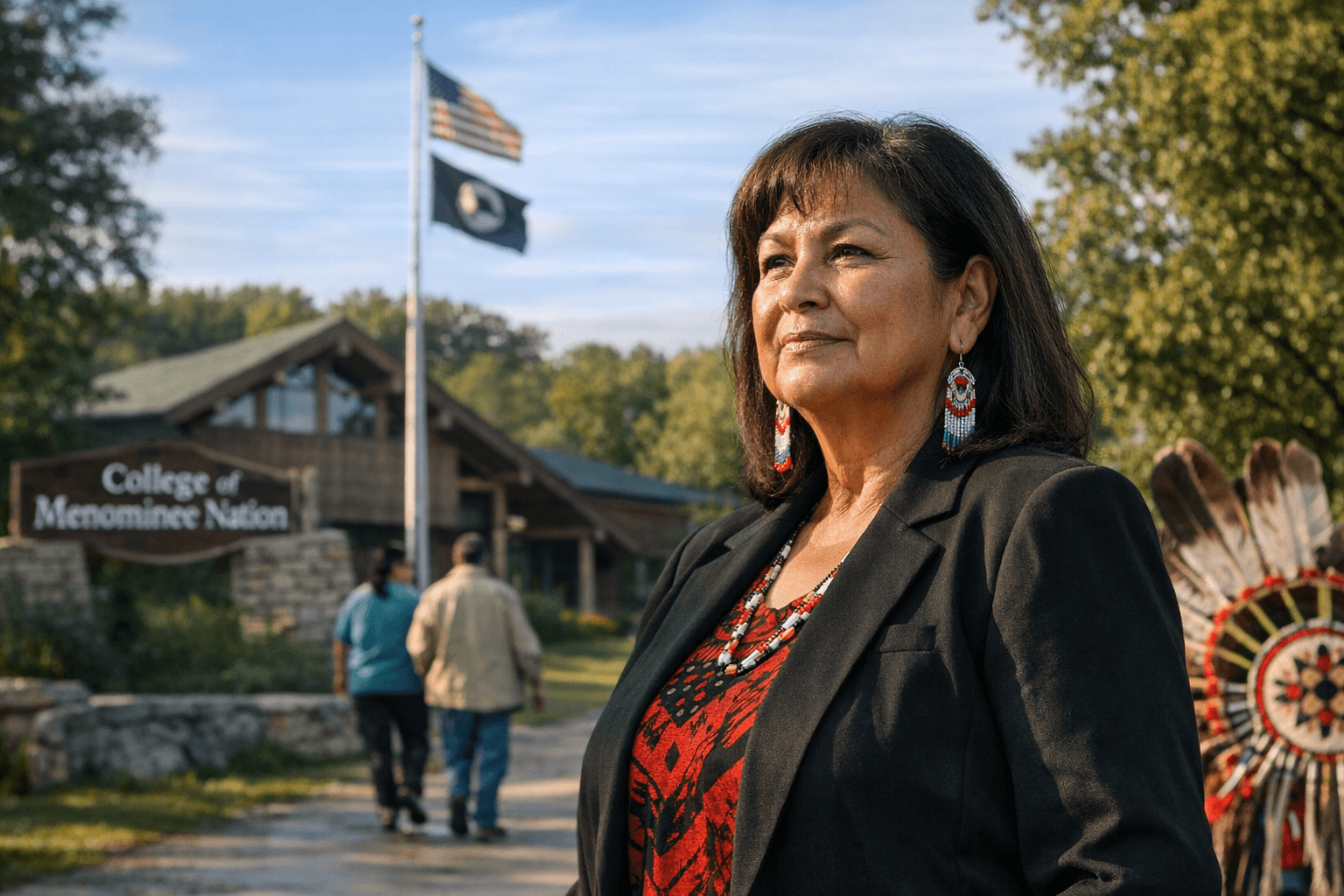
Geraldine Sanapaw has served as chief academic officer at the College of Menominee Nation since April 2022, advancing through the institution from adjunct instructor to institutional research analyst to the leadership role she holds today. Madison365 named her to its sixth annual list of "Wisconsin's 28 Most Influential Native American Leaders" on March 28, placing her alongside elected officials, educators, and tribal business leaders whose work shapes Indigenous policy across the state.
The recognition arrives as Sanapaw's influence is traceable to two of the most consequential developments in CMN's recent history. In November 2025, the MacKenzie Scott Foundation awarded the college an unrestricted $10 million gift, the largest charitable gift in CMN's history. Sanapaw spoke directly to what that scale of resource means for an institution where a majority of students are Pell Grant recipients. "For a small college trying to meet the immediate community needs, but also the surrounding communities that we serve, can sometimes be a very daunting task, and I think a resource like this just helps us dive into it deeper," she said. CMN plans to direct the funds toward higher-quality academic programs, expanded student-support services, endowment investment, and new professional and educational pathways.
Sanapaw is also leading CMN's USDA-backed NextGen initiative, formally titled "From Learning to Leading: Cultivating the Next Generation of Diverse Food and Agriculture Professionals." The program distributed $60,000 in mini-grants to Tribal community projects across Wisconsin in 2025. Individual awards of up to $5,000 are available to enrolled members or descendants from any of Wisconsin's 12 federally recognized tribes, with projects eligible to focus on sustainable food systems, natural resource stewardship, nutrition education, or agricultural innovation. The 2026 grant cycle is currently open. "This is an amazing opportunity provided to the College and the community to build our capacity in programs that will not only benefit the Menominee community, but also surrounding Tribal communities and rural Northern Wisconsin," Sanapaw said of the effort.
CMN's own economic impact research puts the total alumni impact at a conservative $16 million across the tribal lands and state counties the college directly serves, a figure grounded in 2022 and 2023 data. For an institution whose 21 degree and certificate programs lean heavily on federal financial aid, that number illustrates why statewide recognition of CMN leadership carries practical weight when competing for grants and attracting partners.
Madison365's list, now in its sixth year, frames the selections as functional rather than ceremonial, with past honorees building cross-tribal networks and statewide coalitions from the platform. For CMN, which was chartered by the Menominee People in 1993 and stands as Wisconsin's only tribal land-grant institution, the visibility arrives as the college simultaneously manages a historic capital infusion and expands its role in Wisconsin's food and agriculture workforce pipeline.
Sanapaw holds a Master of Business Administration from Lakeland College.
This article was produced by Prism’s automated news system from verified source data, official records, and press releases, then run through automated quality and moderation checks before publishing. The system is built and supervised by the people who set the standards it runs under. Read our full AI policy.
Did this article answer your question?