Five Menominee boxing figures enter Indigenous Athletics Hall of Fame
From Askenette’s backyard to national rings, five Menominee boxing names earned Hall of Fame honors, spotlighting a pipeline that still shapes Indigenous athletes.
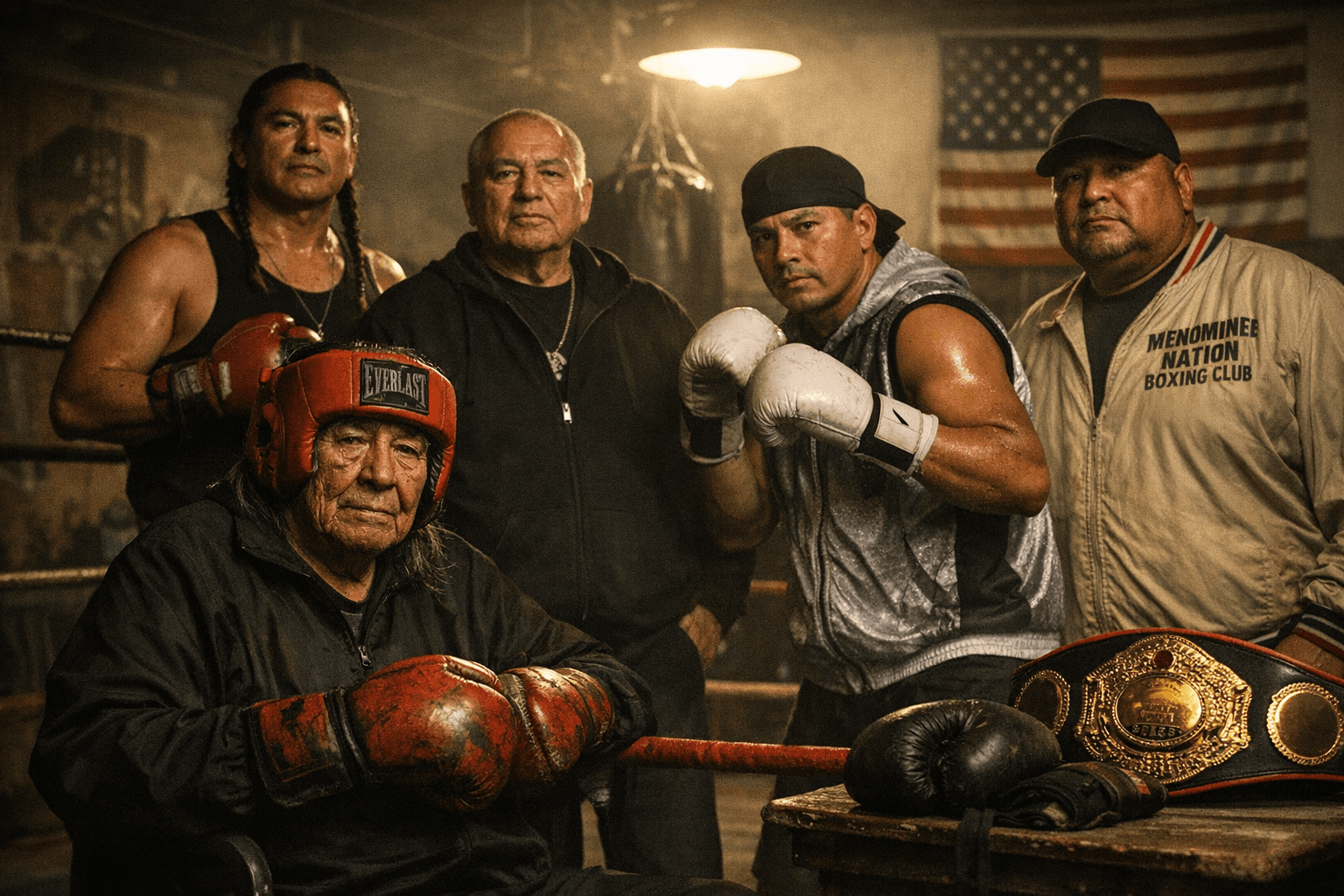
Five Menominee boxing figures are headed into the North American Indigenous Athletics Hall of Fame, a recognition that reaches beyond medals and belts to the training culture that formed generations of local fighters. Alex Askie Askenette Sr., Llewelyn Boyd, Jim Caldwell, Jonathan JJ Corn and Rodger Ponfil Jr. were selected as the latest names tied to a Menominee pipeline that began in backyards, tribal gyms and the Menominee Indian Reservation.
The strongest thread runs through Alex Askenette, born March 19, 1922. The hall describes the Askenette name as a very old Menominee name meaning “Survivor, the only one left.” Askenette won Golden Gloves titles at Haskell in 1939, at Emporia, Kansas, in 1941 and in Marshfield, Wisconsin, in 1947. He later became coach of the Menominee boxers, worked with Menominee police for a decade and kept coaching successful fighters through 1967, eventually becoming a national leader in boxing circles and a regional director in Native athletic programs.
That influence shows up clearly in Boyd’s record. Lew Boyd began his amateur career in 1965 working out of Askenette’s backyard on the Menominee Indian Reservation, starting as a 112-pound flyweight. From 1966 to 1970, he won Wisconsin Golden Gloves championships in multiple weight classes, and his 76-6 amateur mark underscored how far that local training path could carry a fighter. Boyd later moved into coaching and international boxing work with an African delegation.
Caldwell followed a similar route through the Menominee Boxing Club under Askenette. He started boxing at 17 and went on to earn standout honors at major tournaments, including outstanding novice boxer at the 1958 Fond du Lac district Golden Gloves, outstanding fighter at the 1960 Rockford tournament and the Barney Rose sportsmanship trophy at the 1961 Golden Gloves.
Corn and Ponfil extended that tradition into later decades. Corn fought for Joe Swedes’ Neopit-Keshena team from 1987 to 1991 before joining the Army, winning the 1988 Michigan Silver Gloves 95-pound title, the 1990 Wisconsin Golden Gloves 132-pound crown, the 132-pound National Indian championship and the Upper Midwest Junior Gloves 132-pound championship. BoxRec lists him as “The Native Sensation,” with Menominee, Wisconsin, as his hometown and Keshena, Wisconsin, as his birthplace. Ponfil was named to the All American Team, ranked No. 2 nationally in his weight class and selected for the 1978-79 USA International Team, which faced opponents from Europe, South America, Africa and Asia.
The hall says it honors Indigenous sport cultures across 27 countries in North America and aims to inspire future generations through the stories of inductees. Its 2026 banquet is set for Saturday, May 30, at the Oneida Hotel and Conference Center in Green Bay, an exclusive ceremony and lunch that will place Menominee boxing where it belongs, in the larger history of Indigenous athletics.
This article was produced by Prism’s automated news system from verified source data, official records, and press releases, then run through automated quality and moderation checks before publishing. The system is built and supervised by the people who set the standards it runs under. Read our full AI policy.
Did this article answer your question?