How Menominee County board meetings work, and where residents can speak
Menominee County board meetings start with community input, then move through reports, budgets and resolutions. Knowing the agenda shows when your issue can still change.
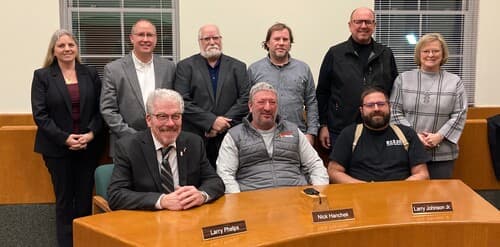
At Menominee County board meetings, the first place residents can make themselves heard is the community input slot near the top of the agenda. After that, the board moves through claims, reports, minutes, budget changes and resolutions, so the agenda is the best map for finding when a road, tax, service or law enforcement issue is still alive.
How the board is structured
Menominee County’s board rules were approved and adopted on August 20, 2024, in a document titled Menominee County and Town of Menominee Rules of Procedure for the Menominee County and Town Board of Supervisors and Committees. The title alone shows how intertwined county and town government are in Menominee: the same board framework governs both the Menominee County and Town Board of Supervisors and its committees.
The rules’ table of contents reaches beyond meeting mechanics. It includes oath of office, vision, governance goals, meeting procedures and committee responsibilities.
A Wisconsin Legislative Audit Bureau review found Menominee County and the Town of Menominee operate under a structure unique in Wisconsin. The review found the Town of Menominee Board consists of seven elected members who, under section 59.10(5) of Wisconsin statutes, also make up the County Board. The same review raised concerns about public accountability and oversight capacity.
Where meetings happen
The county’s regular meeting place listed on official board materials is the Menominee County Boardroom at W3269 Courthouse Lane, Keshena, WI 54135. A February 20, 2025 agenda also shows that the board sometimes meets at the South Branch Community Center, W1281 County Road M, Keshena, WI 54135.
For residents in Keshena, Neopit and nearby communities, the boardroom or community center listed on the agenda tells you where to go, and the posted agenda tells you which meeting is actually handling county business that day.
Where to speak
The most direct place to speak is community input, which appears early on both the August 20, 2024 and September 17, 2024 agendas. It appears before correspondence, committee business, approvals and action items, so residents can address the board before the meeting moves into those items. If your concern is about a county road, emergency service coverage, human services or a tax-related change, that early window is the moment to put the issue on the record.
Public comment is only one part of the path. Items arrive with committee minutes, department head reports, treasurer’s reports and then formal resolutions or budget modifications. A resident may raise a problem at community input, then watch it move into committee discussion before it reaches a final vote.
How an issue moves through the agenda
The August 20, 2024 agenda included community input, correspondence and claims or petitions, committee minutes and department head reports, approval of minutes, a budget modification adding MAG funding, board rules of procedure amendments, the treasurer’s office and report, and the administrative coordinator’s report. That sequence shows where the board spends its time: first hearing from the public, then reviewing administrative and committee material, then taking up policy and money.
The September 17, 2024 agenda followed a similar pattern, with community input, correspondence and claims, committee and department reports, approval of minutes, a budget modification tied to HSD, a resolution numbered 2024.03 on the County/Tribal Law Enforcement Program, the treasurer’s report and the administrative coordinator’s report. The final vote is usually the last stop, not the first. The meaningful debate often shows up earlier in committee reports, budget revisions or the wording of a resolution.
That is especially true when county money is tied to specific services. A budget modification can affect what gets funded, while a resolution like the County/Tribal Law Enforcement Program item can shape how Menominee County works with tribal law enforcement on public safety. If a topic affects roads, social services, county taxes or policing, the agenda line is where the issue becomes visible.
Why committee work matters
The rules make committee responsibilities part of the official structure, and the agendas show those committees in action through committee minutes and department head reports. That is where many issues are first sorted, since the full board’s agenda often reflects what has already been discussed elsewhere in county government. Residents who only watch the final vote may miss the part of the process where a proposal is refined, delayed or redirected.
Menominee County’s public website is organized the same way. Its County/Town Board page sits alongside separate pages for committees, minutes and agendas, ordinances and resolutions and departments. The agenda, not just the meeting itself, is where you can see whether an item is a report, a discussion point or a decision.
What to watch if you care about local services
If your concern is a road, a local tax change, a sheriff or police funding issue, or a service handled through county government, the agenda will usually tell you where the board is headed before the vote happens. The August 20 and September 17 agendas show the same basic pattern: public input, committee and department reports, approval of minutes, then budget and resolution items. That is the route from a resident complaint to a boardroom decision.
This article was produced by Prism’s automated news system from verified source data, official records, and press releases, then run through automated quality and moderation checks before publishing. The system is built and supervised by the people who set the standards it runs under. Read our full AI policy.
Did this article answer your question?