Menominee Forest Maple Sugaring Faces Threat From Warming Climate
Charles and Carol James tapped Menominee Forest maples on March 24, but climate science projects a 30% drop in sap sugar content as Wisconsin's freeze-thaw window continues to shrink.
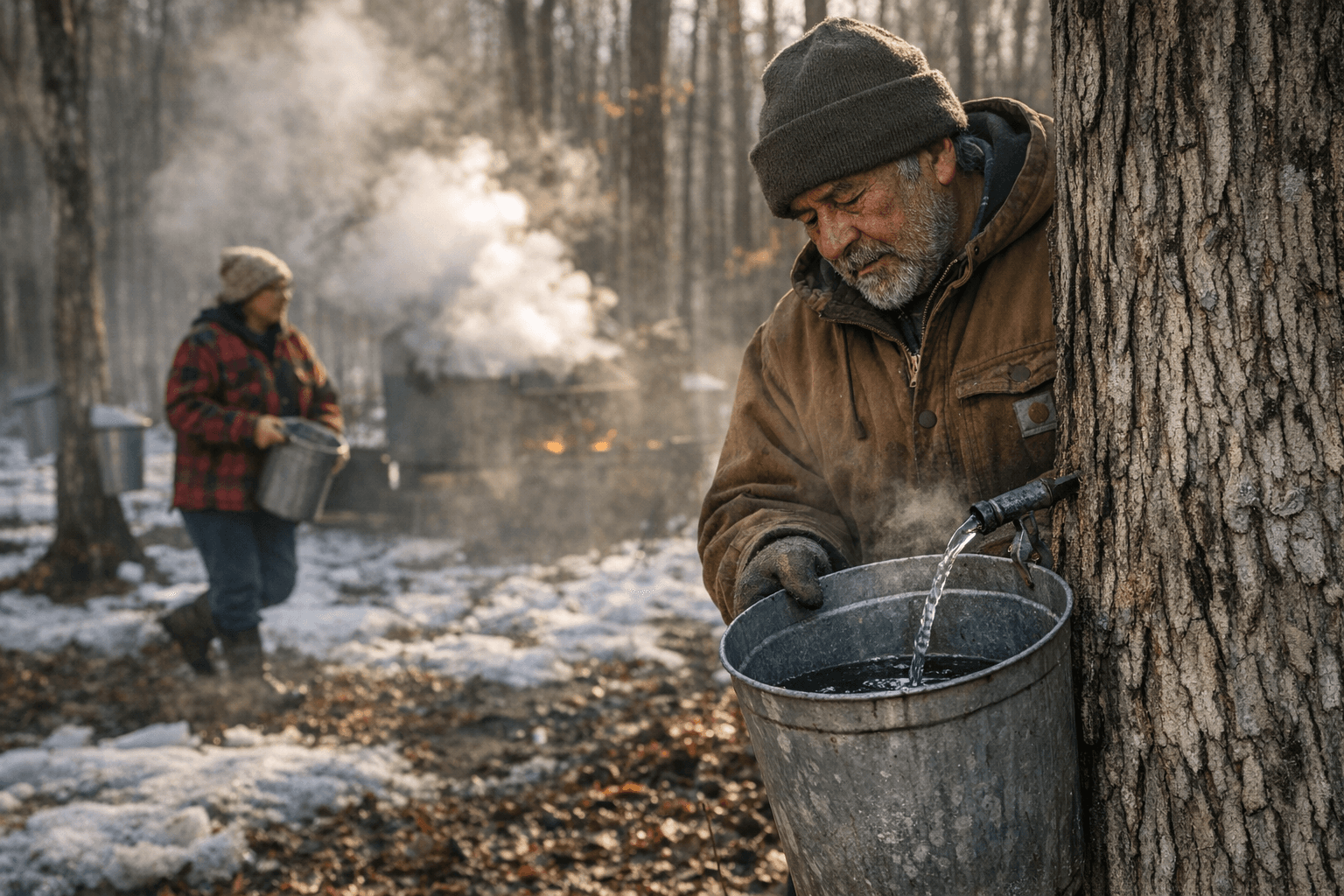
Charles James and Carol James were working the sugarbush in the Menominee Forest near Keshena on March 24, collecting sap from sugar maples in one of the oldest continuously managed forests in North America. What surrounds that work, however, is a closing window: a warming climate is compressing the freeze-thaw cycles that make syrup production possible, and the operational and economic consequences for Menominee producers are accelerating faster than most adaptation plans can keep pace with.
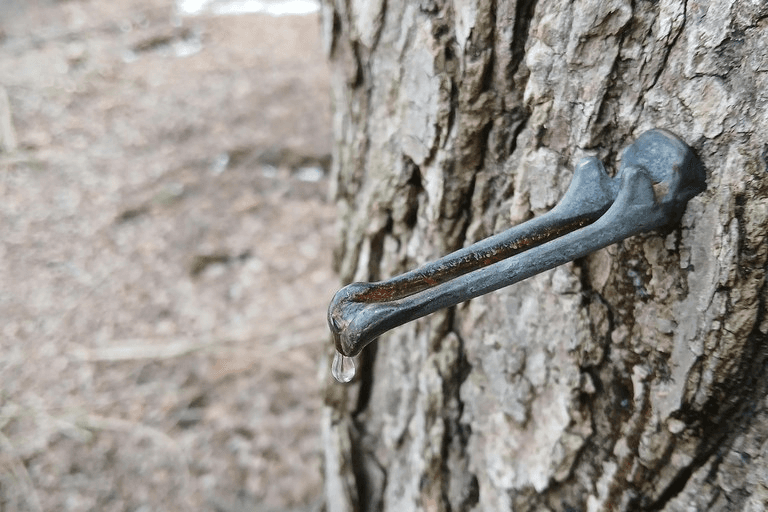
Maple sap runs when nighttime temperatures fall below freezing and daytime temperatures climb above it, a pressure differential that pulls liquid up and through the tree. That cycle is now shorter, less consistent, and increasingly unpredictable across Wisconsin, particularly in the southern and central parts of the state. Research from the University of Wisconsin Extension projects the sap season will shift roughly a month earlier by the end of the century compared to its historical timing, a displacement that makes traditional scheduling unreliable. More immediately damaging to producers: climate modeling projects approximately a 30% decrease in sap sugar content as warming accelerates, because maples growing in longer seasons consume more of the sugar they produce. For a crop that already requires roughly 40 gallons of raw sap to yield a single gallon of finished syrup, a 30% sugar drop translates directly to lower yields per tap and longer boiling times, driving up both fuel costs and labor hours for the same output.
The Menominee Forest, which surrounds Keshena and Neopit and has been managed under a single-tree selection system for over a century, contains healthy, mature sugar maple stands that have sustained sap production precisely because of that careful stewardship. But even the best-managed forests cannot override the climatic signals that govern when sap flows and how much sugar it carries. The tribe's long-standing practice of selective harvesting has created forest conditions that maximize the potential of any given season; it does not insulate producers from a season that arrives at the wrong time or ends too quickly.
For families like the Jameses, the shrinking window creates compounding pressures: tapping schedules must shift earlier to catch the front end of the season, yet an early warm spell can collapse the run before a full harvest is complete. Indigenous producers across the Upper Midwest have begun reporting seasons that once stretched two months or more now arriving in compressed, sporadic bursts, making it harder to justify the capital investment in equipment, fuel, and labor. Adapting to that variability, whether through updated tapping schedules, vacuum tubing systems that capture sap more efficiently during shorter runs, or diversifying into birch sap as a secondary species, carries real upfront costs that small-scale and tribal producers are often least positioned to absorb.
The cultural stakes compound the economic ones. Maple sugaring in the Keshena area is a form of intergenerational knowledge transfer as much as it is an agricultural operation, and seasons that grow shorter and less reliable disrupt not only yields but the conditions under which that knowledge is practiced and passed on. Tribal leaders and county officials tracking Menominee Forest output in coming seasons will need to weigh whether shared processing infrastructure, small capital grants, or cooperative market access can help producers like Charles and Carol James stay viable as the window keeps narrowing.
This article was produced by Prism’s automated news system from verified source data, official records, and press releases, then run through automated quality and moderation checks before publishing. The system is built and supervised by the people who set the standards it runs under. Read our full AI policy.
Did this article answer your question?