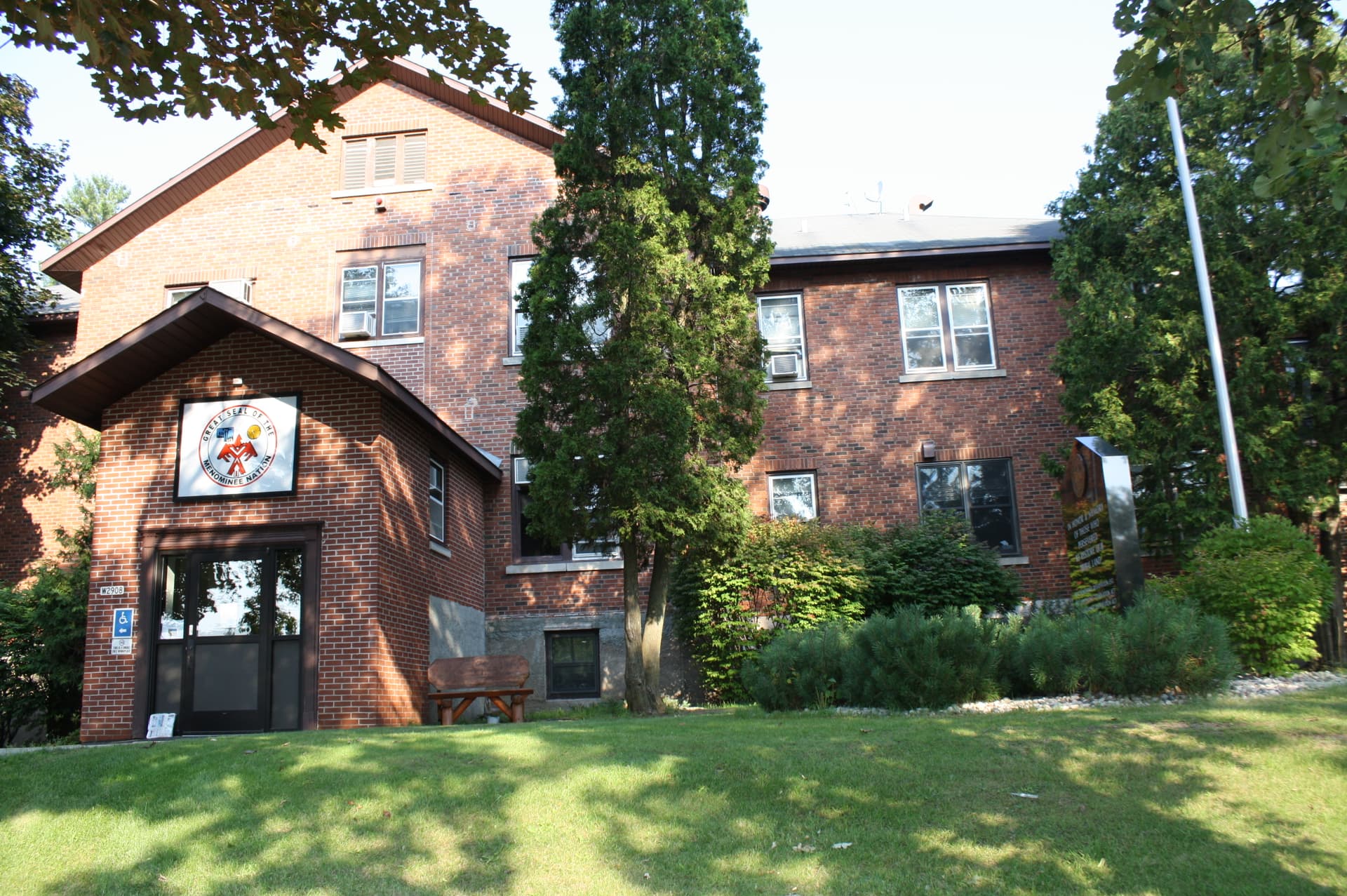
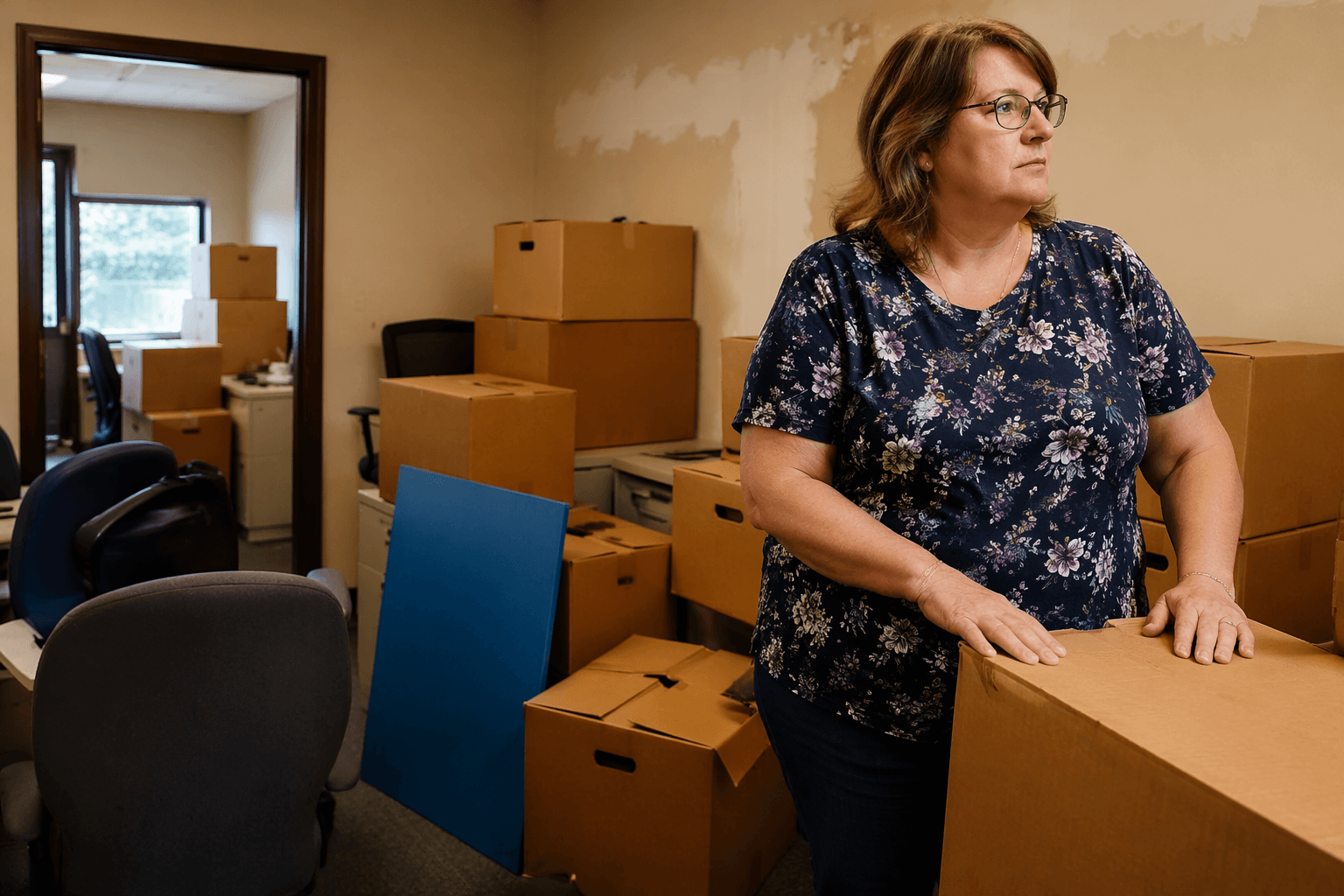
Menominee language classes teach greetings, daily phrases, and commands
Menominee language classes are linking elders, parents and children through greetings, commands and immersion, building a working pipeline from daycare to campus.
In Keshena and across the Menominee Indian Reservation, the Menominee language classes page works like a living classroom, not a static archive. Lesson One starts with greetings and leave-takings, Lesson Two moves into expressions and commands, and the page continues through Lesson Five with both audio and read-the-lesson options for different kinds of learners.
A classroom built for real use
The tribe’s language portal is organized around practical learning rather than ceremonial display. Lesson One introduces everyday phrases such as hello or hi, how are you, I’m fine, I’m well, I’m sick, and help me, along with a word for pencil or writing stick. Lesson Two adds more immediate language for daily life: I’m tired, I’m cold, I woke up cold, I’ll get by, so-so, paper or book, chair, stand up, sit, pick it up, set it down, stop, and walk.
That mix matters because it shows how the language is meant to move through homes, classrooms, and conversations between generations. Audio support gives learners a way to hear pronunciation, while the written lesson format gives others a way to study at their own pace. The structure suggests the tribe is teaching Menominee as a working language, one that can be spoken at the kitchen table, in early childhood classrooms, and in community spaces across Menominee County.
Why the first words carry so much weight
The Menominee language is critically endangered, and one recent Wisconsin Public Radio account said there were about 20 fluent speakers. Most fluent speakers are elderly, and English is the first language for most Menominee families, which makes the classes more than enrichment. They are part of the day-to-day work of keeping the language available to children, parents, and the people who still carry it fluently.
That is why the content in Lessons One and Two is so important. Greetings, temperatures, posture words, and commands are the kinds of phrases that can be used repeatedly, in real settings, until they become familiar. A child who learns how to say hello, sit, stand up, or walk is not just memorizing vocabulary. That child is getting a usable entry point into a language that still needs speakers, teachers, and daily practice to remain alive.
The people keeping the pipeline moving
The work sits inside a broader institutional network. The Menominee Tribe’s Department of Language and Culture directory lists Katelynn Awonohopay as an immersion instructor-trainee, Luke Besaw as interim director, and Robert Tourtillott as coach and mentor. The same directory also names Joey Awonohopay, Ashlee Corn, Cade Madosh, Roberta Tourtillott, Calvin Waukau, Waqnahwew Ben Grignon, and Ron Corn Jr., showing that the language effort is staffed by more than one classroom or one page.
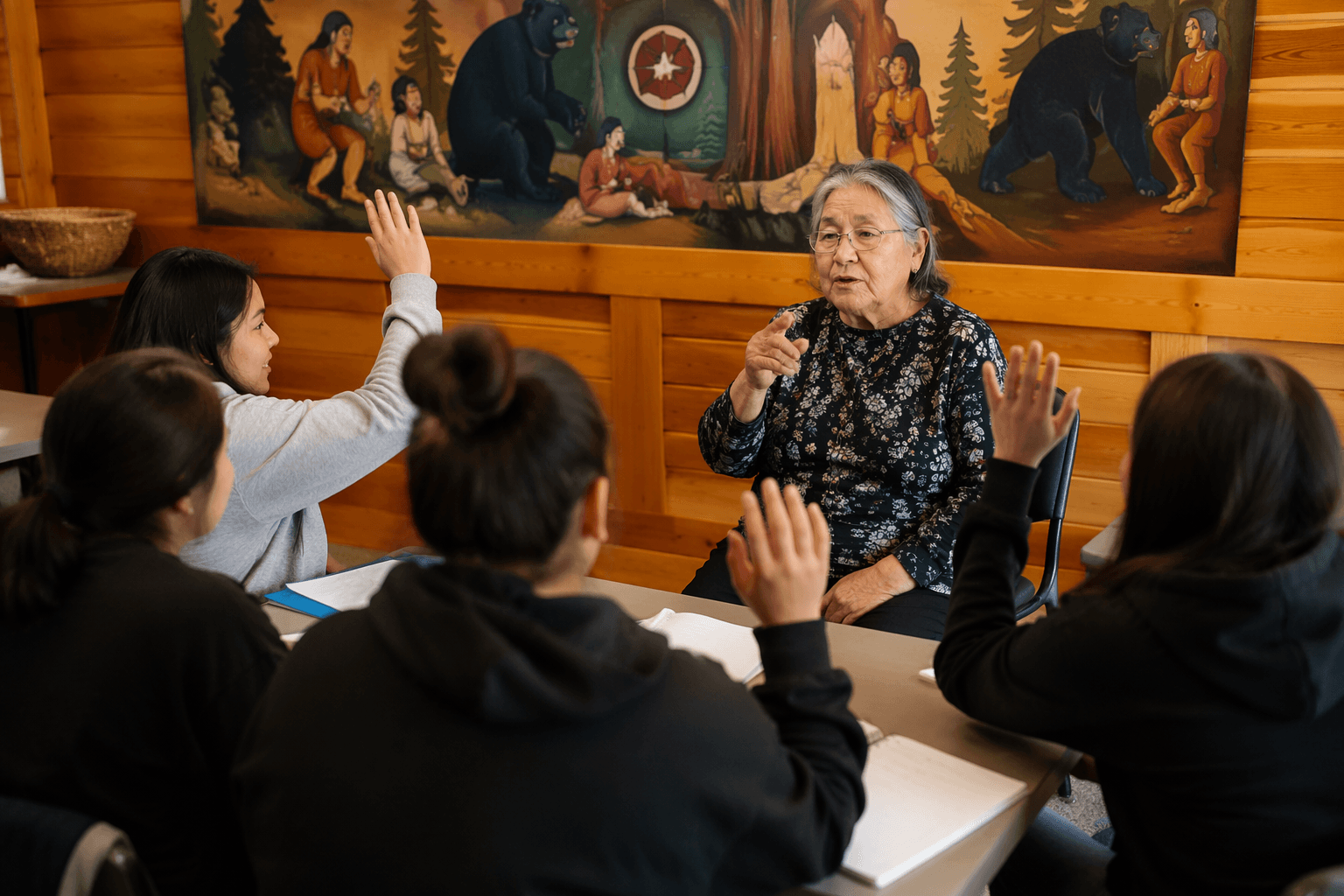
Waqnahwew Ben Grignon, the Menominee Indian School District’s language and culture coordinator, has also been recognized as the 2019 Wisconsin High School Teacher of the Year, a 2020 NEA Leo Reano Memorial Human and Civil Rights Award winner, and a 2022 First Peoples Fund fellow. Ron Corn Jr. is one of about 20 fluent speakers, and he left a full-time teaching job so he could spend more time raising his youngest daughter with the language. Together, those details show a revival effort anchored by educators, mentors, and family members who are carrying the language into the next generation.
From daycare to charter school to campus
The classes online are part of a much larger educational system that already reaches children very early. The Menominee Nation started a language immersion classroom at its daycare center in 2017, a move that put the language in front of children before school age. The Menominee Indian School District later created the Kaehkēnawapatāēq pre-K and kindergarten charter school, a name that means “We learn by observing.”
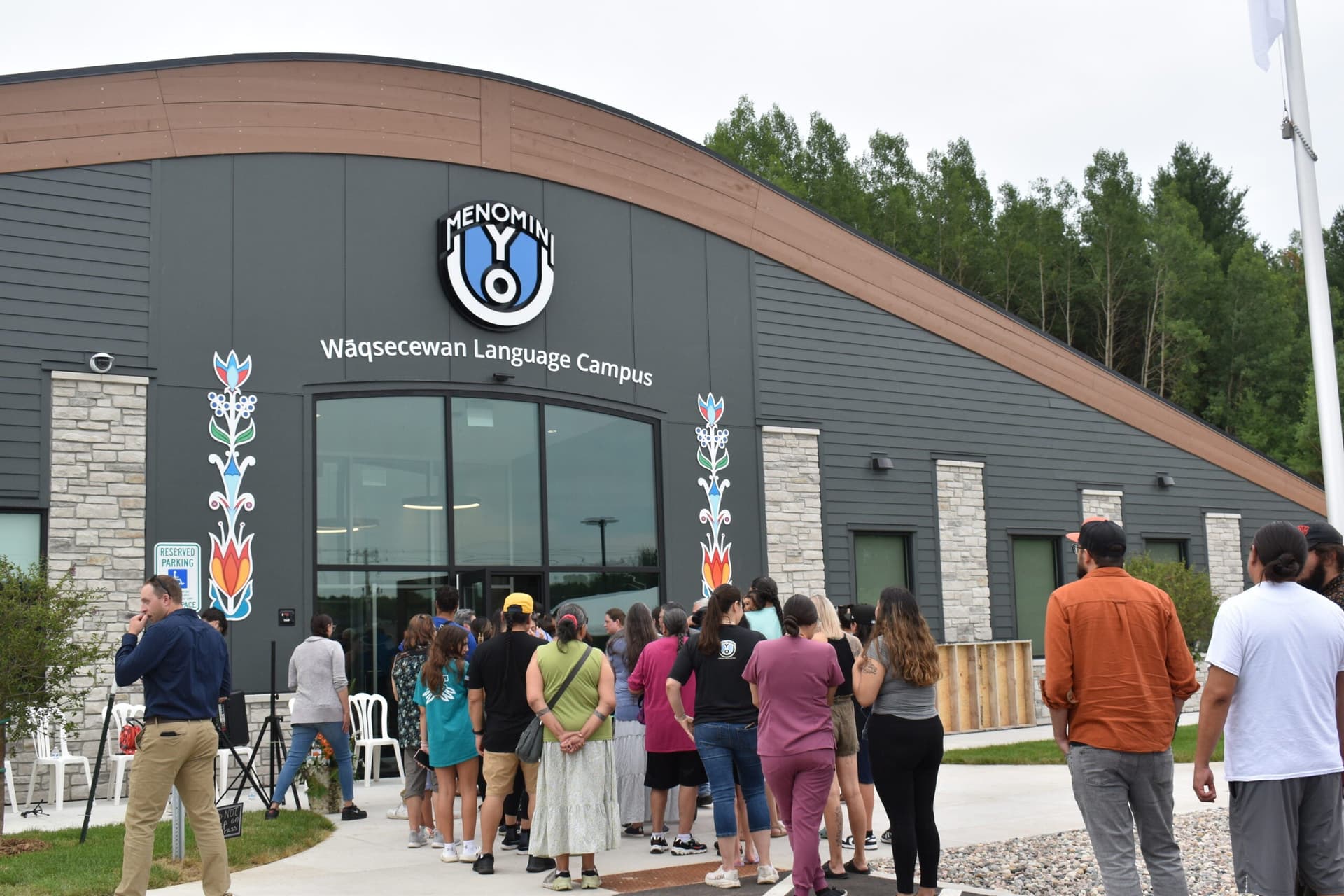
That pipeline widened again with the tribe’s new language center. The Menominee tribe broke ground on a 10,000-square-foot language center on Nov. 2, 2023, and the Wāqsecewan Language Campus opened on Aug. 1, 2024. The campus includes expanded office space, multiple classrooms, meeting and event rooms, a kitchen, and an outdoor cultural activity space, giving the community a place to teach, gather, and host language work under one roof.
The College of Menominee Nation has also tied its efforts to that larger structure. The college said its language nest at Menominee Day Care/Early Head Start Services and Head Start immerses infants in Menominee through 4K. It also said the Menominee Language and Culture Commission works to certify new immersion teacher trainees, which helps turn language preservation into a workforce pipeline rather than a one-time program.
A response to loss, and a statement of future
Menominee language revival carries the weight of a history that tried to break it. Wisconsin Public Radio noted that the Menominee, like many tribes, faced institutional efforts to stamp out their language and culture in the late 1800s and early 1900s. The classes, the language nest, the charter school, and the campus all answer that history with structure, staffing, and repeated use.
The tribe’s own vision is for the Omaeqnomenewak, the People of the Wild Rice, to be a strong, healthy and proud nation living according to its culture and beliefs. That vision is visible in the language portal itself, where Lesson One through Lesson Five, audio support, and practical vocabulary create a usable path for learners at different levels. The result is a language program built for the daily work of speaking, teaching, and raising children in Menominee, not just for preserving words on a page.
This article was produced by Prism’s automated news system from verified source data, official records, and press releases, then run through automated quality and moderation checks before publishing. The system is built and supervised by the people who set the standards it runs under. Read our full AI policy.
Did this article answer your question?