Menominee restoration act reversed termination, restored federal recognition in 1973
The 1973 Restoration Act gave the Menominee Tribe federal recognition again and reset the map around Keshena. Its reach still shows in county boundaries, governance, and daily life.

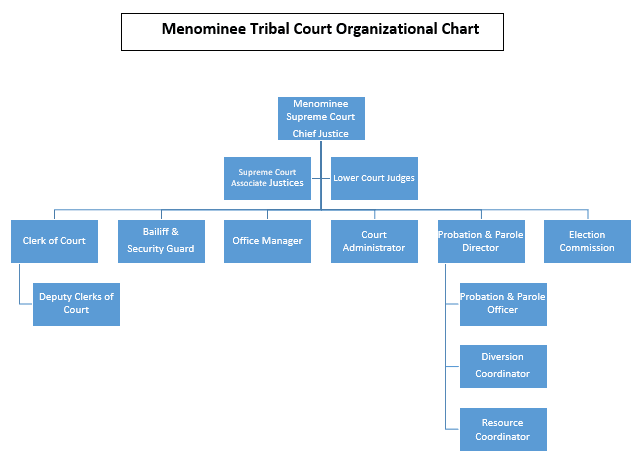
The Menominee Restoration Act still defines who governs, where the reservation sits, and how daily life works in Keshena, Neopit, Middle Village, Zoar, and South Branch. Public Law 93-197 restored federal recognition to the Menominee Indian Tribe of Wisconsin on December 22, 1973, repealed the 1954 termination law, and put the tribe back under the Indian Reorganization Act. In Menominee County, that legal reset still shapes the county map, the tribal government, and the institutions people use every day.
What the law changed
The Restoration Act did more than reverse a legal error on paper. It extended federal recognition to the Menominee Indian Tribe of Wisconsin despite the earlier termination law and provided for a Menominee Restoration Committee of nine Menominee Indians. That matters because recognition is the foundation for tribal authority, federal relationships, and the structure of government that followed.
President Richard M. Nixon framed the signing as a major turn in federal Indian policy, saying it reversed a wrong policy of forcibly terminating Indian tribal status. That statement captured the scale of the change in Menominee County: the tribe was not being granted a symbol, but regaining the standing needed to govern, organize, and reassert its rights and privileges under federal treaty and statute.
How Menominee got there
Restoration did not arrive suddenly in 1973. The Menominee had been building, litigating, and organizing for decades before Congress acted. In 1928, tribal members were able to elect an advisory board. In 1931, the tribe pursued lawsuits over mismanagement of the forest and mill. In 1934, the Indian Reorganization Act opened the door for tribes to develop constitutions and their own governing bodies.
The tribe’s timeline also marks a major 1945 settlement in the swamp-lands case, which included release of 33,870 acres of swamp land from state jurisdiction and payment of $1,590,854 to the State of Wisconsin. Those details show why land and authority were always linked for the Menominee: control of the forest, the mill, and the reservation itself sat at the center of the struggle long before restoration became law.
Termination cut directly into that structure. The Menominee tribal rolls were closed, and leaders were told they had until 1958 to submit a takeover plan for the reservation. That pressure explains why restoration was not only about federal policy. It was about whether the tribe could keep a government, protect membership, and rebuild services after the federal government stripped away recognized status in 1954.
The Menominee were among the first tribes targeted for termination because officials believed their timber lands made them economically self-sufficient. That belief turned the reservation into a national test case for a policy that treated tribal land and tribal sovereignty as problems to be folded into state systems. Restoration reversed that logic.
Ada Deer and the rebuild
Once restoration was achieved, the work shifted to rebuilding institutions. The tribe elected the Menominee Restoration Committee and chose Ada Deer as its head. The Milwaukee Public Museum describes that committee as facing the large task of reorganizing the tribe, its government, and tribal assets, which is a reminder that sovereignty is also administration, records, land, and people.
Ada Deer later was described by the Library of Congress as the first woman to lead the Menominee Tribe. Her role sits at the center of the restoration era because it connected federal recognition to practical governance. The committee had to move from legal victory to organizational reality, and that meant rebuilding the machinery of tribal government after years of disruption.
Archives from the period show how wide that rebuild reached. Records tied to the Menominee Restoration Committee, the Menominee Historical Foundation, and the Menominee County School District show that restoration touched education and community institutions as well as the tribal council table. In other words, the law changed more than jurisdiction. It changed the public life of the reservation.
Why it still shapes Menominee County
The clearest modern lesson is geography. The Menominee Indian Reservation is nearly coterminous with Menominee County, and the tribe’s official count lists 8,551 tribal members. That means county life and tribal life are intertwined in a way that is rare in Wisconsin. The seat of government is in Keshena, which makes the village the practical center for many county and tribal interactions.
Menominee County itself remains unusually small and heavily shaped by tribal land. Census Bureau data puts the county’s 2020 population at 4,255, making it Wisconsin’s least populous county. It covers 357.6 square miles of land area, and the county government says the county contains roughly 223,500 acres of heavily forested land. That forested landscape is not just scenery. It is the material base for land stewardship, local planning, and much of the county’s identity.
Keshena, the county seat, had 1,257 residents in the 2020 census. Together with Neopit, Middle Village, Zoar, and South Branch, it forms the human map of the reservation. Those community names matter because they show where the Restoration Act lands in everyday life: in the places where people live, vote, work, learn, and move through a county that is still structured by the legal outcome of 1973.
The practical takeaway
The Restoration Act remains the statute that keeps Menominee County and the Menominee Indian Tribe of Wisconsin reading the same map. It restored recognition, reopened the tribe’s path to self-government, and anchored the county’s present-day geography in a legal decision that still governs land, institutions, and community life in Keshena and beyond.
This article was produced by Prism’s automated news system from verified source data, official records, and press releases, then run through automated quality and moderation checks before publishing. The system is built and supervised by the people who set the standards it runs under. Read our full AI policy.
Did this article answer your question?