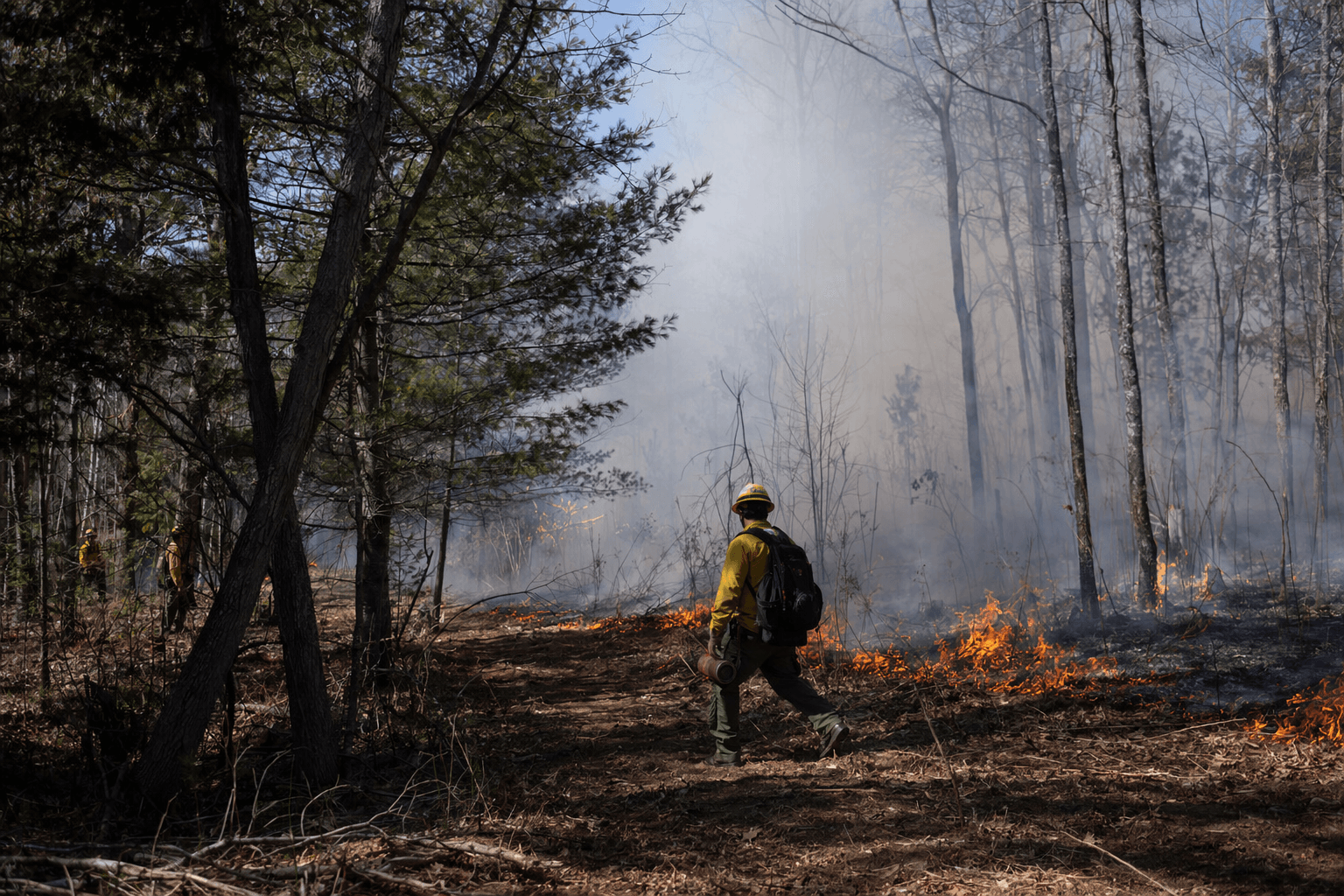
Menominee Tribal Enterprises sawmill keeps century-old hand signals alive
Neopit’s sawmill still uses century-old hand signals, keeping crews safe while carrying Menominee work knowledge from one generation to the next.

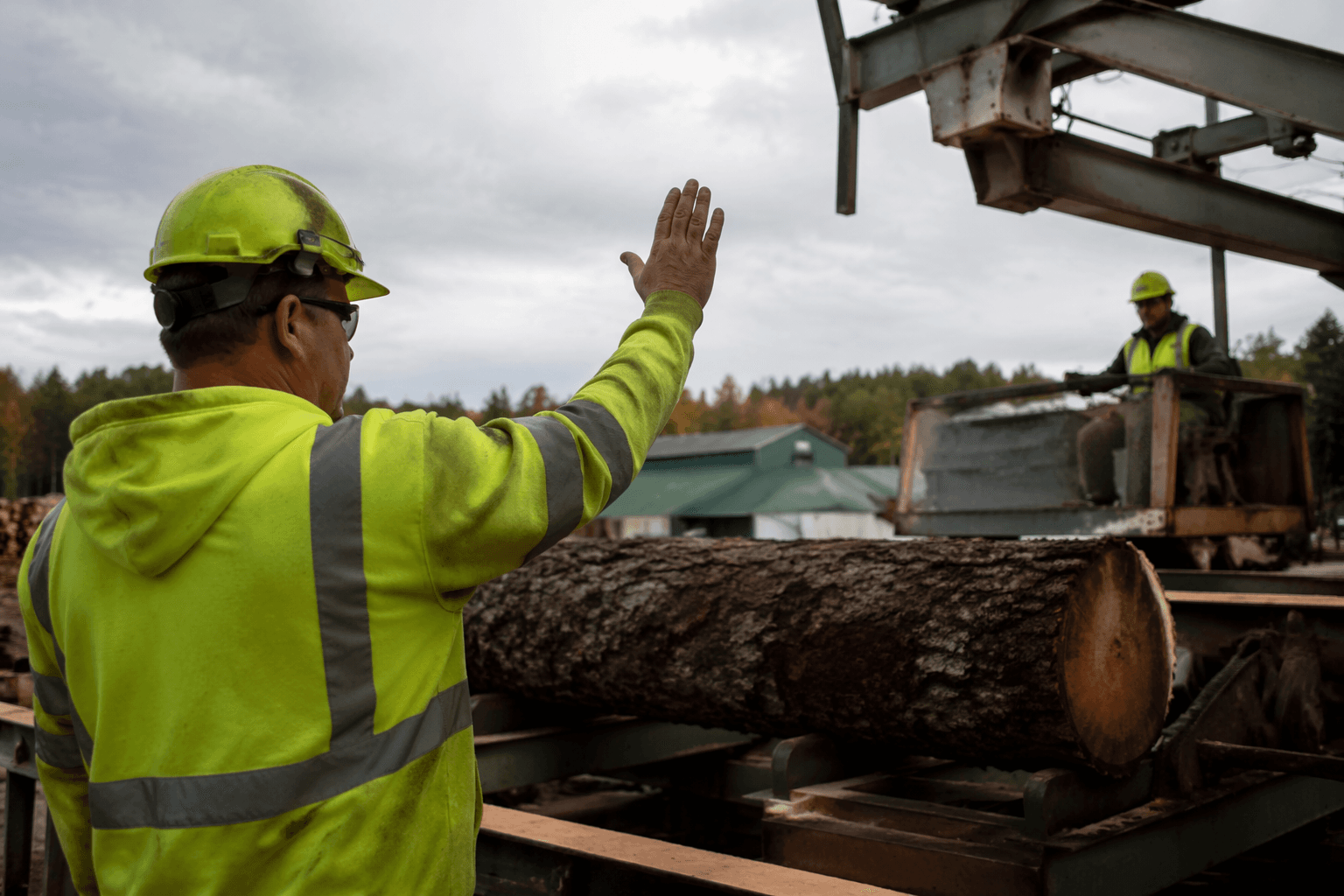
Inside the Menominee Tribal Enterprises sawmill in Neopit, a raised hand can do what shouting cannot: move lumber, warn a co-worker, and keep a century-old Menominee system alive. The hand signals, sometimes called “mill talk,” still cut through the noise of a high-speed industrial floor where multiple saws are running and lumber is moving constantly.
A language built for the sawline
The signal system survives because the mill never stopped needing it. In a place where loud machinery makes normal conversation useless, workers rely on hand signs to coordinate quickly and without interrupting production. That makes the system more than a habit. It is a practical safety tool, built for a workplace where hesitation can slow the line or create danger.
The people using it now give the tradition its everyday force. Edger operator Jason Waukau and lumber operations director John Awonohopay are among the workers featured in the mill’s current life, while Paul Pecore is shown operating the gang saw and Claire Eland and Adam Eland are pictured working on saw equipment. Their presence matters because it shows the signals not as a relic, but as part of the way the mill actually functions shift by shift.
The value of “mill talk” is also in its efficiency. When several saws are operating at once, crews need a way to read one another instantly. A hand signal can tell a worker to hold, move, slow down, or proceed without forcing anyone to stop and shout over the noise. In a place built around speed, that kind of communication is part of keeping the operation smooth as well as safe.
Why the hand signals still matter
What makes the system notable is not only that it works, but that it has lasted for more than a century. The signals connect current workers to earlier generations who developed the same habits in the same kind of loud, dangerous spaces. That continuity gives the practice a cultural weight that goes beyond the sawline. It is daily proof that Menominee knowledge is not stored only in archives or ceremonies. It also lives in the way people work.
That living continuity is especially meaningful in Neopit, where identity and industry have long been tied together. The Menominee Tribal Enterprises sawmill is not a side note to tribal life. It is one of the places where Menominee tradition, skill, and economic self-reliance meet in practical form. The hand signals endure because they still solve real problems, but they also endure because they belong to a workplace culture that has learned to value what works.
The mill’s survival as a functioning communication system also suggests how knowledge is transmitted in an industrial setting. Workers do not need to reinvent the process every generation. They inherit it, refine it, and keep using it because the conditions on the floor have not changed enough to make it obsolete. The result is a rare kind of workplace tradition: one that is both efficient and deeply local.
A century tied to Menominee self-sufficiency
The sawmill’s story reaches far beyond the walls of the plant. The Menominee Indian Tribe of Wisconsin says its history in the region now known as Wisconsin, and parts of Michigan and Illinois, dates back 10,000 years. Tribal history materials say the Menominee origin story begins at the mouth of the Menominee River, about 60 miles east of the present Menominee Indian Reservation. That longer timeline puts the mill in perspective. It is a modern expression of a much older presence.
The industrial chapter began in 1908, when Congress passed the La Follette Bill and authorized construction of a sawmill and manufacturing plant on the reservation. Tribal history materials describe the system as selective logging based on sustained yield, meaning no more logs could be cut than were grown in a single year. That approach turned forestry into a model of restraint rather than extraction, and it gave the tribe a way to tie work, land, and stewardship together.
PBS Wisconsin has described the Menominee Tribal Enterprises sawmill as providing tribal members with a living and a way of life for one hundred years through selective harvesting and sustainable methods. The same coverage noted that the reservation holds more timber today than it did 150 years ago. That detail matters because it shows how the operation has been shaped by long-term planning, not short-term gain. The mill is part of a forestry system that has kept standing timber as a lasting resource.
What the mill means to Menominee County now
The sawmill’s importance is not only symbolic. A 2013 Wisconsin State Journal archive piece said Menominee Tribal Enterprises employed about 100 people, while the nearby Menominee Casino Resort employed about 500. Those numbers help explain why the mill remains one of the reservation’s major employers. In a county where stable jobs matter, the sawmill is a piece of economic infrastructure as much as a cultural landmark.
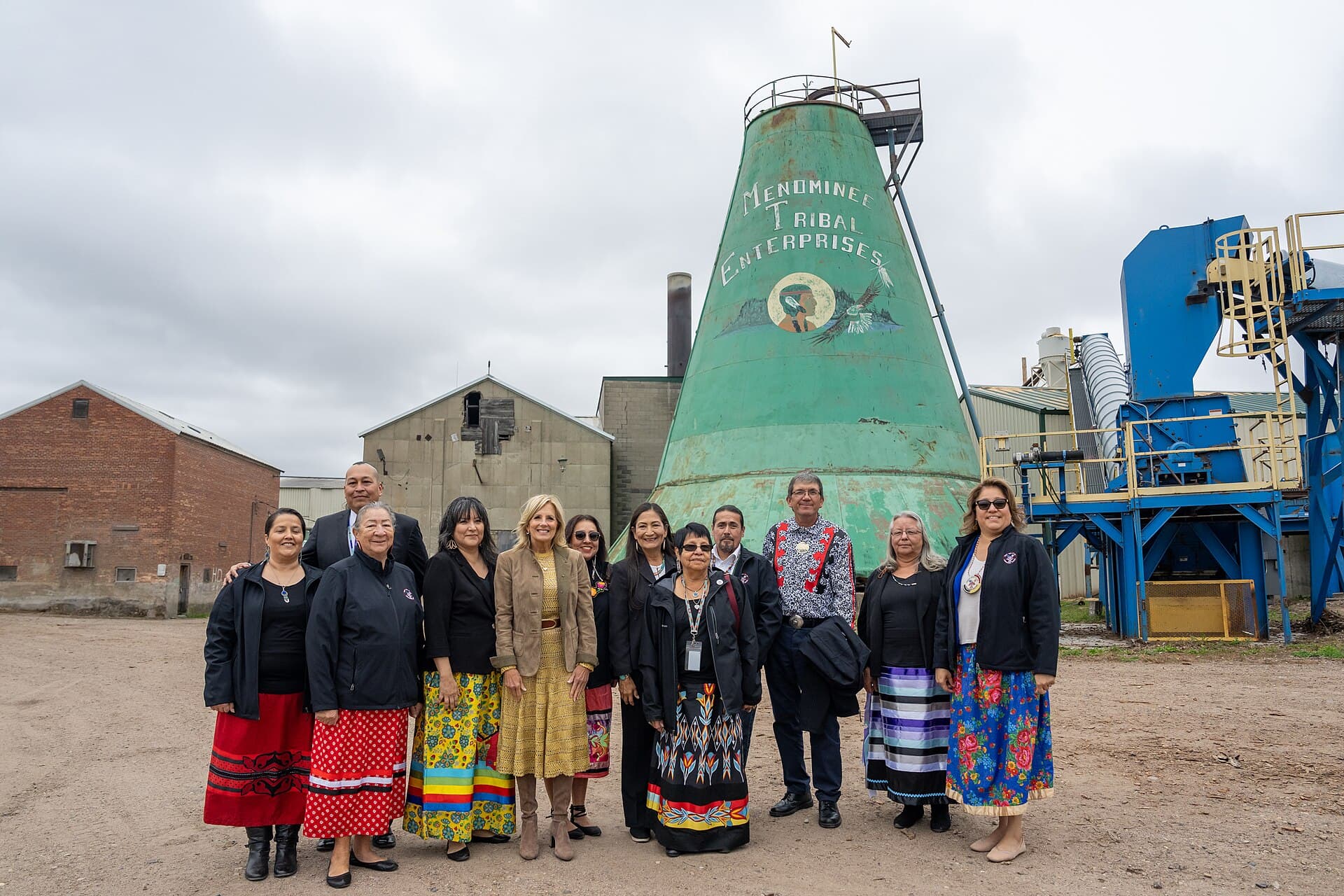
The operation has also been visible far beyond Neopit. On October 10, 2023, First Lady Jill Biden and Interior Secretary Deb Haaland toured the sawmill as part of a visit centered on the tribe’s sustainable forest management. That visit placed the mill in a national conversation about Indigenous stewardship and showed how a local workplace can become a public example of tribal governance, environmental management, and economic resilience.
The deeper story is political as well as economic. Tribal historical materials say the Menominee fought federal mismanagement of the lumber operation and later won restoration after termination-era policies. That history helps explain why the sawmill is often understood as both a business and a symbol of self-determination. It is not simply about cutting lumber. It is about controlling how land, labor, and inherited knowledge are used.
That is why the hand signals matter so much in Neopit. “Mill talk” is practical, but it is also a marker of continuity in a place where work, identity, and survival have long been intertwined. As long as the saws keep turning and the lumber keeps moving, the raised hand will remain one of the most durable expressions of Menominee life on the job.
This article was produced by Prism’s automated news system from verified source data, official records, and press releases, then run through automated quality and moderation checks before publishing. The system is built and supervised by the people who set the standards it runs under. Read our full AI policy.
Know something we missed? Have a correction or additional information?
Submit a Tip