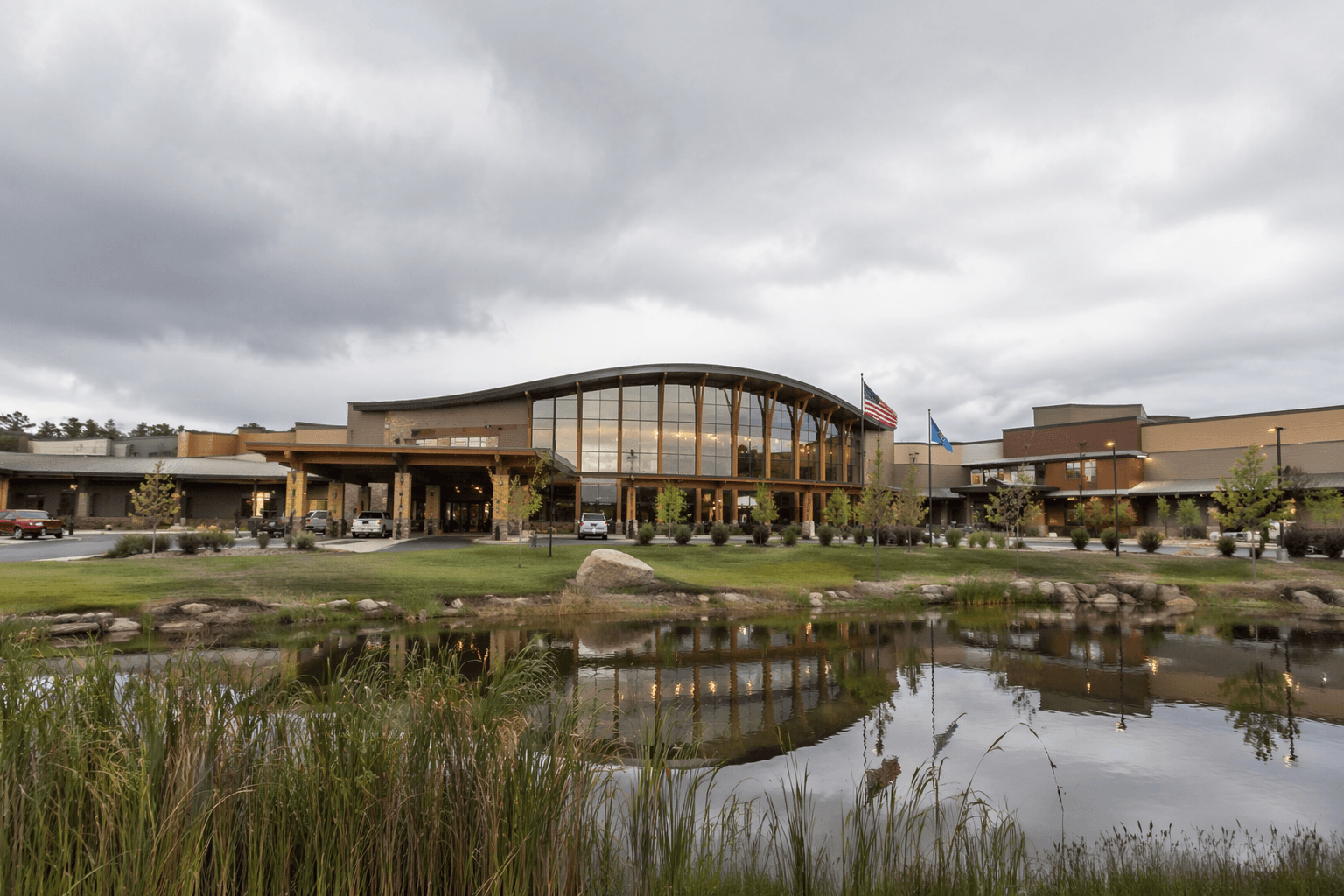
Menominee Tribal Enterprises Sustains County Economy Through Century-Old Forest Model
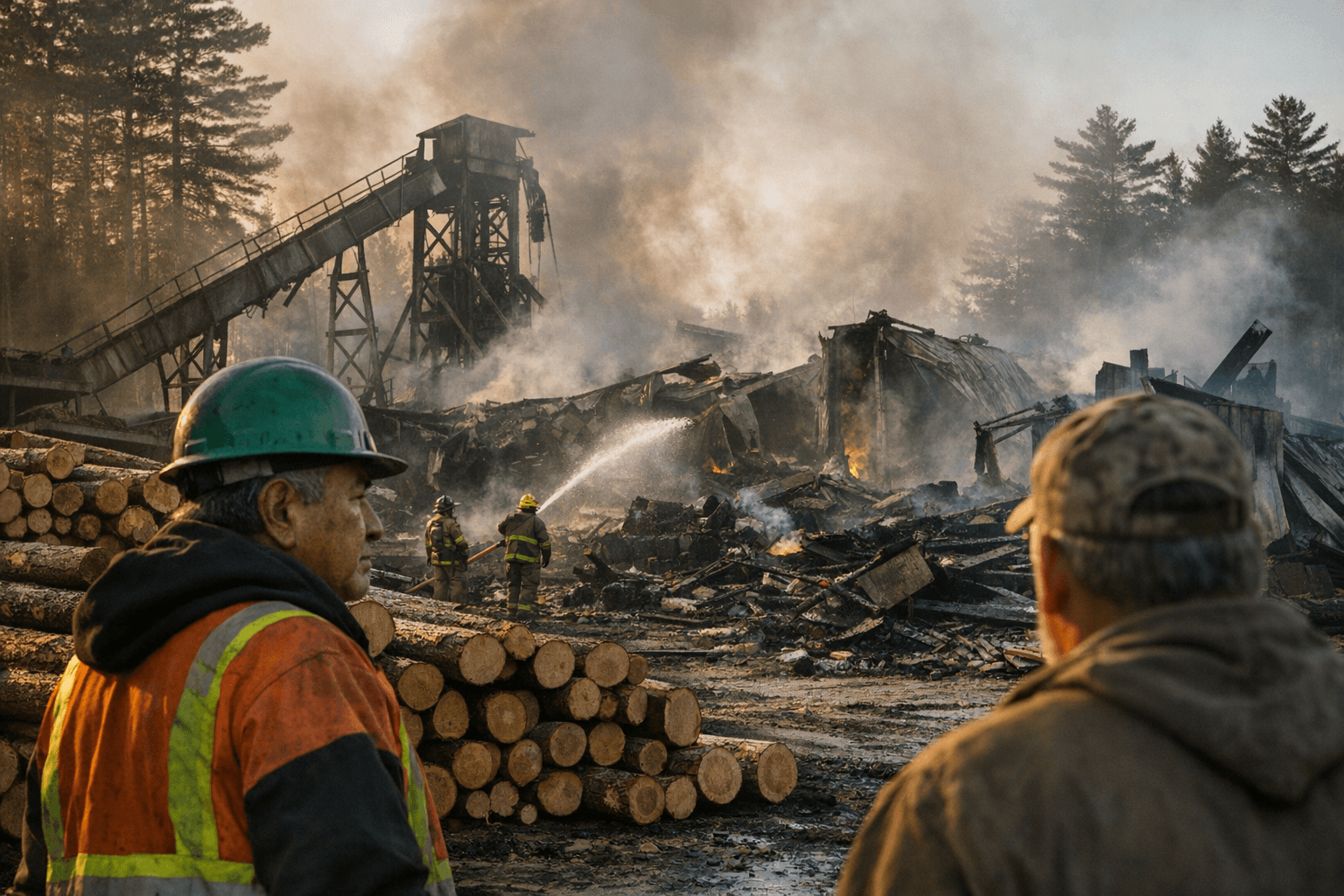
A March fire gutted MTE's Neopit stacker building and halted production at the mill sustaining nearly 300 jobs and most of Menominee County's private-sector payroll.

Fire consumed the stacker building at Menominee Tribal Enterprises' sawmill complex on Highway 47 in Neopit on March 3, 2026, reducing the structure and every piece of equipment inside to a total loss. The MTE president confirmed that some lumber inventory was also damaged in the blaze. Production operations shut down while the enterprise assessed the damage — a pause felt almost immediately by the roughly 300 workers whose paychecks run through this facility, and by the web of equipment vendors, trucking contractors, and supplier businesses whose cash flow moves in parallel with the mill's output.
The incident put in sharp relief something Menominee County residents already understand: when the Neopit mill stops, a significant portion of the county's private-sector economy stops with it.
The Scope of MTE's Economic Footprint
Menominee Tribal Enterprises is the business arm of the Menominee Indian Tribe of Wisconsin and the steward of a 230,000-acre working forest managed continuously for more than a century. Its operations span timber harvesting, sawmilling, remanufacturing, and value-added wood products, with principal facilities in Neopit and supporting operations in Keshena. Across those functions, MTE employs approximately 125 people directly within the enterprise — mill operators, logistics staff, procurement specialists, and administrators — alongside roughly 180 contracted woods workers who handle harvesting on the reservation.
That combined workforce of around 300 makes MTE the dominant private-sector employer in Menominee County. Wages and benefits are set by MTE's board and management, and the competitive compensation structure is a primary reason tribal members from Keshena, Neopit, Zoar, and surrounding communities pursue mill careers rather than positions requiring long commutes out of the county.
20 Million Board Feet and the Businesses It Feeds
The Menominee Forest yields approximately 20 million board feet of timber annually under the tribe's sustainable-harvest model, a volume calibrated precisely to what the forest can regenerate each year. That timber flows from the reservation uplands through the Neopit sawmill and into regional markets as finished lumber, veneer, and custom-milled products, generating revenue that funds tribal services and community programs beyond mill payroll alone.
The economic ripple extends well past the mill gate. Equipment vendors, fuel suppliers, transport operators, and maintenance firms all carry MTE on their client lists. When the mill runs at capacity, that procurement spending circulates through local commerce, showing up in the retail, construction, and service-sector businesses that anchor Keshena and Neopit. A disruption — like the March stacker fire — affects supplier invoices and transport schedules, not just mill-floor paychecks. That is why local leaders, tribal government, and MTE leadership consistently treat mill outages, timber market shifts, and forest-health trends as high-priority items with direct fiscal and social consequences for the whole county.
The Stat That Stops Visitors Short
Here is the number that consistently surprises people encountering the Menominee model for the first time: over roughly 170 years of continuous harvesting, MTE and its predecessors have extracted more than 2.25 billion board feet of timber from the Menominee Forest, yet the forest today holds approximately 40 percent more standing timber than it did when formal management began. The harvest has far exceeded the original stock in total volume removed, but the forest has grown faster than the saws.
That outcome is the direct product of the multi-age management system MTE practices. Only mature, over-ripe, or diseased trees are targeted for harvest, leaving younger, faster-growing trees to accumulate volume for future cuts. The forest's more than 9,000 distinct tree stands are monitored individually, with growth and harvest volumes tracked against the annual allowable cut to ensure the forest never draws down its productive base. For a county whose economy depends on continuous timber supply, that discipline is not environmental philosophy in the abstract; it is the operating logic that keeps the payroll coming.
Value-Added Products and Capital Investment
In September 2022, the U.S. Commerce Department's Economic Development Administration awarded MTE a $5 million grant to support mill upgrades and expand its value-added product lines. The investment reflected a strategic push already underway: moving beyond commodity lumber into higher-margin remanufactured and custom-milled products that command stronger prices in housing, cabinetry, and finish carpentry markets. MTE's millwork division, operating out of Neopit, supplies custom moulding, trim, and cabinetry components to contractors and builders across the region.
The value-added orientation matters for the county economy because higher-margin products generate more revenue per board foot, which in turn supports more stable employment than commodity lumber markets alone can sustain. MTE's FSC certification also opens access to institutional and commercial buyers who pay a premium for verified sustainable sourcing, a market segment that has expanded as housing developers face green-building procurement requirements. With lumber prices remaining elevated in regional housing markets, MTE's ability to supply FSC-certified hardwoods positions the enterprise well — provided the Neopit mill can sustain output through recovery from the March incident.
Stewardship as County Infrastructure
The Menominee stewardship model is inseparable from the county's economic stability in a way that is unusual even among tribal enterprises. Because the forest is the feedstock for every downstream job — from the chainsaw operator in the reservation uplands to the cabinet installer fitting MTE millwork into a Green Bay kitchen — forest health functions as a balance-sheet item, not only a conservation goal.
The tribe's sustained-yield approach traces to the 1908 Congressional act that authorized construction of the Neopit sawmill to maximize economic benefit to tribal members while establishing harvest limits. That legislative foundation created a governance framework in which MTE's board, tribal government, and forest managers share accountability for keeping harvest within the forest's regenerative capacity. Sustainable harvest practices also reflect a community commitment to tying business decisions to tribal governance principles, ensuring that revenues from the forest are reinvested in the services and programs that Keshena, Neopit, and Zoar residents rely on.
What to Watch in the Coming Months
The stacker building fire has focused immediate attention on MTE's recovery timeline. Board meeting notices, procurement announcements, and operational updates on MTE's official news page are the most direct way to track whether and when full production resumes. Broader variables shaping the county's economic outlook include timber market pricing, the pace of planned mill equipment upgrades, and the continued health monitoring that sets the ceiling on annual harvest volumes.
The Neopit sawmill has been operating in some form since 1908. It has weathered federal policy shifts, commodity crashes, and a June 2022 windstorm that deposited 12 million board feet of downed timber, roughly a full year's typical harvest, onto the forest floor in 20 minutes. The century-old model has adapted before. How quickly it adapts this time is the most consequential open question for the county's economic calendar right now.
This article was produced by Prism’s automated news system from verified source data, official records, and press releases, then run through automated quality and moderation checks before publishing. The system is built and supervised by the people who set the standards it runs under. Read our full AI policy.
Did this article answer your question?