$1,500 a month buys just 498 square feet in Miami rentals
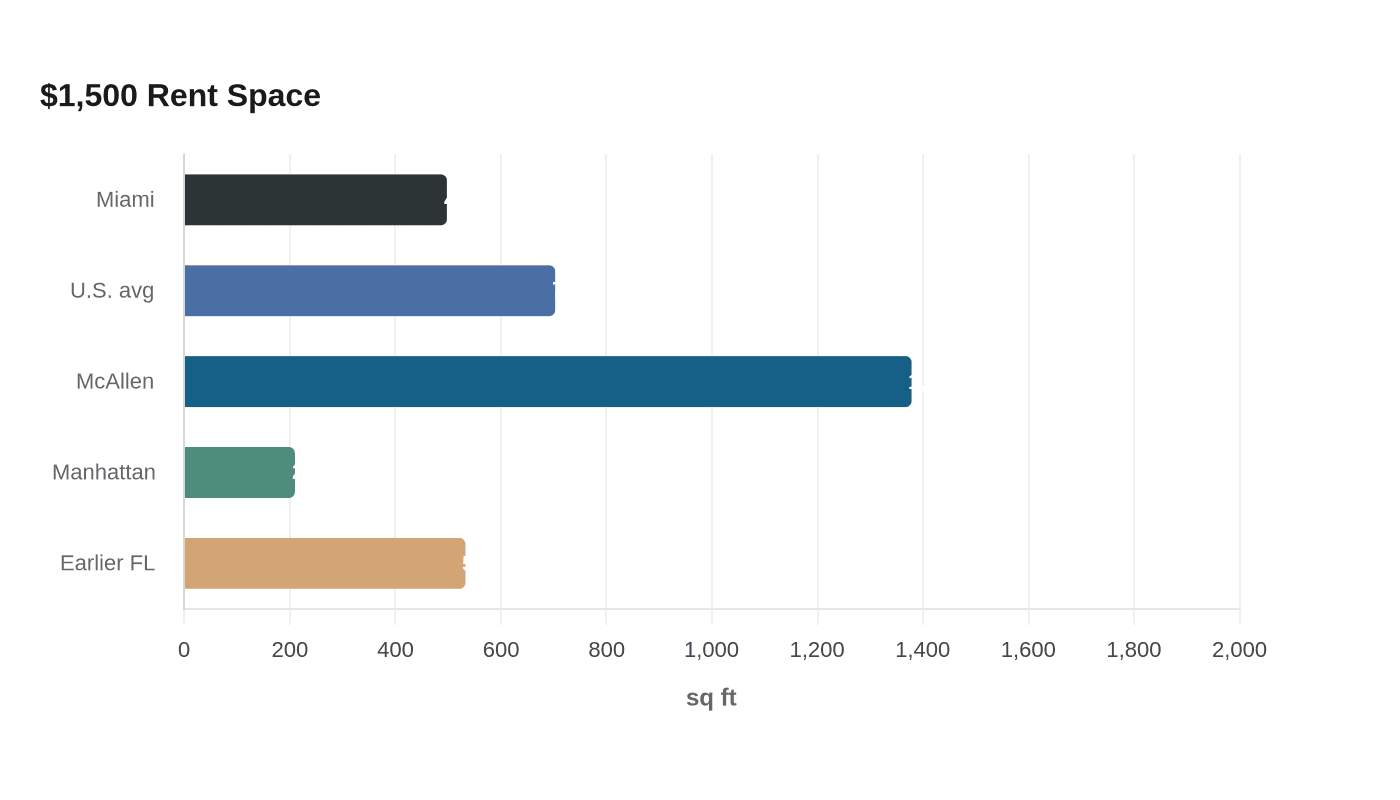
In Miami, $1,500 now rents just 498 square feet, less than a two-car garage, and far below the 703-square-foot U.S. average.

A $1,500 rent check now buys only 498 square feet in Miami, about the size of a two-car garage. That is down from 533 square feet in an earlier Florida comparison, a small but sharp reminder that renters are paying more and getting less space in one of the country’s tightest housing markets.
The gap is glaring against the national benchmark. RentCafe’s July 10 snapshot said $1,500 buys an average of 703 square feet across 200 U.S. cities, while McAllen, Texas, stretches that same budget to 1,378 square feet. Manhattan sits at the other extreme at just 210 square feet. Miami’s 498-square-foot result leaves it well below the U.S. average and far from the cheaper metros that still give renters room to breathe.
The math gets even harder inside the city itself. RentCafe listed Miami’s average rent at $2,753 as of July 2, 2026, up 0.4% from a year earlier. Studio apartments averaged $2,147 and about 463 square feet, which helps explain why a $1,500 budget is pushed toward compact units, older buildings, or units with fewer amenities. In Miami Beach, the pressure is stronger still: average rent reached $3,583, and even the cheapest studio averaged $1,908 for 575 square feet.

That squeeze lands hardest on people whose jobs anchor them near the city. In a January 2026 WLRN report, Miami-Dade firefighters and police officers were spending about 50% of salary on housing, while teachers were facing more than 60%. For service workers, new graduates, and health-care employees, the choice is often between living alone in a studio, taking on roommates, or moving farther from work and accepting longer commutes.

Miami-Dade County has said rents and homeownership costs continue to rise faster than income growth, and transportation costs add to the burden. The county’s census profile puts its population at about 2.84 million, with a median age of 40.6 and a median household income of $72,808. Those numbers help explain why federal benchmarks matter: the U.S. Department of Housing and Urban Development uses Fair Market Rents to set payment standards for Housing Choice Vouchers and other housing programs, so local rent levels shape both subsidized and unsubsidized households.
County officials said in June 2026 that investments in affordable and workforce housing projects had doubled compared with early 2021. Even so, the latest rent figures show Miami remains a market where $1,500 no longer buys enough room for many residents to stay near the jobs and schools that keep the county running.
This article was produced by Prism’s automated news system from verified source data, official records, and press releases, then run through automated quality and moderation checks before publishing. The system is built and supervised by the people who set the standards it runs under. Read our full AI policy.
Did this article answer your question?