Milam’s Market tests AI smart carts at Miami-Dade stores
Milam’s Market rolled out Coupr smart carts at its Pinecrest and Coconut Grove stores, offering free AI help to shoppers searching for items, coupons and product details.
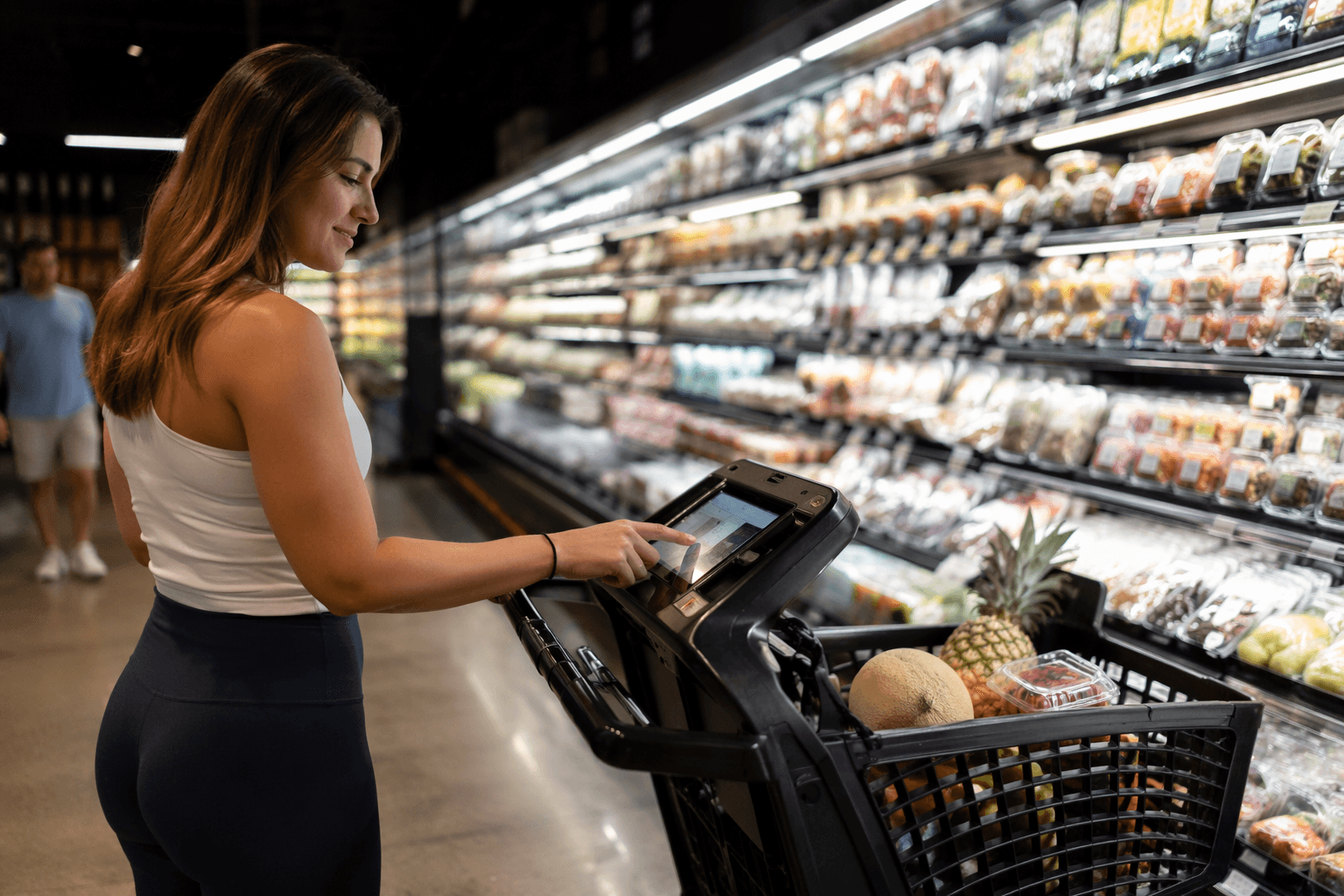
Milam’s Market began testing Coupr’s AI-powered smart carts at its Pinecrest and Coconut Grove stores, putting 10 carts into each location with a goal of 20 as the Miami-Dade grocer tried to make shopping faster and more personalized. The pilot was free to customers and ran at 11701 S. Dixie Hwy. in Pinecrest and 2969 SW 32nd Ave. in Coconut Grove.
Milam’s Markets is a six-store, family-owned grocery retailer with roots in Miami-Dade dating to 1984, when the first Milam’s opened at Red Road and Bird Road in Miami. The chain later expanded to Miami Springs, Coconut Grove, Sunny Isles Beach, Coral Gables and Pinecrest, and it has framed itself as carrying a 40-year legacy in the county.
The carts added tablet-sized screens and scanners to the familiar grocery cart, giving shoppers a way to search for products, explore alternatives, compare items and pull up coupons, nutrition facts and other product details while they moved through the aisles. Coupr said its mission was to bridge the gap between the physical store and the online shopping experience, a pitch aimed at people who want digital-style tools without giving up a traditional grocery run.
For Miami-Dade shoppers, the practical test was simple: whether the carts actually saved time. In stores where many customers shop with long lists and tight schedules, a cart that can point them to staples faster could make a real difference. If the system worked smoothly, it could help people navigate unfamiliar layouts and cut down on the backtracking that turns an ordinary grocery trip into a search mission.
Coupr founder Julian Janna, who is 31, said his own frustration shopping in stores pushed him toward the idea, and he chose Miami because he knew the market and wanted to work with a smaller retailer. That local fit mattered in a county where neighborhood grocers still compete with big chains by offering convenience, familiarity and a more personal feel.
The pilot also raised a privacy question that goes beyond Pinecrest and Coconut Grove. Across retail, tools that track shopping behavior and location have drawn scrutiny because that data can be used in individualized pricing systems. The Federal Trade Commission has warned that precise location and shopping patterns can feed those systems, giving shoppers another reason to watch how much information an AI cart collects while it follows them through the store.
For Milam’s, the experiment put a familiar South Florida grocery trip in the middle of a larger retail shift. The question facing Miami-Dade shoppers was not whether the technology looked new, but whether it genuinely made the weekly grocery run easier without asking for too much in return.
This article was produced by Prism’s automated news system from verified source data, official records, and press releases, then run through automated quality and moderation checks before publishing. The system is built and supervised by the people who set the standards it runs under. Read our full AI policy.
Did this article answer your question?