9-foot crocodile removed from U.S. 1 near Naval Air Station Key West
A 9-foot crocodile was hauled off U.S. 1 by Naval Air Station Key West after deputies said it appeared to have been hit by a vehicle.
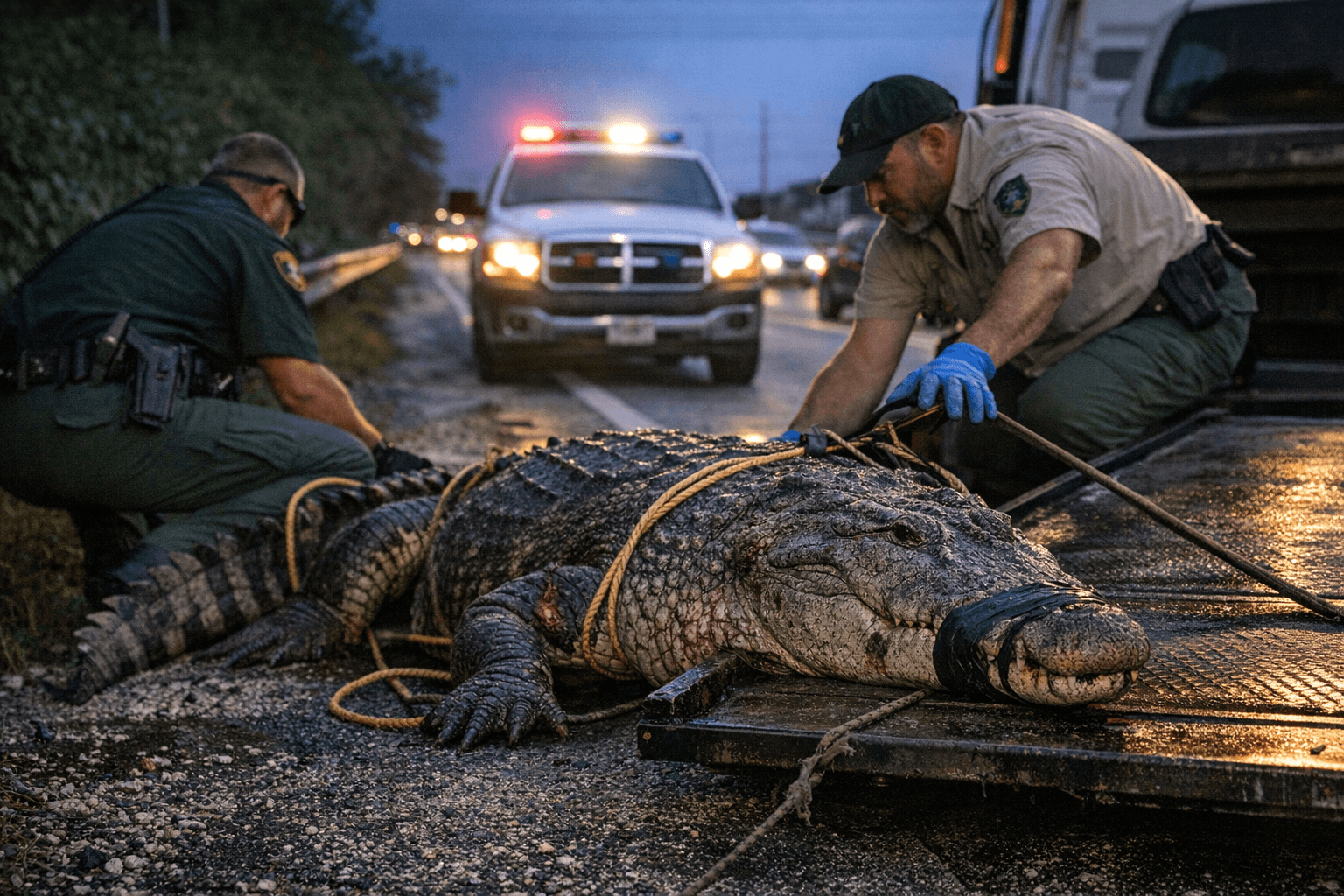
A 9-foot dead crocodile was removed from U.S. 1 near U.S. Naval Air Station Key West after officials said it appeared to have been struck by a vehicle.
Sheriff Rick Ramsay was on hand as the Monroe County Sheriff’s Office, Key West Police Department and Florida Fish and Wildlife Conservation Commission handled the removal. On a stretch of highway where traffic is dense and visibility can be limited, the carcass was more than an odd roadside sight. It was a roadway hazard that forced public-safety and wildlife crews to work together on one of Monroe County’s most important corridors.
The incident also underscored how closely the Florida Keys’ transportation system overlaps with its wildlife habitat. The American crocodile is not a common nuisance animal. It is a federally protected species that FWC describes as a conservation success story, after Florida’s population recovered from a few hundred animals when it was listed as endangered in 1975 to as many as 2,000 adults today. The agency says nesting has climbed to more than 100 annually, and that the species is now considered threatened by the U.S. Fish and Wildlife Service.
FWC says American crocodiles are shy and reclusive and are found at the northern end of their range in South Florida, especially in brackish and saltwater habitat such as mangrove swamps, coves and creeks. That makes Monroe County a place where a major highway and a protected predator can end up sharing the same narrow geography, with drivers facing the risk of sudden encounters and wildlife officers facing the risk of injury to an already protected species.
The Lower Keys scene came as state wildlife officers were also seeking information in another crocodile case in Key Largo, where an approximately 8-foot American crocodile was found with a spear from a speargun lodged in the back of its head near MM 101. Together, the two incidents point to the same tension across the island chain: the Florida Keys are built around roads, water and wildlife, and when crocodiles are hurt or killed, the response quickly becomes about more than one animal.
For Monroe County, a dead crocodile on U.S. 1 is not just a strange sight. It is a reminder that the county’s signature highway runs directly through habitat that still belongs to one of Florida’s most closely watched species.
Know something we missed? Have a correction or additional information?
Submit a Tip