NOAA Hurricane Hunter aircraft returns to Marathon Airport for tours
A C-130J Hurricane Hunter drew school groups and residents to Marathon Airport, showing how storm data is gathered before Keys hurricane season starts June 1.
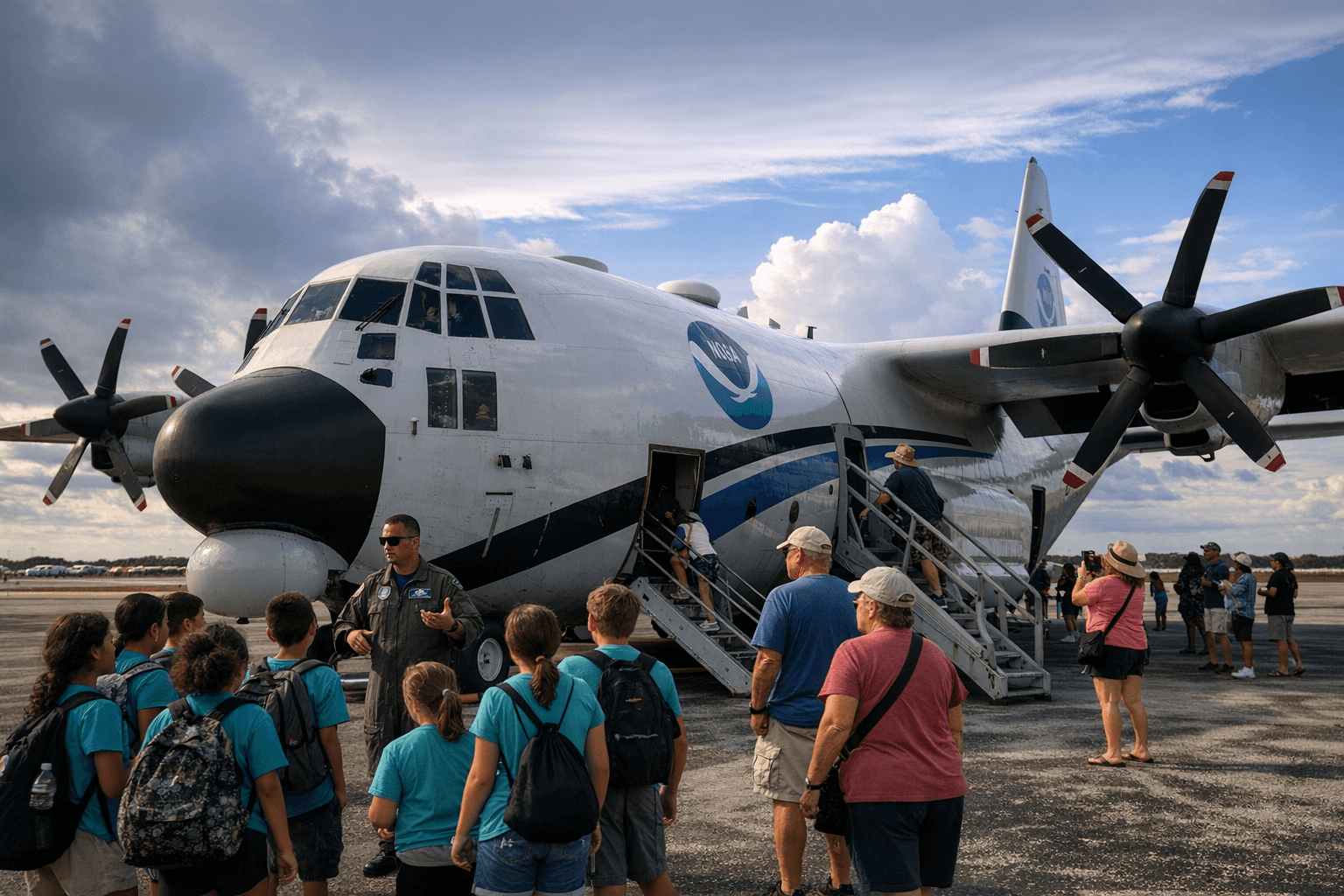
The sight of a C-130J Hurricane Hunter on the tarmac at Florida Keys Marathon International Airport gave Monroe County residents a rare look at the science that tracks hurricanes before they strike the Keys. The aircraft landed in Marathon on April 14 as the first stop on NOAA’s Caribbean Hurricane Awareness Tour, a visit local leaders and storm watchers had not seen at the airport in more than a decade.
NOAA scheduled public tours from 1 p.m. to 4 p.m. EDT, and the plane welcomed public officials, school groups and residents who stepped inside to see the cockpit and storm gear up close. National Hurricane Center director Michael Brennan was among the NOAA officials who met with local leaders and emergency managers during the stop, along with staff from the National Hurricane Center and National Weather Service Key West.
The visit was more than a photo opportunity. NOAA and the U.S. Air Force Reserve use Hurricane Hunter aircraft to fly into tropical storms and hurricanes and collect real-time data that is sent to the National Hurricane Center for analysis. NOAA’s own Hurricane Hunter fleet is based at the Aircraft Operations Center in Lakeland and includes the WP-3D Orion and Gulfstream IV-SP, while the Air Force Reserve’s WC-130J flies directly into the storm core. The 53rd Weather Reconnaissance Squadron, the only Department of Defense unit still flying into tropical storms and hurricanes, has done that mission since 1944.
Brennan used the Marathon stop to underscore what that data means on the ground: better tools and better information have improved forecasts, but residents still cannot wait for seasonal outlooks to start preparing. That message carries extra weight in Monroe County, where hurricane season is not abstract and where even a slight forecast shift can change evacuation timing, shelter planning and supply runs across the island chain.
NOAA and Monroe County both say hurricane season runs from June 1 through November 30. County preparedness guidance tells residents to decide where they will go, get vehicles ready and register special-needs family members if needed. For Marathon, the aircraft’s return also carried a local reminder that this is a community with a long memory for storms and a direct stake in the accuracy of every forecast cone.
The 2026 tour also included Roatan, Honduras, Belize City and Isla Grande, Puerto Rico, but the Marathon stop stood out because it brought national storm science into the heart of the Keys. Keys residents got a hands-on look at the mission before the season begins, and the message from the tarmac was plain: preparation starts now, not when the first watch is issued.
This article was produced by Prism’s automated news system from verified source data, official records, and press releases, then run through automated quality and moderation checks before publishing. The system is built and supervised by the people who set the standards it runs under. Read our full AI policy.
Did this article answer your question?