Artemis II mission links Florida Keys training site to record lunar flyby
Two Artemis II astronauts trained 62 feet down off Tavernier, tying a Florida Keys habitat to the mission’s record 252,756-mile lunar flyby.
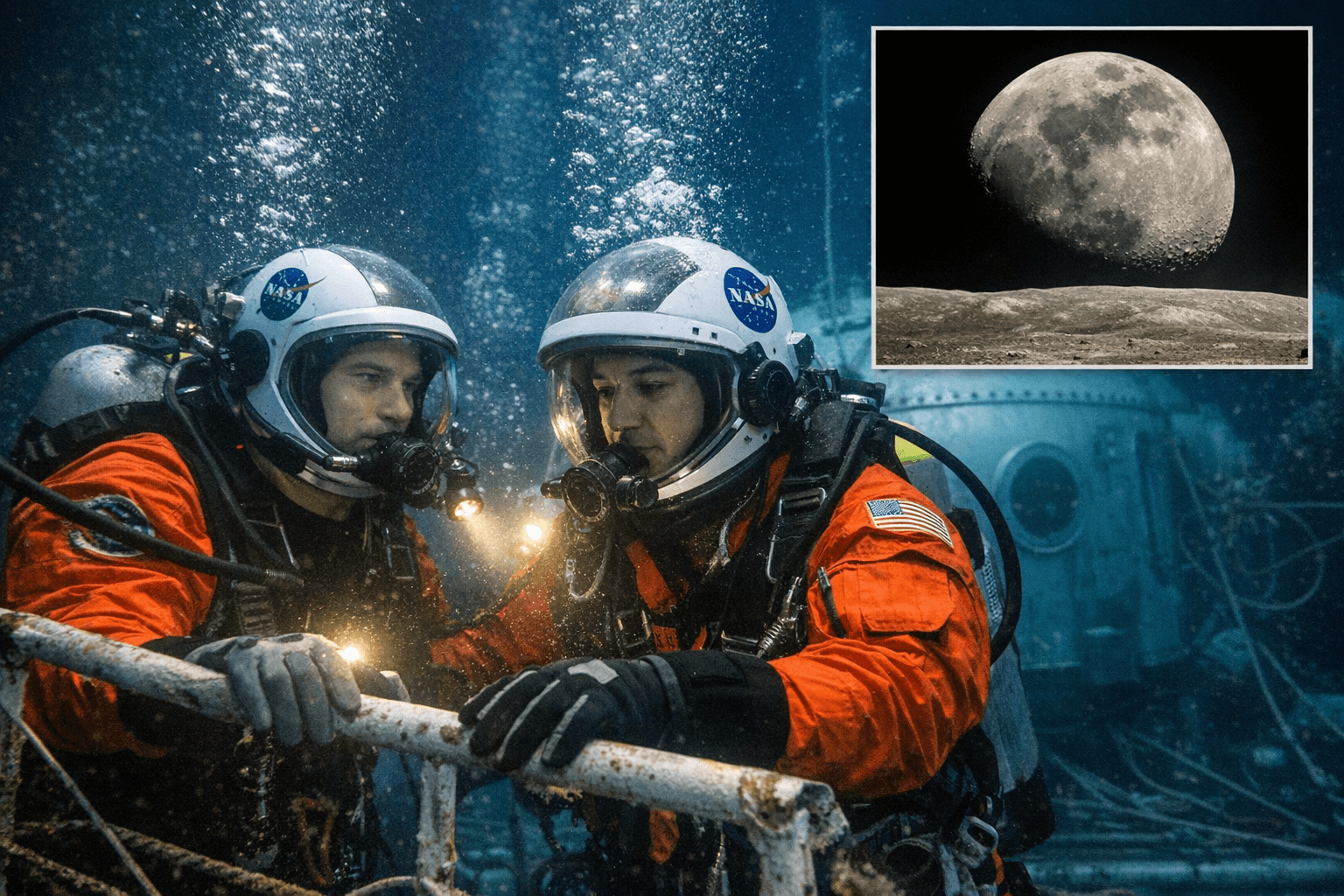
More than 200,000 miles from Earth, Artemis II carried a Monroe County connection: two of its astronauts had already trained underwater at Aquarius Reef Base off Tavernier, where the isolation and confinement of the habitat helped prepare them for life inside Orion on the way to the Moon.
NASA said the four-person crew, commander Reid Wiseman, pilot Victor Glover, and mission specialists Christina Koch and Jeremy Hansen, completed the agency’s first crewed lunar flyby in more than 50 years. The mission reached a maximum distance of 252,756 miles from Earth, breaking the human spaceflight distance record previously held by Apollo 13 by 4,111 miles. NASA described Artemis II as a planned 10-day mission around the Moon designed to test deep-space systems and pave the way for future lunar landings.
The Keys link runs through Aquarius Reef Habitat at Conch Reef in the Florida Keys National Marine Sanctuary, about 62 feet below the ocean surface. NASA’s biography of Wiseman says he commanded NEEMO 21 at Aquarius off Islamorada, and the space agency says that mission began July 21, 2016, with aquanauts splashing down to the habitat for a 16-day simulated space mission. Florida International University reported that Wiseman lived underwater there in 2016 and Hansen did the same in 2014.
That setting mattered because Aquarius recreates conditions that astronauts cannot get from ordinary classroom training. The habitat’s depth, remoteness and tight quarters force crews to work through delays, limited space and close coordination, the same kind of pressures that shape long-duration missions in deep space. Henry Stark, Aquarius operations director, has said the work is unusual because it gives the team a chance to know astronauts personally while living and working underwater together for days at a time.
For Monroe County, that turns a global space milestone into a local one. The Florida Keys are usually known for diving, fishing and tourism, but Aquarius has long shown that the same waters can support ocean science and astronaut preparation. NASA’s Aquarius science history also includes the Aquarius/SAC-D satellite, which mapped ocean salinity to improve understanding of the water cycle, circulation, weather and climate.
Artemis II added another chapter to that story. NASA said the crew was 18,830 miles from the Moon when it woke on lunar flyby day, captured images of the far side and even recorded a rare in-space solar eclipse. The mission’s record-setting arc now runs from Kennedy Space Center to the Moon and back, with a crucial part of the preparation rooted in the waters off Tavernier and Islamorada.
This article was produced by Prism’s automated news system from verified source data, official records, and press releases, then run through automated quality and moderation checks before publishing. The system is built and supervised by the people who set the standards it runs under. Read our full AI policy.
Did this article answer your question?