Coast Guard intercepts sinking migrant boat in Yucatán Channel
A wooden boat carrying 27 people was taking on water in the Yucatán Channel, underscoring the risky crossings that keep Keys crews on alert.
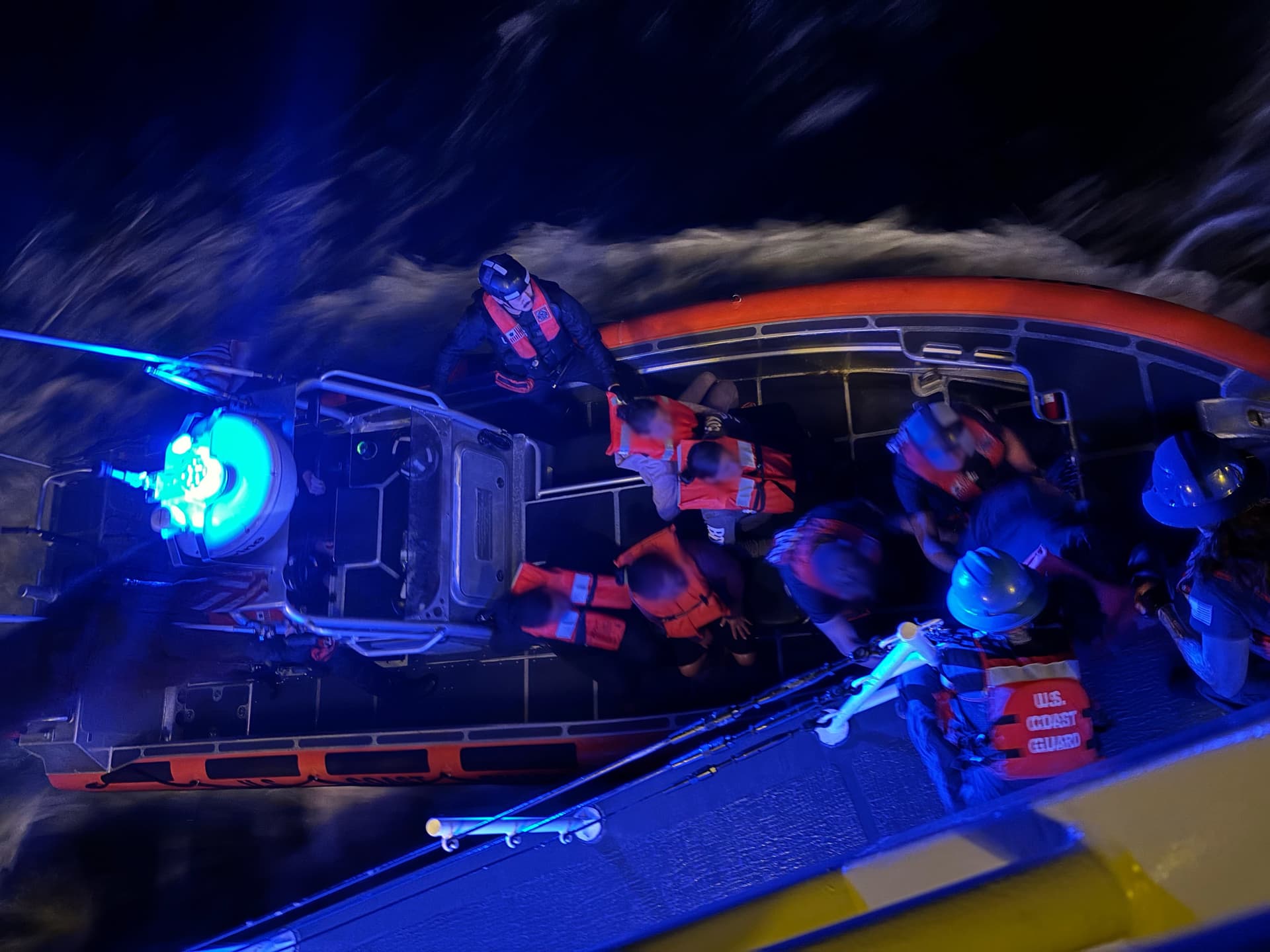
A wooden boat carrying 27 people was taking on water in the Yucatán Channel, with no fuel or drinking water aboard, when the Coast Guard intercepted it and moved the migrants to safer custody. The vessel was nearly out of options in one of the most dangerous stretches of water in the Caribbean, where overloaded homemade boats can turn a crossing into a life-threatening emergency in minutes.
The Coast Guard said the Cutter Raymond Evans launched a patrol boat crew to reach the vessel, transfer the people aboard and stabilize the situation before another cutter later returned the group to Cuba. Footage released from the operation showed the kind of cramped, unseaworthy conditions that have become familiar to crews working South Florida’s maritime routes: a small wooden hull riding low, packed far beyond any safe capacity and already taking on water.
The interception happened on June 25, 2026, west of Cuba rather than inside the Florida Keys, but it belonged to the same maritime corridor that keeps Monroe County on alert. The Keys sit at the front edge of a route watched by federal, state and local agencies that regularly track boat traffic, respond to distressed vessels and handle migration-related emergencies alongside routine rescues of boaters and anglers.

For Monroe County, the significance is not the nationality of the people aboard the boat but the danger of the passage itself. A vessel with no fuel, no drinking water and water coming over the sides puts everyone on board, along with the crews called to find it, in immediate danger. Coast Guard officials used the interception to deliver a blunt warning: crossings by sea in overloaded homemade boats are extraordinarily dangerous and place lives at unnecessary risk.
The scene is also a reminder of how closely the Keys are tied to events unfolding far offshore. A sinking boat in the Yucatán Channel may be outside county waters, but the same currents, patrol patterns and rescue demands shape daily life across Monroe County, where dangerous crossings and maritime emergencies remain part of the region’s public-safety reality.
This article was produced by Prism’s automated news system from verified source data, official records, and press releases, then run through automated quality and moderation checks before publishing. The system is built and supervised by the people who set the standards it runs under. Read our full AI policy.
Did this article answer your question?