Monroe County approves 2026 federal legislative agenda for the Keys
Monroe County set its 2026 federal wish list around Card Sound Bridge, flood insurance and storm aid, tying Washington’s choices to daily life in the Keys.
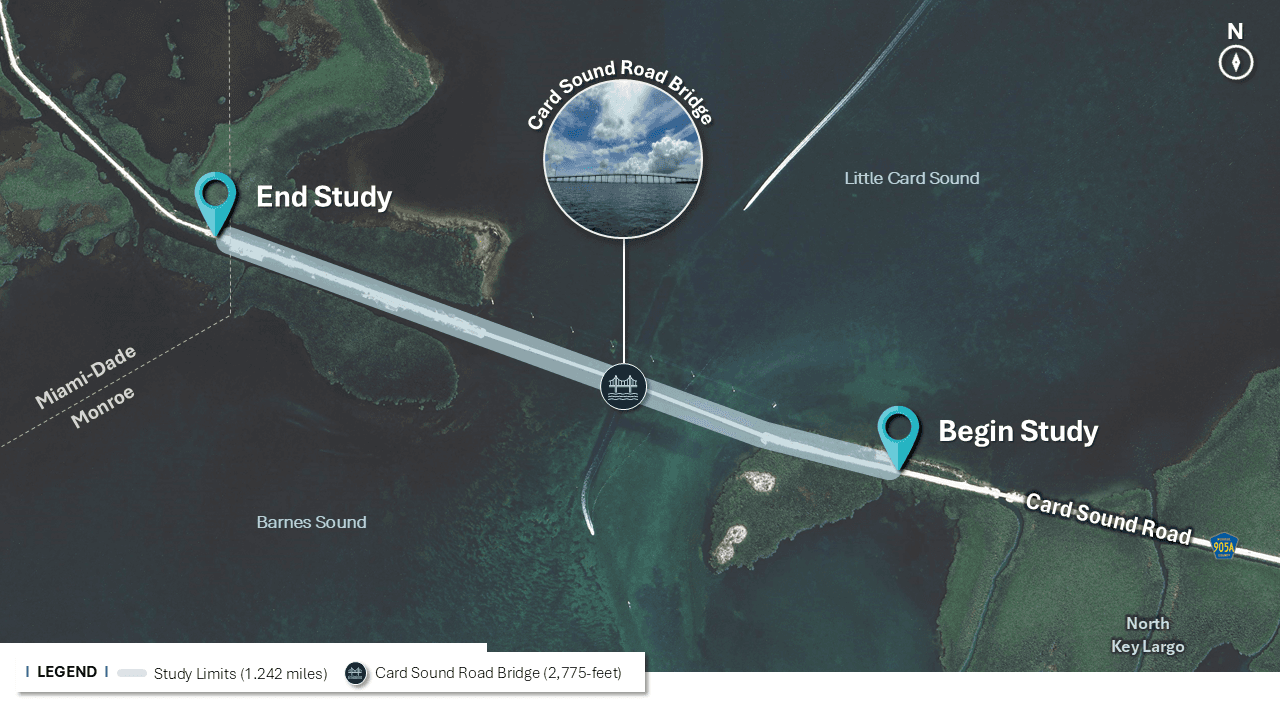
Monroe County put Card Sound Bridge, flood insurance and storm recovery at the top of its 2026 federal agenda, tying Washington’s choices directly to whether Keys roads, homes and evacuation routes get stronger or stay vulnerable. Commissioners approved the plan Wednesday, June 11, and the county said the document now guides staff and lobbyists as they press federal agencies and lawmakers for help.
The clearest near-term consequence is Card Sound Bridge, where Monroe County is asking for $3 million for final engineering and permitting for the replacement project, which the county says is its most significant bridge replacement effort to date. The bridge matters well beyond engineering papers: county materials say it is tied to an evacuation route, and a new alignment is expected. If federal money comes through, the project can move closer to construction. If it does not, a critical piece of storm-escape infrastructure stays in the pipeline while the Keys keep relying on an aging link.

Flood insurance is the other direct pocketbook issue. Monroe County is pushing for reauthorization and reform of the National Flood Insurance Program, more transparency in FEMA’s Risk Rating 2.0 formula and a cap of no more than 9 percent a year on premium increases. County figures show about 30,268 policyholders in Monroe County with more than $7.5 billion in insured value. Early analysis of Risk Rating 2.0 suggested more than 90 percent of policyholders would see increases, averaging about $3,200 a year. For homeowners, landlords and renters in a county where housing costs already strain household budgets, that debate lands at the kitchen table, not in a distant committee room.
The agenda also reflects a broader fight over how much of the cost of disasters should stay local. Monroe County wants Washington to maintain the current disaster cost-share structure, preserve hazard mitigation funding and make FEMA aid faster and more transparent. County leaders warned that some of the FEMA Review Council’s proposed changes could shift more recovery costs onto local governments and make smaller coastal communities less able to qualify for help after major storms. With the Atlantic hurricane season already underway, that issue has immediate stakes for emergency managers in Key West and throughout the island chain.
Other requests include $2.25 million for the Big Pine Key Activity Center through a Transportation, Housing and Urban Development appropriations bill, along with support for the Florida Keys Coastal Resiliency Project, the Florida Keys Water Quality Improvement Program, Everglades restoration, affordable housing programs, veteran services, opposition to offshore drilling and continued support for Naval Air Station Key West. Monroe County said it has secured or earmarked more than $20 million in recent years with help from Rep. Carlos Gimenez, but the 2026 agenda shows the county still sees federal backing as essential to keeping the Keys functional, affordable and prepared.
This article was produced by Prism’s automated news system from verified source data, official records, and press releases, then run through automated quality and moderation checks before publishing. The system is built and supervised by the people who set the standards it runs under. Read our full AI policy.
Did this article answer your question?