Monroe County explains staged reentry after storms, why return is delayed
Monroe County sends people back in stages after storms, and the difference between zones, stickers and checkpoints can decide who gets home first.
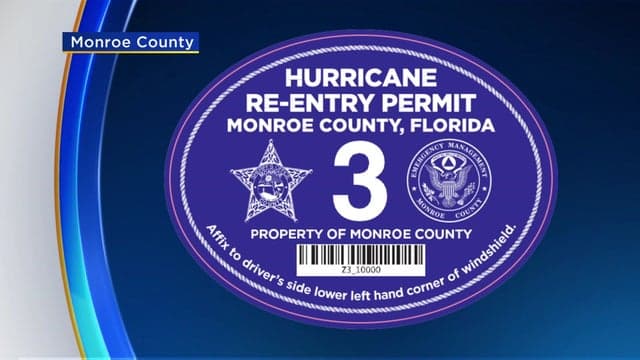
Monroe County reopens the Florida Keys in stages after a major storm because the chain depends on a small number of bridges, road segments, utilities, fuel supplies, medical facilities and emergency services. Officials will not flood damaged areas with traffic before conditions are safe. Monroe County orders evacuation only when lives are in danger, then slows reentry on purpose to avoid downed wires, blocked roads and other hazards that can turn a return trip into a second emergency.
Why Monroe County opens in stages
Monroe County opens after a storm based on the areas that are damaged or obstructed, not on a simple countywide timer. Residents, business owners and visitors are all held back until local officials decide it is appropriate, and people are told not to congregate at checkpoints or try to force an early return. One blocked stretch of U.S. 1 or one damaged utility can stop access for an entire island community.
The county’s phased evacuation procedures are designed to achieve and maintain an overall 24-hour hurricane evacuation clearance time for the resident population.
Know the difference between evacuation zones and reentry zones
Monroe County uses five evacuation zones, and they are not the same thing as reentry sticker zones. Zone 1 runs from MM 0 to MM 6, Zone 2 from MM 6 to MM 40, Zone 3 from MM 40 to MM 63, Zone 4 from MM 63 to the three-way stop at CR 905-A, and Zone 5 from CR 905-A to mainland Monroe County, including Ocean Reef. That system is about getting people out before dangerous weather arrives.
The reentry sticker zones work differently. For residents, the county uses Upper Keys as zone 3, Middle Keys as zone 2 and Lower Keys as zone 1. The evacuation map and the reentry sticker map are separate systems, so a family may evacuate from one zone and still need a different credential to return.
How resident windshield stickers work
Resident reentry stickers are one of the county’s most recognizable tools for post-storm access. One sticker is issued for each registered vehicle when the owner shows proof of residency at a Monroe County Tax Collector office. The stickers are barcoded and color-coded by zone, and if you already have a barcoded sticker, you do not need a new one each year.
Those stickers need to be in hand before the storm. They are not available once a state of emergency is declared, which makes last-minute errands risky and often pointless. The stickers are designed to make reentry easier if checkpoints are needed after a destructive storm that creates a public-safety issue, and there are no plans to use the checkpoints for COVID-19.
Key West uses its own white sticker, separate from the countywide color-coded system. People who split time between the city and other parts of the Keys may need a different credential depending on the checkpoint.
Businesses, nonprofits and the 2026 early-reentry program
Monroe County also runs an early reentry program for qualifying critical private-sector businesses and nonprofits. The program was established in 2017 after Hurricane Irma, and its purpose is to let essential organizations get back into the Keys in time to help restore critical services and community lifelines after a hurricane.
The 2026 season moved from physical windshield placards to secure digital QR codes. The application window closed Monday, June 22 at 5 p.m., and no late applications would be accepted. Businesses that already applied for 2026 did not need to apply again.
When evacuation becomes mandatory and where shelter exists
Shelter options in Monroe County change sharply with storm strength. For Category 1 and 2 hurricanes, the county lists four in-county shelters: Key West High School, Sugarloaf School, Marathon High School and Coral Shores High School. Those shelters are pet-friendly.
For Category 3, 4 and 5 hurricanes, Monroe County has no in-county shelters at all. Evacuation becomes mandatory for everyone, and the county’s emergency planning directs residents to shelter in Miami-Dade County.
The county also sets up special-needs shelter options for smaller storms. For Category 2 hurricanes and below, that shelter is located at the Gato Building in Key West and/or the Murray Nelson Government Center in Key Largo. People with special medical or mobility needs should lock that plan in before winds rise, not after roads begin to close.
What to do before the next storm
The practical order is clear:
- Confirm your evacuation zone now, not when a warning is posted.
- Get resident reentry stickers before a state of emergency is declared.
- Keep proof of residency ready for the Monroe County Tax Collector.
- Register for Alert!Monroe, which uses Everbridge for severe weather, fires, flooding, road closures and water utility maintenance.
- If you run a qualified business or nonprofit, keep early reentry credentials current and understand whether QR-code access has been approved for the season.
- Know your shelter option if the storm is Category 1 or 2, and leave the county if the forecast reaches Category 3 or higher.
Monroe County warns people who stay behind that medical, fire rescue and law-enforcement help should not be expected until storm conditions subside, roads are passable and equipment is operational.
This article was produced by Prism’s automated news system from verified source data, official records, and press releases, then run through automated quality and moderation checks before publishing. The system is built and supervised by the people who set the standards it runs under. Read our full AI policy.
Did this article answer your question?