NWS warns of minor saltwater flooding in the Lower Keys through Wednesday
Saltwater could creep onto low-lying roads, seawalls and storm drains in the Lower Keys at high tide, with the sharpest risk around 10:12 a.m. and 11:20 p.m.
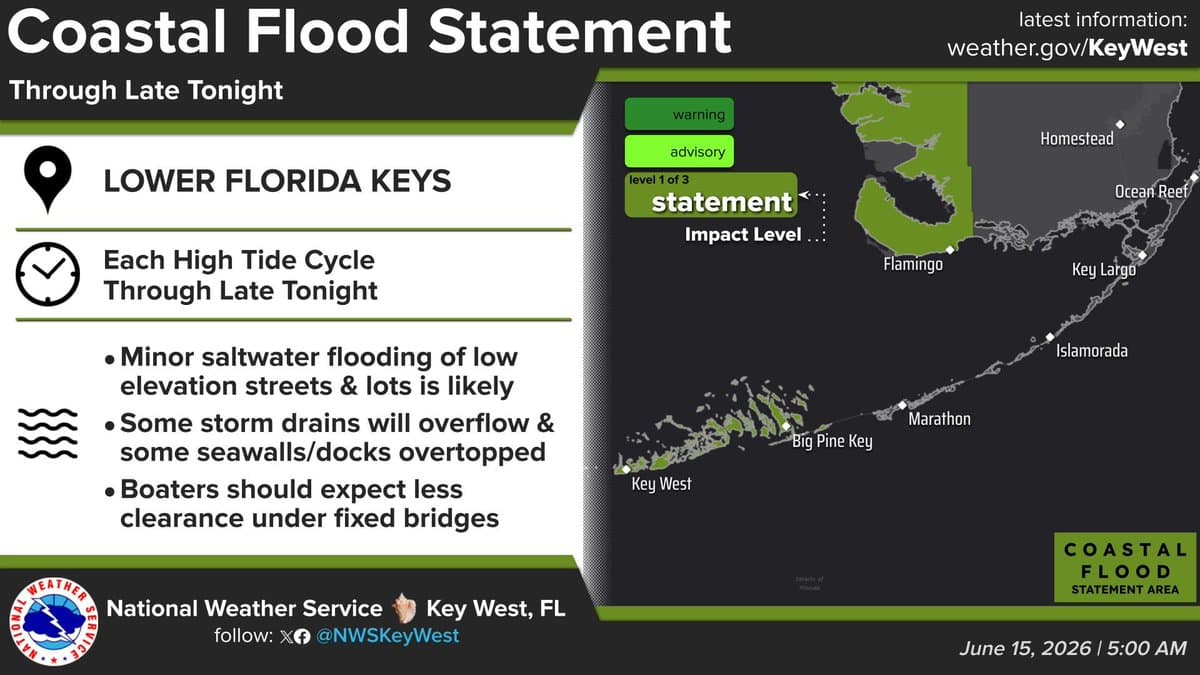
High tide pushed the Lower Florida Keys into another round of minor saltwater flooding warnings, with the National Weather Service in Key West saying low-lying roads, seawalls and some storm drains could be affected through Wednesday. The agency said a Coastal Flood Statement was in effect for the Lower Florida Keys and that isolated minor coastal flooding was possible near and during the times of high tide.
The timing of the warning mattered. NWS tide information for Key West Harbor showed a high tide at 10:12 a.m. and another at 11:20 p.m., while Snipe Point was forecast to reach high tide at 12:27 p.m. Those peaks marked the periods when saltwater flooding was most likely to push into the lowest-lying spots.

Monroe County warned that high tides can reduce clearances under fixed bridges, creating a problem for boaters moving through the islands. County officials advised checking tide tables before leaving the dock. In a place where fixed spans and shallow channels are part of daily travel, even minor flooding can slow commutes, complicate parking near waterfront areas and make routine boating runs more difficult.

Florida Division of Emergency Management said the same coastal flood statement also covered coastal Collier County and Mainland Monroe County, showing the tide-driven threat extended beyond the island chain. Recent marine forecasts also pointed to light winds and a dry pattern across the Keys, but the flooding concern remained tied to the daily rise and fall of the tide.

NOAA said its Coastal Inundation Dashboard provides real-time, projected and historical water level information at more than 200 stations, part of the broader effort to track recurring high-tide flooding along U.S. coasts and territories. In the Lower Keys, where seawalls, storm drains and fixed bridges sit close to the waterline, the latest warning again highlighted how quickly a routine tide cycle can become a local infrastructure problem.
This article was produced by Prism’s automated news system from verified source data, official records, and press releases, then run through automated quality and moderation checks before publishing. The system is built and supervised by the people who set the standards it runs under. Read our full AI policy.
Did this article answer your question?