2026 Lunar Calendar Highlights Total Eclipse and Blue Moon
A new 2026 lunar calendar released at the end of 2025 outlines full and new moon dates, including a total lunar eclipse on March 3 and a blue moon on May 31. Morgan County residents should note early-morning and daytime viewing windows and the potential for moon-driven interest in outdoor events and local tourism.
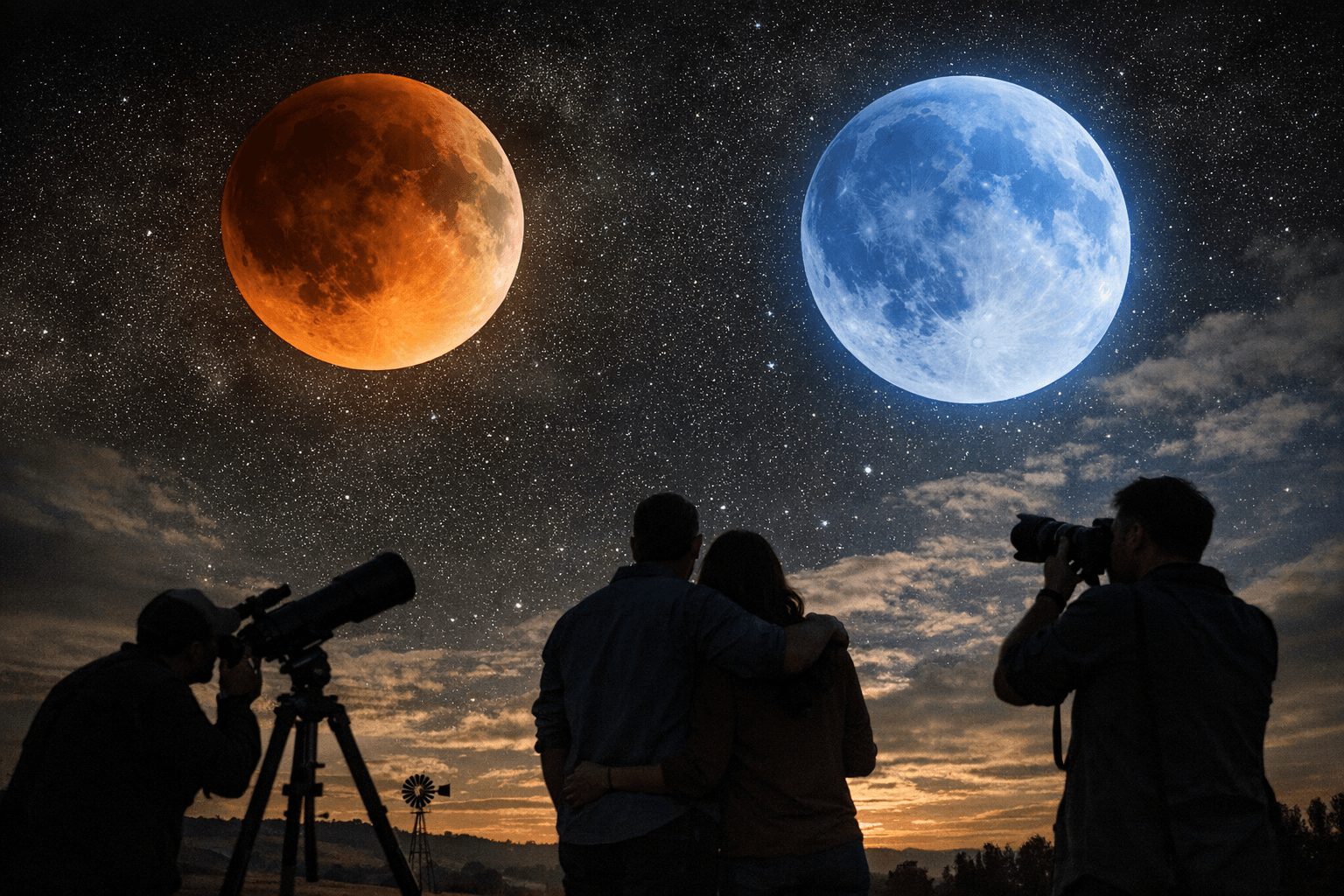
The lunar calendar for 2026, published Dec. 31, 2025, lays out a full schedule of full moons, new moons and several notable celestial events that will be visible from the Eastern time zone. The most prominent event for the region will be a total lunar eclipse on Tuesday, March 3, occurring at 6:38 a.m. Eastern Time during the Worm Moon; East Coast viewers can expect to see the eclipse in the predawn hours before sunrise. Another notable occurrence is a blue moon, the second full moon in a single month, on May 31 at 4:45 a.m. Eastern Time.
Full moons of interest for 2026 include a Wolf Moon supermoon on January 3 at 5:03 a.m. Eastern Time, a Flower Moon micromoon on May 1 at 1:23 p.m., a Strawberry Moon micromoon on June 29 at 7:57 p.m., and several supermoons late in the year: a Beaver Moon on November 24 at 9:54 a.m. Eastern Time and a Cold Moon on December 23 at 8:28 p.m. Eastern Time. A partial lunar eclipse will occur during the Sturgeon Moon on August 27 at 12:19 p.m. Eastern Time. New moons that coincide with solar eclipses are scheduled for February 17 at 7:01 a.m. Eastern Time and August 12 at 1:37 p.m. Eastern Time. Several new moons in mid-2026 are also identified as supermoons on May 16, June 14 and July 14.
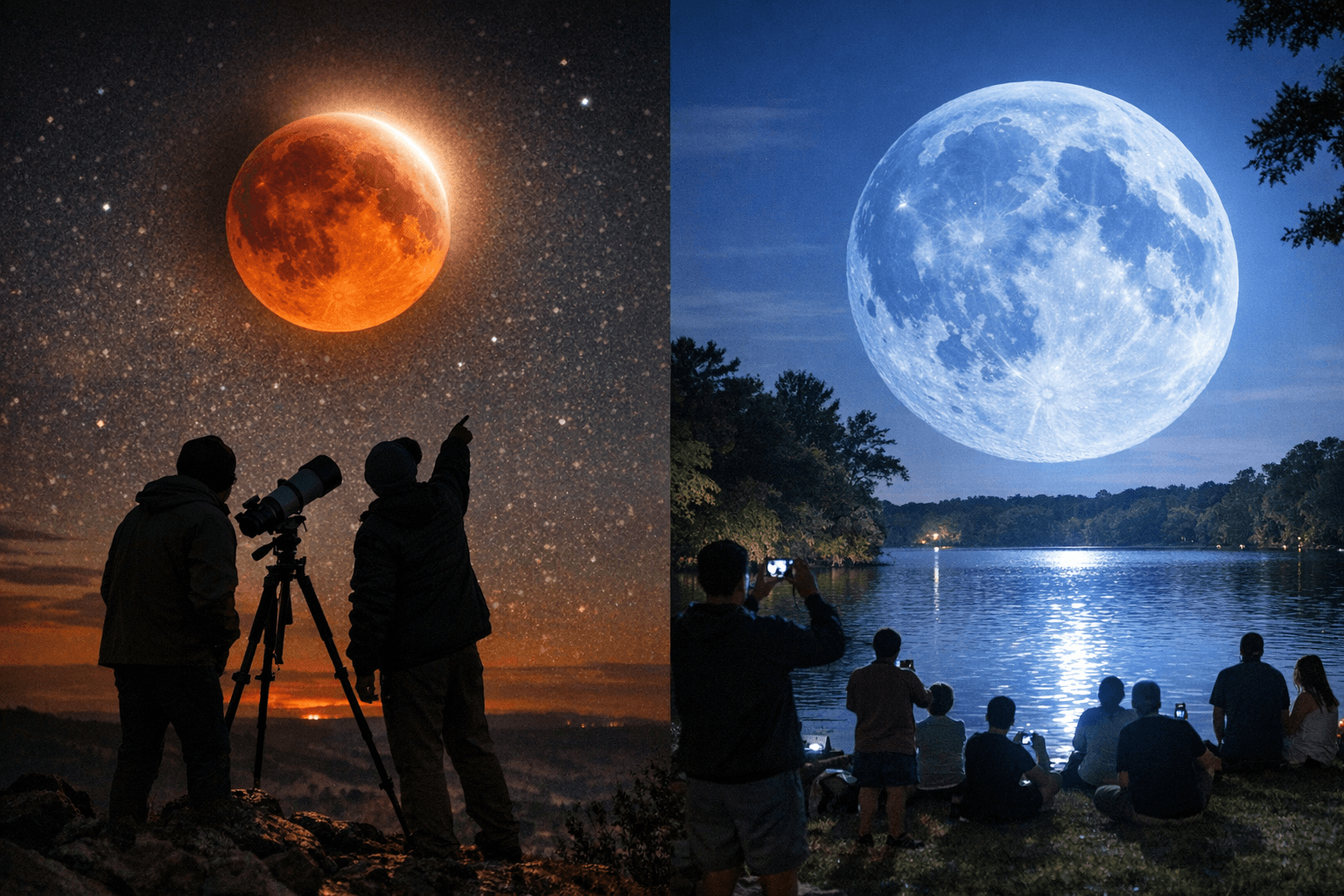
The traditional names attached to the full moons reflect seasonal patterns long used to mark agricultural and natural cycles, the Wolf Moon in January, the Buck Moon in July, the Harvest Moon in September and so on, offering local farmers and gardeners familiar seasonal cues that have persisted across generations. For Morgan County, these names are more than quaint labels; they can inform planting and harvesting rhythms, community events tied to seasonal tourism, and scheduling for outdoor programs that depend on nights without moonlight or nights with striking lunar illumination.
From an economic perspective, predictable celestial events create modest but measurable opportunities for local businesses. Early-morning and evening events tied to the March total eclipse, the May blue moon and the August partial eclipse can draw amateur astronomers, photographers and small tour groups. Restaurants, lodging and retail near popular viewing sites may see upticks in traffic around those dates, especially if weather cooperates.
Residents planning to observe or host events should note that times listed are Eastern Time and that precise moon phase timings vary by location. Those interested in viewing should plan for early-morning schedules for March 3 and May 31 and consider weather and light-pollution factors that affect visibility.
This article was produced by Prism’s automated news system from verified source data, official records, and press releases, then run through automated quality and moderation checks before publishing. The system is built and supervised by the people who set the standards it runs under. Read our full AI policy.
Did this article answer your question?