Jacksonville author Kara Dalton turns expertise into books for children
Kara Dalton turns 17 years in special education into children's books that help families talk about autism, medical care and confidence.
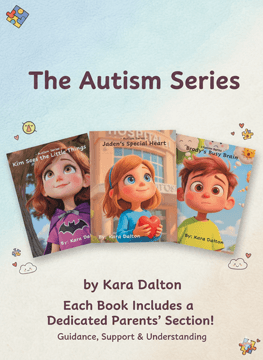
Jacksonville author Kara Dalton has built a body of work for the moments when a child needs more than reassurance and an adult needs better language. Her 39 children’s books are shaped by more than 17 years in special education, and that combination gives her writing a practical edge for parents, counselors, teachers, therapists and hospital staff who need age-appropriate ways to explain hard topics.
Books built from classroom experience
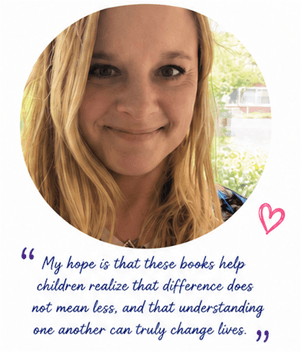
Dalton’s background is unusually wide for a children’s author. She has a communications degree, a master’s degree in special education, certifications to teach from birth through age 21, and post-graduate specialization in autism. Her author bio also says she has taught special education for 17 years in public and private districts, working in self-contained classrooms, co-taught classes, educational resource settings and early childhood intervention.
That range matters because her books are not built around abstract lessons. They are written from direct experience with children who learn and communicate differently, including students with autism, ADHD, Down syndrome, Williams syndrome, OCD and CAPD. The result is work that can help adults explain differences without turning a child’s experience into a lecture.
What her books are trying to do
Dalton’s titles are aimed at helping children understand autism, medical experiences, social-emotional development, differences and confidence-building. That makes her work especially useful in settings where adults often have to answer difficult questions without much time to prepare: a classroom after a diagnosis, a counseling office after a stressful change, a hospital waiting room, or a library program built around belonging and empathy.
The practical value is in the tone. These books are meant to help children feel seen and understood while giving adults language that is calm, concrete and age-appropriate. For families navigating disability, medical treatment or social anxiety, that kind of shared vocabulary can make a difficult conversation less intimidating and more honest.

Why Morgan County gives this story context
Morgan County’s size helps explain why Dalton’s reach matters locally. The county was established in 1823, Jacksonville became the county seat in 1825, and the 2020 census counted 32,915 residents in Morgan County, including 17,616 in Jacksonville. In a county anchored by a modest-size county seat, one local professional can have an outsized effect on education and child development conversations.
Jacksonville also has a long institutional history around disability services and special education. The Illinois School for the Visually Impaired in Jacksonville was founded in 1848 or 1849 and serves children from birth through age 22. Four Rivers Special Education District is based in Jacksonville at 936 W. Michigan Ave. The Autism Program of Illinois says its network includes 20 centers across the state, serving children, families, educators, childcare providers and medical professionals.
That local landscape matters because Dalton’s books fit into it. Even when her stories travel beyond Morgan County, they are rooted in the same kinds of needs that local schools, specialized programs and family support systems handle every day. An autism center has also been planning a Jacksonville location and said the nearest existing locations are in Galesburg and Lincoln, another sign that the need for support remains close to home even when services are spread across the region.
Her reach now extends beyond Jacksonville
Dalton’s work has attracted attention far beyond Morgan County. Her books have earned international recognition, including an International Book Award, and her work has been featured on FOX 2 St. Louis and KMOX Radio. That visibility suggests her books are finding readers in the broader autism-awareness and special education world, not just among local families.
One of the clearest examples is Archie at the Arch. FOX 2 aired an interview about the book on March 23, 2026, and the Gateway Arch scheduled a signing for April 2, 2026, World Autism Awareness Day. The book is part of a series created to help children on the autism spectrum navigate the world, which puts Dalton’s work in front of a public audience at one of the region’s best-known landmarks.
That kind of appearance matters because it connects a Jacksonville author to a broader civic conversation. Autism awareness is not just a campaign slogan when a book is being presented in a high-profile public space tied to a global observance date. It becomes part of the everyday infrastructure of how communities talk about disability, inclusion and access.
A local author with a national-purpose toolkit
Dalton is from Buffalo, New York, and now lives in Illinois, but her career path has been shaped by years spent in special education classrooms and by the needs of children who do not all experience the world in the same way. Before returning to school for her master’s degree, she worked for an ABC affiliate television station in Buffalo. That earlier communications work, paired with classroom experience, helps explain why her books are designed to communicate clearly across age, diagnosis and setting.
For Morgan County, Dalton represents more than another local success story. Her books speak directly to the gap that families, schools and health providers often face when a child needs help processing autism, medical care or the feeling of being different. In a county with deep special education roots and a growing autism-service footprint, that is not a niche contribution. It is practical help built by someone who knows the terrain.
This article was produced by Prism’s automated news system from verified source data, official records, and press releases, then run through automated quality and moderation checks before publishing. The system is built and supervised by the people who set the standards it runs under. Read our full AI policy.
Did this article answer your question?