Jacksonville Keeps Local Grocery Tax as State Ends Levy
Jacksonville city leaders voted to continue a 1% municipal grocery tax even after the State of Illinois ended its equivalent levy on Jan. 1. The decision means Morgan County residents will still pay an extra 1% on groceries in Jacksonville, a revenue choice intended to protect city services but one that creates differing tax burdens across nearby communities.
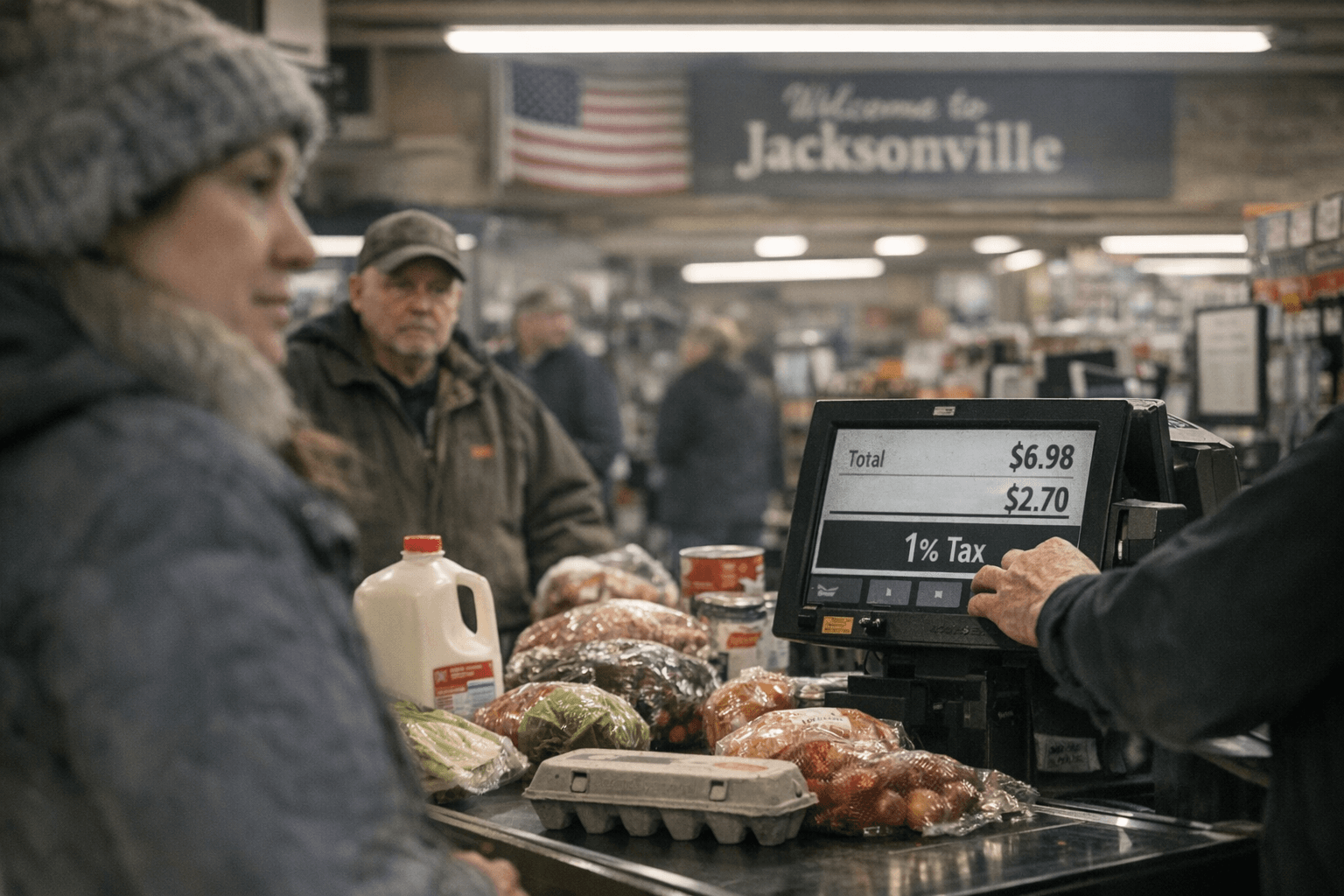
Illinois eliminated its 1% statewide grocery tax at the start of the year, but many local governments moved quickly to replace that revenue by enacting municipal ordinances. By Jan. 3, a total of 656 municipalities, representing roughly 56.4 percent of the state’s population, had chosen to continue collecting a 1% grocery tax at the municipal level. In Morgan County, the Jacksonville City Council voted 7-1 to retain the local levy.
Local officials said the municipal grocery tax provides a predictable revenue stream for cities and villages. City leaders in Jacksonville explained the decision as a response to the immediate budgetary impact the loss of state-collected revenue would have on core services. The Illinois Municipal League and municipal finance officials have emphasized that sales-tax receipts are a cornerstone of local budgets and difficult to replace on short notice.
The result is a patchwork of tax policies across Illinois. Larger cities and many suburban communities opted to continue the municipal tax to shore up funding for public safety, infrastructure and other basic services, while a number of smaller towns elected not to adopt the local 1% levy. That divergence creates practical consequences for residents: shoppers in municipalities that kept the tax will see grocery bills modestly higher than in neighboring towns that did not, and shoppers may respond by changing where they buy staples.
For Jacksonville residents, the retained 1% municipal grocery tax is effectively an ongoing local charge equivalent to an additional dollar on every $100 spent on groceries. City officials framed the vote as a choice between preserving current service levels and absorbing a sudden hole in the municipal budget that could require cuts or other revenue increases. Council members who opposed retention cited the burden on low- and fixed-income households and the inequities created between neighboring jurisdictions.
The municipal decisions also carry administrative and economic implications beyond immediate receipts. Local governments must now balance the political and practical effects of disparate tax rates, from enforcement of sales-tax collection to potential shifts in consumer spending and local business competitiveness.
Residents should review receipts and be aware that grocery taxes may differ from town to town. Council records show Jacksonville’s 7-1 vote finalized the city’s stance, and city officials said they will monitor revenue and budget impacts in the months ahead as local leaders weigh longer-term fiscal strategies.
This article was produced by Prism’s automated news system from verified source data, official records, and press releases, then run through automated quality and moderation checks before publishing. The system is built and supervised by the people who set the standards it runs under. Read our full AI policy.
Did this article answer your question?