Jacksonville May was slightly warmer and drier than normal, report says
Jacksonville ended May warmer and a little drier than normal, but Morgan County stayed out of drought as 4.16 inches of rain fell and no 90-degree days arrived.

Jacksonville closed out May with enough rain to keep Morgan County out of drought, but not quite enough to match normal moisture for the month. The city averaged 63.3 degrees and picked up 4.16 inches of precipitation, a combination that left gardens, lawns and field conditions close to normal but still uneven heading into June.
The month ran almost a full degree warmer than average and finished without a single 90-degree day. Highs reached 89 on May 29, lows dipped to 35 on May 1, and only two nights fell below 40. Measurable rain came on 11 of the 31 days, with the wettest stretch landing between May 15 and May 19. After May 24, Jacksonville managed only 0.2 inches, a reminder that the month’s moisture came in bursts rather than a steady soaking.

That pattern mattered for people trying to keep grass green and crops moving. A May like this can feel comfortable compared with midsummer heat, but the uneven rainfall can still leave topsoil dry between showers and force homeowners to keep watering beds and lawns. For farmers, the difference between a wet stretch in mid-month and a drier finish can show up in field work, seedling growth and the timing of irrigation or spraying decisions.
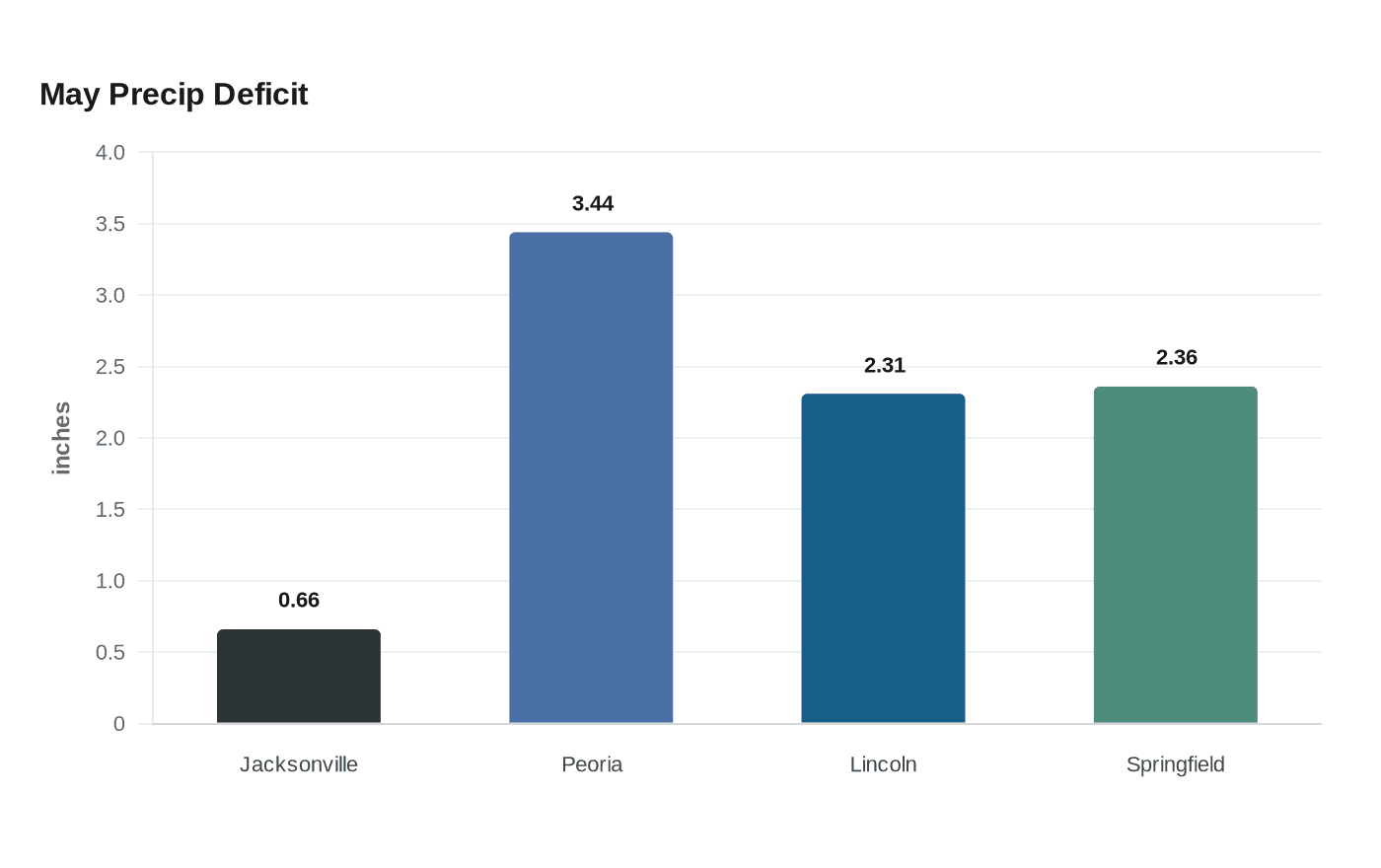
The broader picture across Morgan County was better than it had been earlier in the spring. Drought.gov reported that zero people in the county were affected by drought as of May 26, and April 2026 was the 13th wettest April on record in a 132-year county history. That helps explain why the drought was described as broken, even though May still finished 0.66 inches below normal for precipitation.
Jacksonville also fared better than several nearby climate sites. Peoria finished May 3.44 inches below normal, Lincoln was 2.31 inches below normal and Springfield was 2.36 inches below normal, while the National Weather Service said much of central Illinois stayed below normal for precipitation and heavier amounts tended to fall farther southeast. The agency also notes that drought categories are broad and that thunderstorm rain can improve one small area without changing the larger map.
For Morgan County, the practical takeaway is straightforward: the county entered June in better shape than many neighbors, but not so wet that residents could stop watching soil moisture, drainage and storm placement. If the next few weeks repeat May’s stop-and-start rainfall, the difference between a healthy yard and a stressed one could come down to which part of the county gets hit by the next shower.
This article was produced by Prism’s automated news system from verified source data, official records, and press releases, then run through automated quality and moderation checks before publishing. The system is built and supervised by the people who set the standards it runs under. Read our full AI policy.
Did this article answer your question?